One CMR mistake can delay your cargo at the border: which fields to check first
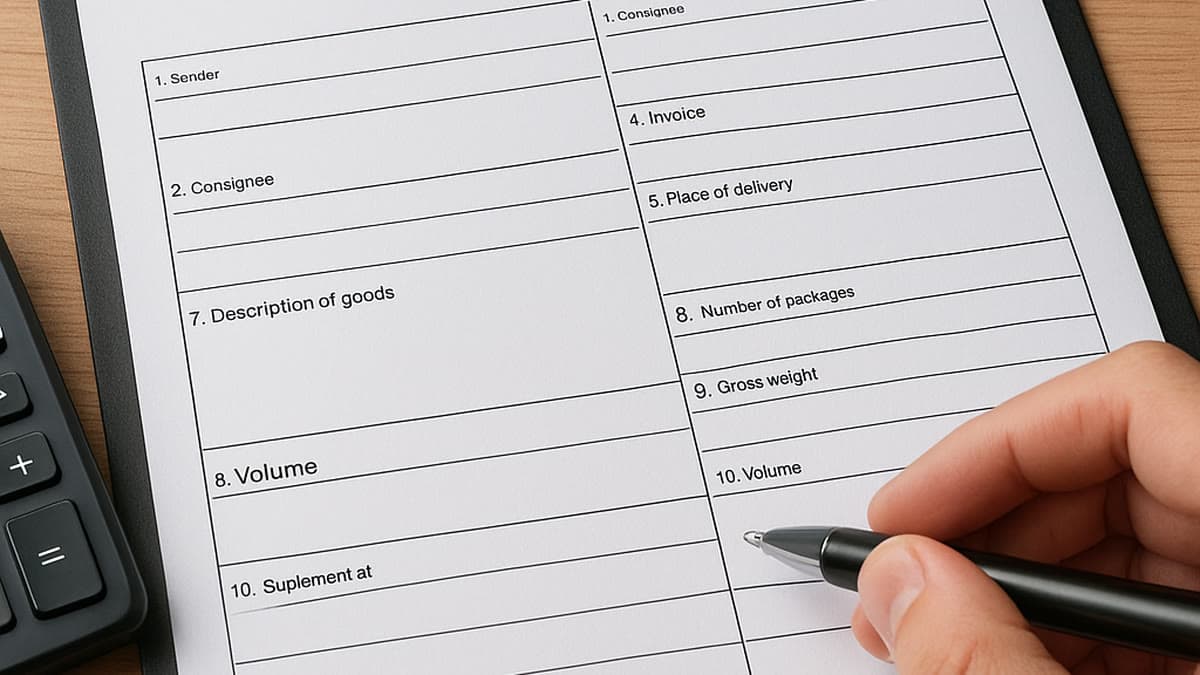
Why one inaccuracy in a CMR can delay cargo at the border
Short answer: if you need to quickly understand which fields to check first in a CMR, start with the details of the sender, the carrier, the consignee, the cargo description, the number of packages, the weight and the vehicle numbers. These are the details most often cross-checked against each other, against the invoice, the packing list and the customs documents.
This material is intended for freight forwarders, carriers, logistics specialists, importers and exporters working with international road transport to or from Ukraine. It does not replace consultation with a customs broker in complex cases, in particular for dangerous, excisable or controlled goods.
| What to check | Why it matters |
|---|---|
| Parties to the transport | Errors in names and details make it harder to identify the participants |
| Cargo, packages and weight | Data must match the invoice and the packing list |
| Route and transport | Discrepancies can trigger additional questions during inspection |
What role the CMR plays in international transport
CMR is the international consignment note used to document road transport of cargo between countries. It confirms the conclusion of the contract of carriage, contains the main instructions for the carrier and records the condition and characteristics of the cargo at the time it is taken over.
The document normally travels with the cargo and helps match information between the sender, the carrier, the consignee and the control authorities. At the same time, the CMR is not a customs declaration and does not replace the invoice, the packing list, permit documents or certificates. Its value lies in the integrity and consistency of the entire document package.
Why an inaccuracy can cause a delay
At the border, officers assess not just a single document but the consistency of data across several documents. If the CMR states one number of boxes and the packing list states another, the question of which figure is correct has to be resolved. A similar situation arises from a mistake in the consignee's name, an incorrect trailer number or a weight mismatch.
The result can be an additional check, a query to the broker, a document correction, or waiting for confirmation from the sender. This does not mean every typo automatically stops the truck: a lot depends on the nature of the mistake, the type of cargo, the transit country and the outcome of the inspection. But even an "innocent" figure can sometimes cost extra hours of waiting — the border, unfortunately, does not always have a sense of humour.
Why consistency across all data matters
The main principle of checking is simple: the CMR, the invoice, the packing list, the customs declaration and the permit documents must describe exactly the same cargo without contradictions. Before departure it is worth checking:
- the names and addresses of all parties;
- the description of the goods, the number of packages, the weight and the marking;
- the registration numbers of the tractor unit and the trailer;
- the places of loading and unloading and the date the document was issued;
- signatures, stamps or electronic confirmations, if they are required.
It is exactly this initial cross-check that helps determine which fields to check first in a CMR, and it reduces the risk of a technical mistake turning into a cargo delay.
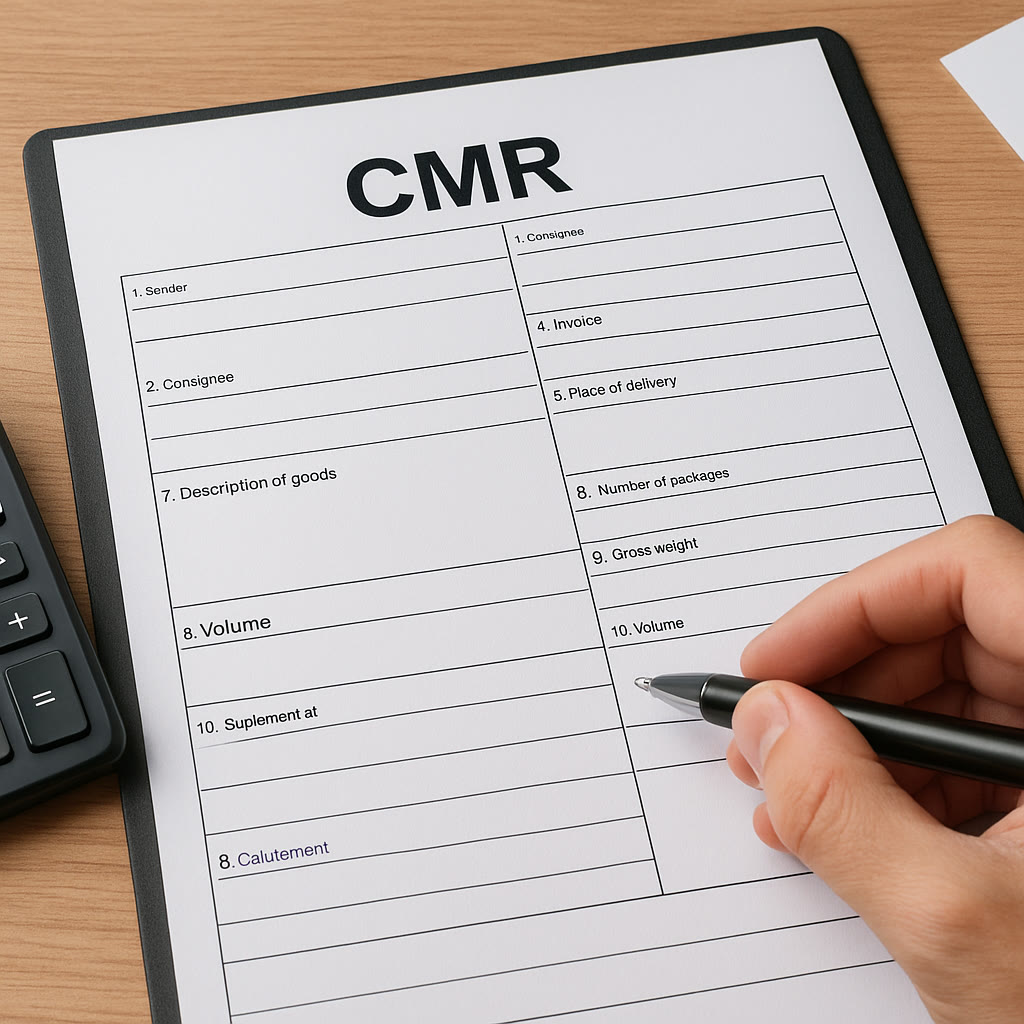
Which fields to check first in a CMR before departure
Checking a CMR: from critical data to secondary details
Before departure, a CMR should not be read chaotically, line by line. It is more effective to move by priority: first check the details that identify the participants and the cargo, and only then the technical details of the paperwork. This approach helps you understand which fields to check first in a CMR when loading time is limited.
Pay particular attention to whether the data in the CMR, the invoice, the packing list, the customs declaration and the permit documents match. Even if each document looks correct on its own, a contradiction between them can raise additional questions at the border.
- Sender, carrier and consignee. Check the full company names, addresses, countries, contact details and, if needed, identification or tax numbers. Do not rely only on the abbreviated name from email correspondence: in the documents it must match the official details.
- Place of loading and delivery. Check the exact addresses, warehouse names, localities and countries. For delivery to a logistics terminal, it is important not to confuse the terminal's address with the consignee's legal address.
- Description of the cargo. The name of the goods must be clear and consistent with the invoice and the customs data. For certain categories of cargo, the article number, model, product code, composition or dangerous-goods status are important.
- Number of packages and packaging. Match the number of boxes, pallets, crates or rolls against the goods actually loaded. If one pallet contains several boxes, the counting logic should be obvious from all the documents.
- Weight and volume. Check the gross weight, the net weight, the units of measurement and the rounding. A discrepancy of a few kilograms can be a technical inaccuracy, but a significant difference needs an explanation before departure.
"In a CMR, it is not enough just to fill in every field — the whole set of documents has to say the same thing."
What to check in the transport and accompanying data
After the main details, check the registration numbers of the tractor unit and the trailer, the date and place the document was issued, the route, the terms of carriage and any special instructions. The trailer number often changes at the last moment, so it has to be checked again after the vehicle is actually presented for loading.
Also make sure the driver has been given the full set of documents and clear instructions on temperature regime, sealing, the customs terminal or a special unloading procedure. If the cargo requires temperature control, the CMR and the other documents must not contain mutually contradictory values.
- the number of the invoice, the packing list and other attachments;
- customs, sanitary, veterinary or phytosanitary documents, if they are required;
- the seal number after loading;
- the signatures and remarks of the driver or the sender;
- special terms of carriage and the procedure for reporting a delay.
Final check before departure
Before dispatch, ask the responsible person to compare the CMR against the actual cargo and the set of documents one more time. It is best to check on the principle "one person reads, another verifies": a fresh eye often catches a mistake that the person who drew up the document has stopped seeing.
If a correction is needed, it must be clear to all parties and properly confirmed. Do not leave unreconciled fields "for later": a document is harder to correct on the road, and at the border even a small mismatch can turn into a long pause.
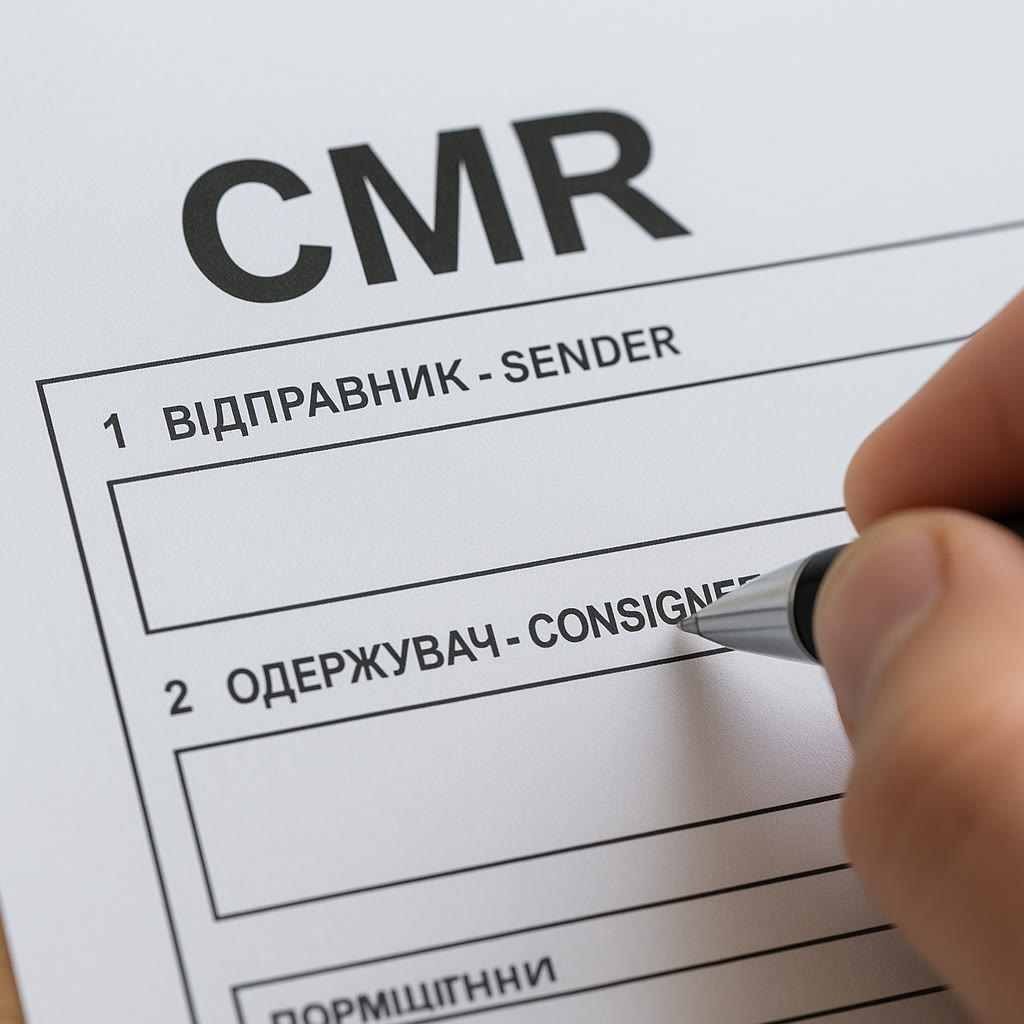
The most critical discrepancies: cargo, weight, packaging and documents
Number of packages, weight and packaging: where discrepancies most often occur
During a check, the CMR is usually compared not only against the text of the note but also against the actual cargo, the invoice, the packing list and the customs data. So the answer to the question of which fields to check first in a CMR starts with the number of packages, the weight and the way the goods are packaged. These figures can be matched directly against the cargo in the body of the vehicle.
For example, the CMR states 20 pallets, the packing list states 240 boxes, and the inspection shows 19 pallets. Such a difference can be explained by part of the goods being moved onto another pallet, but without confirmation the control authority may order an additional check. A similar situation arises if the document states "10 crates" while the goods are actually loaded onto 10 pallets.
Check the gross weight separately. It includes the goods, the packaging and, depending on the accounting approach, elements of the transport packaging. If the CMR states 18,500 kg and the weighbridge ticket states 19,300 kg, the driver or the carrier may be asked about the reason for the discrepancy. A small difference is sometimes explained by a weighing error, but a significant deviation is better corrected or documented before departure.
| Discrepancy | Possible consequence | What to do |
|---|---|---|
| A different number of pallets or boxes | Clarification of the actual cargo composition | Recount the packages and reconcile the documents |
| A difference in gross weight | Additional weighing or inspection | Check the weighbridge ticket, the packaging and the data in the declaration |
| Incorrect marking | Verification of the goods' identification | Compare the labels, the batch numbers and the documents |
"Matching figures in the documents still do not guarantee consistency if the marking on the packaging tells a different story."
Description of the goods, marking and document codes
An overly general description such as "goods" or "spare parts" may not be enough to identify the cargo. In a CMR you should state the name, the model or type of product, the quantity and, if it matters for the inspection, the batch number. The description must not contradict the invoice or the customs declaration.
Check the marking on the boxes: the name of the goods, the country of origin, the batch numbers, the barcodes and any dangerous-goods markings. For example, if the CMR describes plastic parts but the packaging shows a different article number or chemical composition, this can become grounds for a classification query.
Errors in the numbers of invoices, packing lists, certificates or permits also create a risk of delay. Even one missing digit in a document code makes automatic or manual cross-checking harder. Before departure, check not only that the attachments are present but also that exactly these documents are listed and actually handed to the driver.
What to do if a discrepancy has already been found
Do not try to hide the mistake or correct the document in an unagreed way. First establish exactly where the inaccuracy arose: in the CMR, the invoice, the packing list or the actual loading. Then agree the correction procedure with the sender, the carrier and the customs representative.
The safest option is to bring the entire document package into a single, consistent state before crossing the border. This does not rule out an inspection, but it significantly reduces the risk of a technical mistake turning into a long standstill.
How to cross-check a CMR against the invoice, the packing list and the customs declaration
Start with the basic details of all the documents
Cross-checking the CMR, the invoice, the packing list and the customs declaration should not start with the weight but with identifying the participants and the shipment itself. If the company, the address or the document number is stated differently across the documents, any further check of the cargo will no longer be reliable.
Compare the full names and addresses of the sender and the consignee. Pay attention to the legal name, the country, the city, the street, the building number, and the tax or registration number, if it is used in a particular document. An abbreviation such as "Alfa LLC" in one file and "Alfa Logistics Group" in another is not always a mistake, but such a difference is better confirmed in advance.
Next, match the numbers of the invoice, the packing list, the permits and the customs declaration. The number, date or version of the document must match wherever they are referenced. One missing digit can make it harder to find the document in an electronic system or force an inspector to request additional confirmation.
"First it is checked whose cargo this is and under which documents it is processed, and only then how much it actually weighs."
Step-by-step cargo cross-check
To avoid missing an important discrepancy, use the same sequence every time. This is the easiest way to determine which fields to check first in a CMR, even if the documents were prepared by different employees.
- Compare the description of the goods. The name, model, article number, product code, batch number and country of origin must match the invoice, the packing list and the customs declaration. Avoid overly general wording if it does not allow the product to be unambiguously identified.
- Match the quantity. Check the quantity of goods and the number of cargo units: boxes, pallets, crates, rolls or containers. Do not confuse units of goods with units of packaging.
- Check the units of measurement. Kilograms, tonnes, pieces, litres and cubic metres must be stated consistently or clearly converted. A mix-up between 1,200 kg and 1,200 t is not a typo but a material discrepancy.
- Compare the weight. Check the gross and net weight separately, if both figures are used. The gross weight must account for the packaging in accordance with the cargo accounting rules.
- Check the route and the transport. The places of loading and delivery, the registration numbers of the tractor unit and the trailer, the loading date and the seal number must match the actual situation.
Final check before submitting the documents
After the step-by-step comparison, read the documents again as a single package. Check that the description of the goods, the classification code, the number of packages, the weight and the value are not in contradiction with each other. Pay particular attention to decimal separators, unit abbreviations and rounding.
If the CMR has already been signed, do not make corrections yourself without the agreement of the parties. It is better to record the discrepancy, find out its source, and arrange the correct changes in an acceptable way before arriving at the border.
This procedure does not guarantee that there will be no inspection, but it noticeably reduces the risk of a standstill caused by technical or logistical inconsistencies.
What to do if a mistake in the CMR is found already on the road
First record the discrepancy and notify those responsible
If a mistake in the CMR is found after departure, do not try to correct it yourself at a stopover or before the border. The first step is to record exactly what the mismatch consists of: the wrong number of packages, weight, trailer number, delivery address, description of the goods, or details of an accompanying document.
Make a clear copy or photograph of the relevant page of the CMR, the packing list, the invoice or any other document involved in the discrepancy. If possible, record the actual data: photos of the marking, the vehicle numbers, the seal, the weighbridge ticket or the cargo units. This will help separate a real mistake from a misreading of the document.
After that, the driver or the responsible person must notify the carrier, the sender, the freight forwarder and the customs representative, if one is involved in the clearance. The notification should state the trip number, the CMR number, a description of the problem and a proposed course of action. A phone call is useful for speed, but the key agreements are better confirmed by email or a message that can be kept on record.
"Until the parties have agreed on how to correct it, the driver must not turn the CMR into a draft."
How to properly agree and make corrections
The correction procedure depends on the type of document, the number of copies, the requirements of the parties to the transport and the rules of the specific country. So before making changes, they need to be agreed with the sender and the carrier, and on customs matters, also with the broker. Particular care is needed if the mistake concerns the quantity of goods, the weight, the classification code, dangerous cargo, or a party to the foreign trade transaction.
For a paper CMR, the correction must remain legible: do not erase the original data, do not use correction fluid, and do not replace the page without explanation. Normally the incorrect entry is crossed out in a way that leaves it readable, the correct information is written next to it, and the correction is confirmed with a date, a signature or another form of agreement by the authorised parties. The specific requirements may differ, so it is important to follow the instructions of the carrier, the sender and the broker.
- describe the original value and the correct data;
- state the reason or nature of the correction;
- obtain confirmation from the authorised representatives;
- keep updated copies for the driver, the carrier and the consignee;
- check whether the invoice, the packing list or the customs declaration also need to change.
What to do before crossing the border
After the correction has been agreed, cross-check all the documents again as a single package. This is exactly where the principle of which fields to check first in a CMR comes in useful: the parties to the transport, the addresses, the description of the cargo, the number of packages, the weight, the document numbers, and the data on the tractor unit and the trailer.
If the inaccuracy affects customs clearance, do not rely on the corrected CMR alone. The customs representative may need to update the declaration or submit an explanation. The driver must be given clear instructions on which documents to present and whom to notify of the changes.
If an electronic CMR is used, corrections should be made through the procedure provided by the system, rather than by creating an unofficial file with changed data. It is better to spend time on proper confirmation than to explain at the border why different versions of the same cargo exist in the documents.
FAQ: answers to common questions about checking a CMR
Who is responsible for filling in the CMR?
Who should fill in the CMR? In practice, the main information about the cargo is usually provided and entered by the sender or its freight forwarder: the name and address of the parties, the description of the goods, the number of packages, the weight, the point of loading and the place of delivery. The carrier is responsible for the data relating to the vehicle, the route and the actual acceptance of the cargo. At the same time, the division of duties can be defined by the contract between the parties.
The driver should not sign the document thoughtlessly just because it was prepared at the warehouse. Before signing, he must check the visible characteristics of the cargo, the number of packages, the condition of the packaging, the seal numbers and whether the vehicle matches. If there are any remarks, it is better to enter them in the CMR before the vehicle sets off. The consignee's signature after delivery confirms the fact of acceptance and can record remarks about the condition or quantity of the cargo, but it does not automatically correct mistakes made during the paperwork.
Can a CMR be corrected after loading?
Are corrections allowed after loading? Yes, but they must be agreed, clear and properly confirmed. Do not erase entries, use correction fluid, tear out pages or create a new version of the document without explanation. For a paper consignment note, incorrect data is usually left legible, the correct information is written next to it, and the changes are confirmed with signatures, a date or other required details of the authorised parties.
If the correction concerns the weight, the quantity of goods, the description, the classification code or a party to the foreign trade transaction, a single change in the CMR may not be enough. The invoice, the packing list and the customs declaration need to be checked. For an electronic CMR, changes should be made through the functionality of the relevant system, so that a log of actions and the previous version of the document are preserved.
Which mistakes delay cargo, and when is a new consignment note needed?
Which fields should be checked first in a CMR? Problems most often arise from an incorrect number of packages, gross weight, description of the goods, delivery address, consignee's name, invoice number or the trailer's registration number. The risk increases if the marking on the boxes does not match the documents, or if the CMR states a different type of packaging. Not every discrepancy automatically leads to a delay, but every one can cause additional questions.
When should a new CMR be issued? This may be necessary if the document was made out to the wrong sender or consignee, has become illegible, contains material contradictions about the cargo itself, or the correction cannot be properly confirmed. A new consignment note must not hide the original mistake: the parties must agree which document is valid and, if necessary, provide an explanation to the carrier, the broker or the control authority.
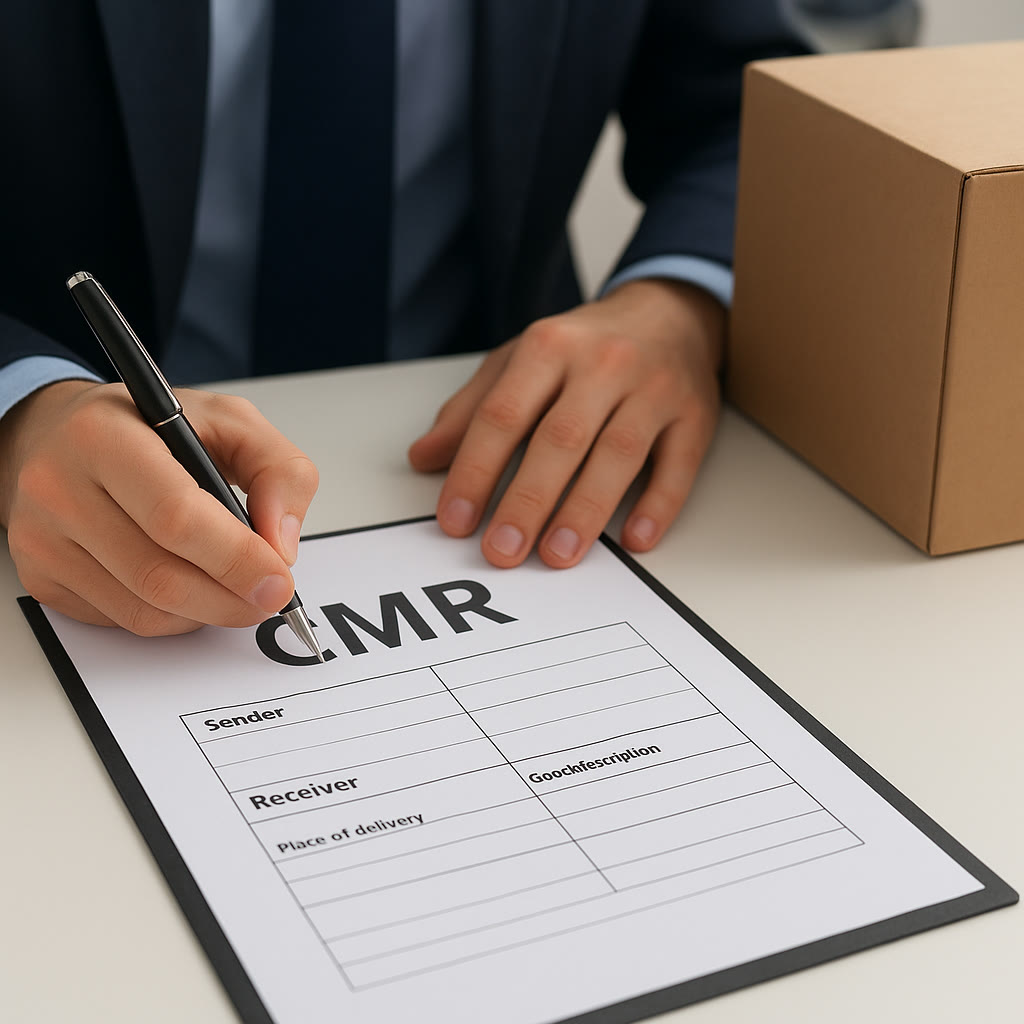
Conclusion: a short CMR checklist before crossing the border
Before crossing the border, a CMR should not be checked selectively but as part of a single set of documents. First of all, check the names and addresses of the sender, the carrier and the consignee, the places of loading and delivery, the invoice number, the description of the goods, the number of cargo units, the gross weight and the details of the tractor unit and the trailer. These are the fields that most often affect the identification of the cargo.
Which fields should be checked first in a CMR? First, those that can be matched against the actual cargo: the number of pallets or boxes, the marking, the packaging, the seal and the weight. Then compare the CMR against the invoice, the packing list and the customs declaration. Separately check the units of measurement, the document numbers, the article number, the product code, the date the document was issued and the vehicle's registration numbers. Even one digit or letter in the wrong place can cause additional questions.
The final procedure is simple: the sender confirms the data on the goods, the freight forwarder cross-checks the entire set of documents, the carrier and the driver check the actual loading and the vehicle, and before departure all parties agree the final version of the CMR. If a mistake is found on the road, it must be recorded, the sender, the carrier and the broker must be notified, and the correction must be made only in an agreed and confirmed way.
Do not erase entries, do not use correction fluid, and do not create unofficial copies of the document. If the discrepancy is significant or cannot be properly confirmed, a new CMR or an update to the other documents may be needed. A few minutes spent checking before departure usually cost far less than a standstill at the border.

Related posts



Do you have cargo or transport?
Post your offer — and find the right partner today.