Yahodyn, Krakivets or Rava-Ruska: how carriers choose a border crossing for a truck
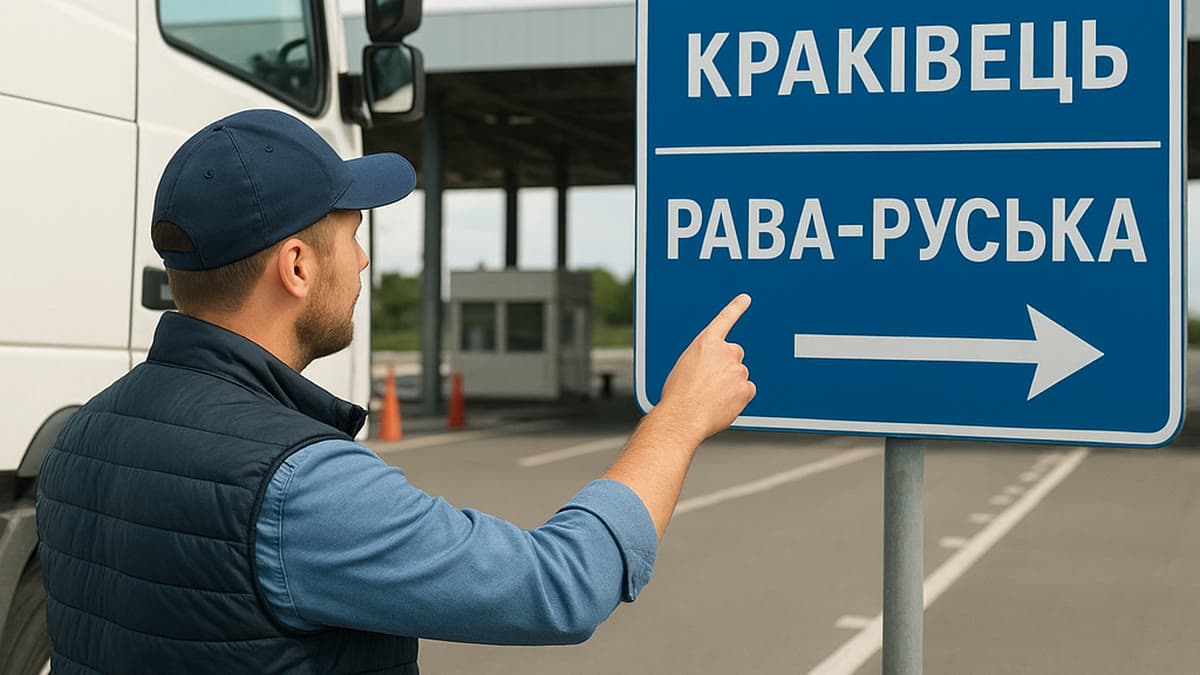
How Carriers Choose a Border Crossing for a Cargo Truck: Key Criteria
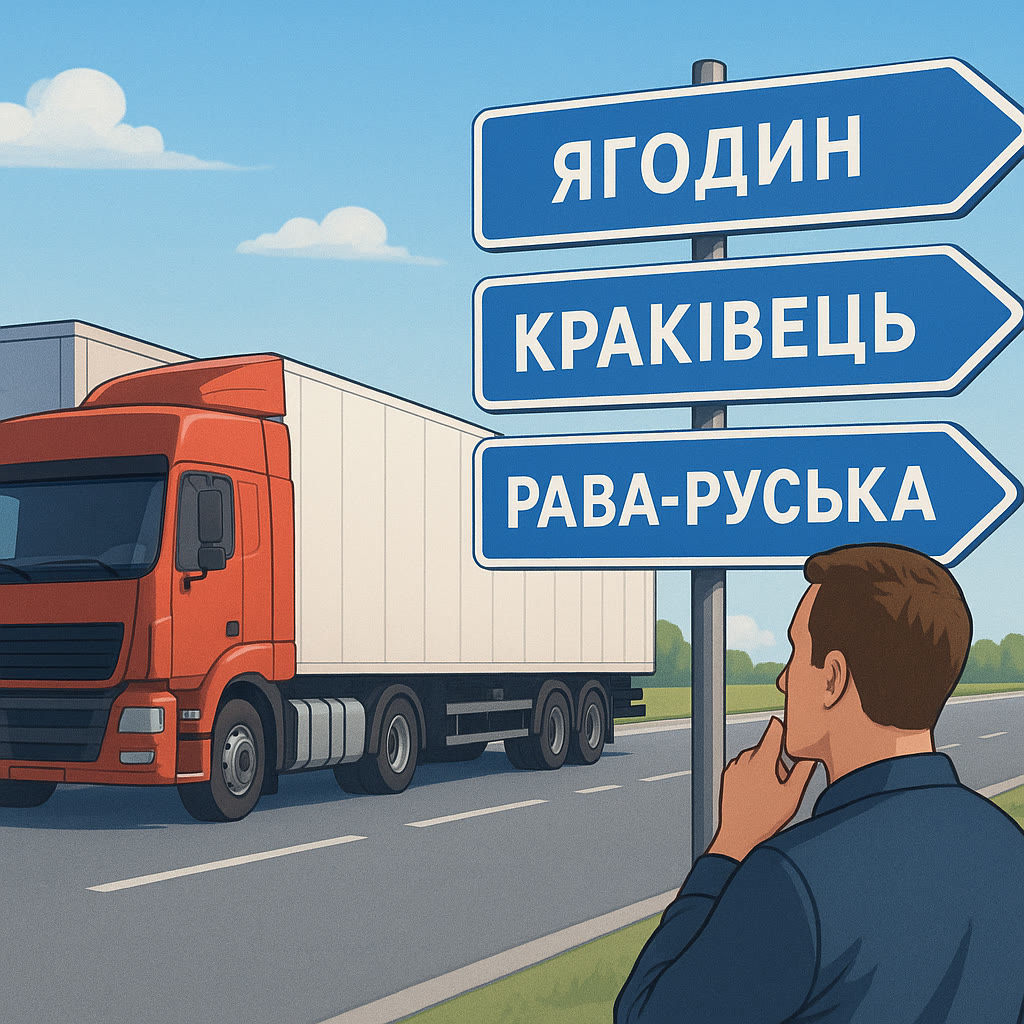
How do carriers choose a border crossing for a cargo truck? Not simply by the rule "wherever the queue is shorter." A carrier weighs the route, the type of cargo, the admission requirements, the current load on the checkpoint, and the working hours of the adjoining services. For trips to Poland, Yahodyn, Krakivets and Rava-Ruska are compared most often, but there is no universally best option: the right choice depends on the specific delivery.
| Criterion | What to check before departure |
|---|---|
| Direction | Distance to the warehouse, logistics centre or the next country on the route |
| Cargo | Whether special documents, a temperature regime or extra control are needed |
| Queue | Estimated waiting time and a forecast of how the situation will change |
| Documents | Customs, transport, veterinary, phytosanitary and permit documents |
This approach is useful for drivers, dispatchers, freight forwarders and fleet owners planning an international trip. However, it does not replace checking the official rules when dangerous, perishable or excisable goods are involved.
Route and Final Delivery Point
The first step is to look not at the map of the border, but at the whole route after crossing it. Yahodyn can be a logical choice for directions toward Lublin, Warsaw and the more northern regions of Poland. Krakivets is often considered for trips along the route toward Krakow, Katowice, Wroclaw or further west. Rava-Ruska can be convenient for routes to the eastern and central parts of Poland.
This is only a general guideline. If, after the border, the truck ends up on a detour, a road section under repair, or city restrictions for oversized vehicles, the advantage of the "shorter" checkpoint can disappear. A dispatcher usually compares the total time on the road, fuel costs, toll roads and the risk of missing the loading window.
Queue, Working Hours and Throughput Capacity
The operational situation at the border changes throughout the day, so queue data needs to be checked right before departure and again while planning the route. What matters is not only the number of vehicles but also the speed of their processing: sometimes a shorter queue moves more slowly because of checks or an uneven flow of cargo.
The operating hours of the specific checkpoint, the customs division and the adjoining services are also checked. Different procedures may apply to certain categories of cargo, and repairs, technical works, strikes or temporary restrictions can change the usual logistics. Unfortunately, the border does not work on the principle of "arrive and the system is already waiting for you."
Cargo Type, Documents and Restrictions
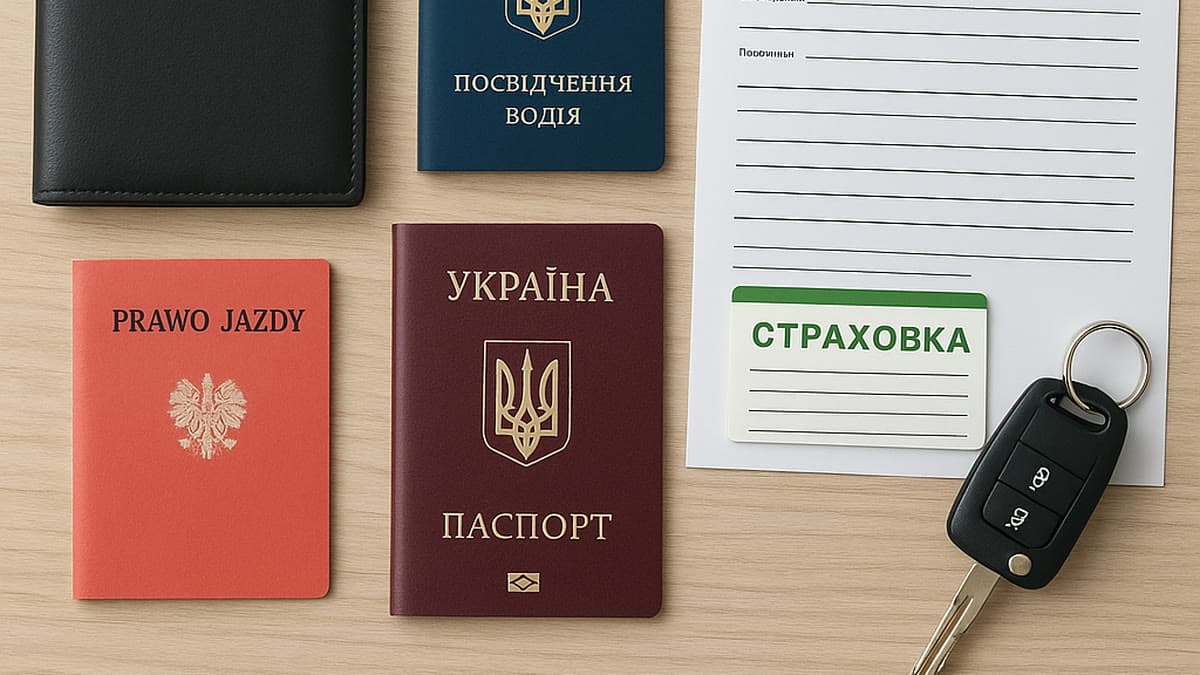
Before choosing a checkpoint, the carrier checks whether the documents for the cargo, the vehicle and the driver meet the requirements of both countries. Additional certificates and controls may be required for products of animal origin, plants, live animals, dangerous substances or goods requiring a temperature regime.
- cross-check the customs declaration, invoice, packing list and transport documents;
- verify the permits, certificates and conditions for special cargo;
- confirm the restrictions on weight, dimensions, trailer type and transport regime;
- agree the arrival time and the acceptable buffer for the border with the consignee.
So, how carriers choose a border crossing for a cargo truck in practice: first they filter out checkpoints that do not fit by documents or route, then they compare queues, schedules and the full cost of the trip. The best checkpoint is not necessarily the one with fewer vehicles, but the one that ensures a predictable and lawful passage to the delivery point.
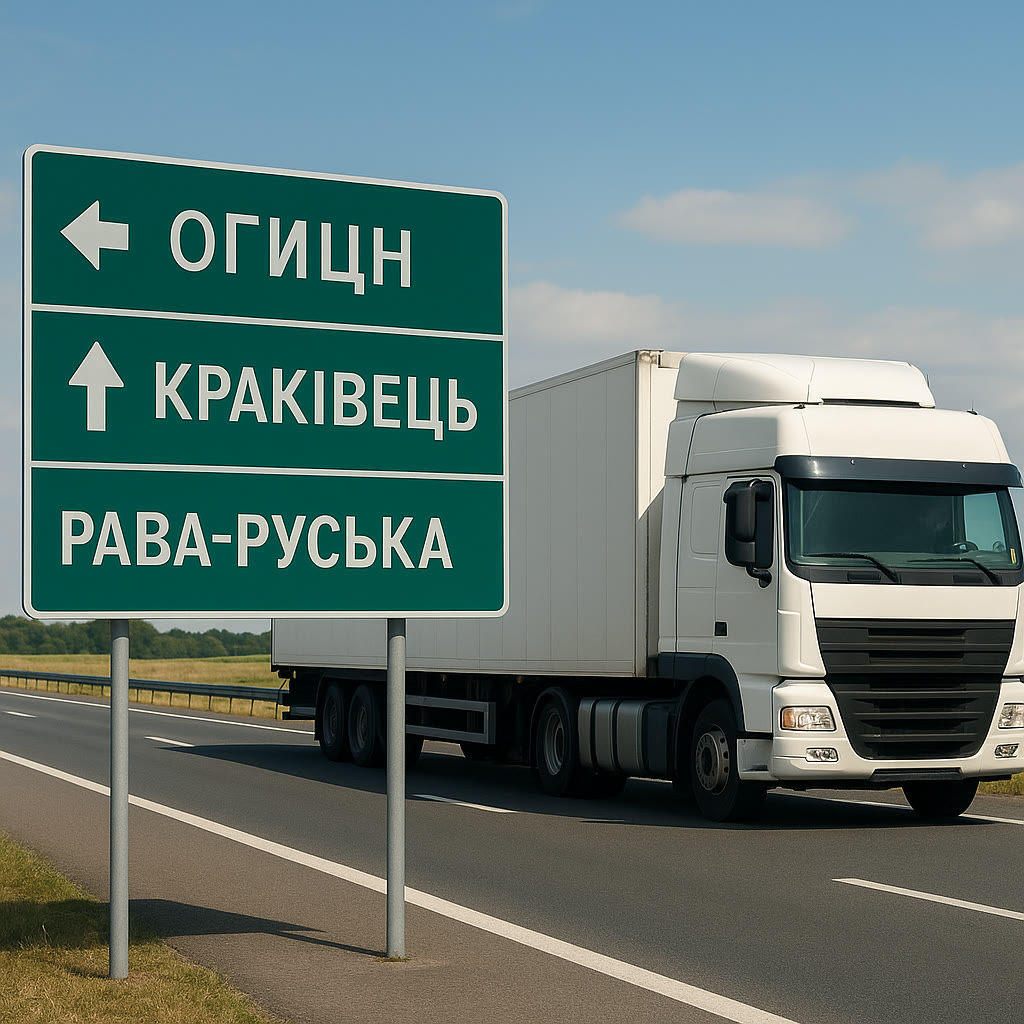
Yahodyn: When This Route Can Be the Most Convenient
Who the Route Through Yahodyn Suits
The "Yahodyn–Dorohusk" checkpoint is often considered by carriers heading from Volyn and the northern or central regions of Ukraine to Poland. After crossing the border, the route can lead toward Lublin, Warsaw, the Masovian Voivodeship and further north or west into Europe. For some trips this makes it possible to avoid an unnecessary detour to southern Poland.
At the same time, the distance to the checkpoint is only one element of the calculation. If the cargo needs to be delivered to Krakow, Katowice or the Czech Republic, the advantage of Yahodyn will depend on the condition of the roads, the load on Polish routes, restrictions for oversized vehicles and the arrival time to the consignee. Sometimes a saving of a few dozen kilometres to the border turns into a longer route after it.
"The shortest road to the border is not always the shortest road to the customer"
This rule explains well how carriers choose a border crossing for a cargo truck: they compare the full route from the loading point to the warehouse, not just the Ukrainian section.
Advantages of Yahodyn for Freight Transport
The main advantage of this route can be that it matches the geography of the delivery. When the consignee is located in the Lublin, Masovian or neighbouring regions, the driver does not spend time on a significant detour south after passing control. This is especially important for regular trips with fixed time windows for loading or unloading.
Yahodyn is also chosen when it is convenient for the carrier to travel through Volyn and there is no need to cross all of Ukraine to reach the more western checkpoints. For companies with regular routes, an established documentation workflow, a familiar approach to the border and the ability to plan the queue in advance through the available official services matter.
- delivery to eastern, central or northern Poland;
- dispatch from Volyn and the neighbouring regions;
- a trip with a set time for accepting the cargo in Poland;
- no special requirements that direct the vehicle to another checkpoint.
When Yahodyn May Not Be the Best Choice
The main risk is a long wait caused by a high concentration of freight transport, uneven throughput, tightened checks or temporary organisational restrictions. The real situation changes over the course of the day, so old reports about the queue should not be taken as an accurate forecast. Before departure, the dispatcher checks up-to-date data, the status of the electronic queue, the working hours, and notices from the customs and border services.
Special attention is paid to the type of cargo. Additional procedures may apply to products of animal origin, plants, dangerous substances, perishable goods or oversized transport. If the documents are not ready or special control is required, even a favourable queue will not save the schedule.
So Yahodyn is most often chosen not simply because of a shorter or longer queue, but when it logically matches the delivery direction, the documents and the capabilities of the specific truck. If the final point is located significantly further south, it is worth comparing Krakivets and Rava-Ruska in parallel by the full trip time.
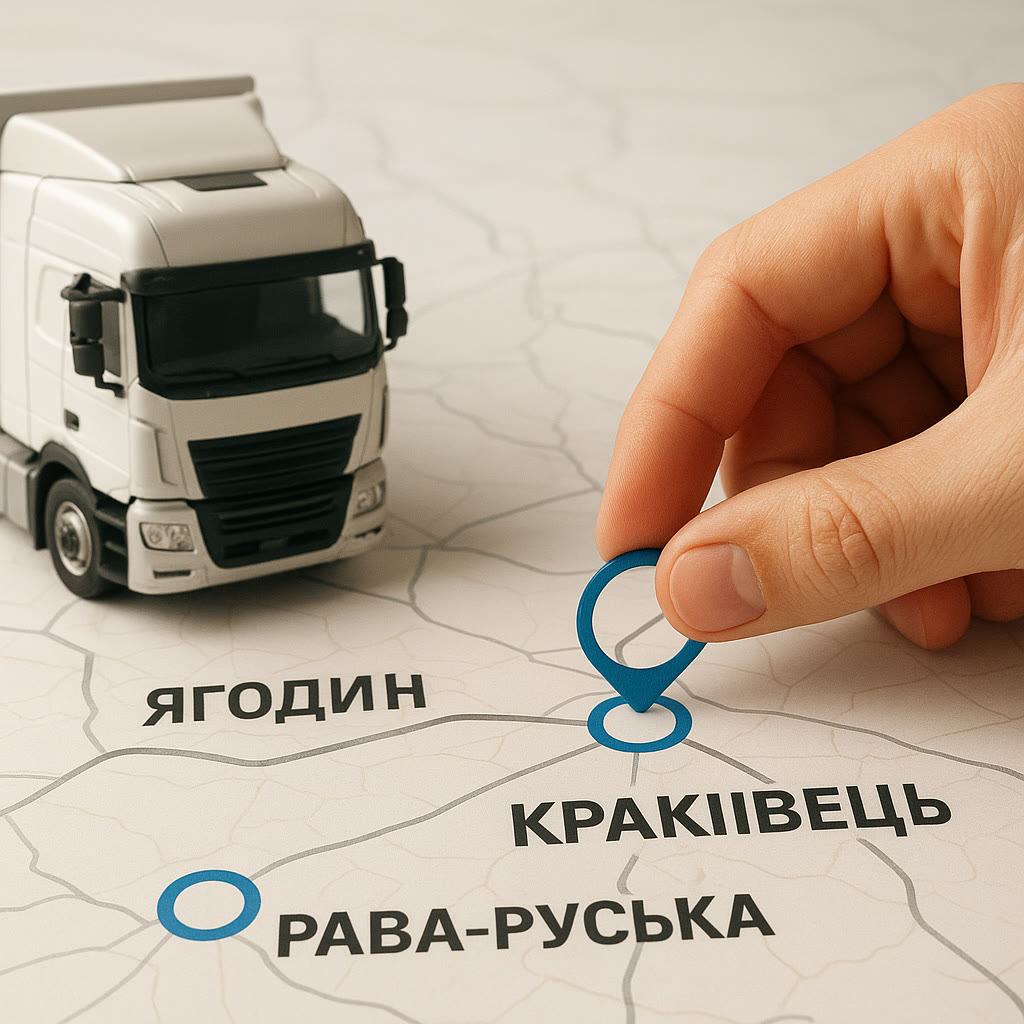
Krakivets and Rava-Ruska: Comparing Routes for a Truck
Krakivets: A Logical Choice for Western and Transit Routes
The "Krakivets–Korczowa" checkpoint is located on one of the main routes between the Lviv region and Poland. It is often considered by carriers transporting cargo to Krakow, Katowice, Wroclaw, Germany, the Czech Republic or further west into Europe. After the Polish border it is convenient to continue toward the A4 motorway, although the specific time to reach it depends on the road situation, processing and the route.
For a truck, the advantage of Krakivets lies in matching the transit direction. If the loading point is located in the Lviv, Ternopil, Ivano-Frankivsk or other western regions, this option often makes it possible to shorten the internal Ukrainian section. It can also be convenient for trips with a short time buffer, when after the border you need to reach the main Polish roads quickly.
At the same time, the popularity of the route means a significant load. The queue at Krakivets can change quickly due to seasonal demand, repair works, tightened control or an uneven arrival of trucks. So the mere fact of proximity to the A4 does not guarantee the fastest trip.
Rava-Ruska: An Alternative for Directions Through Eastern Poland
The "Rava-Ruska–Hrebenne" checkpoint can be practical for deliveries to Lublin, Zamość, Warsaw and other districts of eastern and central Poland. The Polish side has connections to the main roads, including toward the S17 expressway. For trips that do not require travel through Krakow or southern Poland, this can be a more direct logistics scheme.
Rava-Ruska is also compared with Krakivets when it is necessary to spread the risk of delay or find a route with a more acceptable waiting forecast. However, throughput capacity and the actual speed of processing are not constant indicators. They are affected by the number of available lanes, the work of the customs and border services, the type of cargo and the share of vehicles arriving at the same time.
"The queue on the map is only a snapshot indicator, not a guarantee of the crossing time"
That is exactly why a dispatcher checks up-to-date data right before departure rather than relying on yesterday's reports.
How to Compare Krakivets and Rava-Ruska Before a Trip
| Criterion | Krakivets | Rava-Ruska |
|---|---|---|
| Typical direction | Southern and western Poland, transit to the EU | Eastern and central Poland |
| After the border | Convenient access toward the A4 | Routes toward the S17 and Lublin |
| Main risk | Heavy load at a popular crossing | Changing processing times and local restrictions |
In summary, how carriers choose a border crossing for a cargo truck: they weigh not only the queue but also the final address, the road after the border, the documents, the restrictions for the cargo and the time reserve. Krakivets is more often justified for western transit, while Rava-Ruska is for eastern and central Poland. The final decision should be made after checking the official situation for both directions.
How to Assess the Queue, Documents and the Risk of Delay
Start With the Current Queue, Not With Assumptions
Before departure, the dispatcher or driver first checks the situation at all acceptable checkpoints: Yahodyn, Krakivets and Rava-Ruska. For trucks it is important to take into account not only the number of vehicles but also the waiting time, the dynamics of movement and the presence of temporary restrictions. Morning data can differ significantly from the evening situation — the border does not much favour stability.
If an electronic queue applies to the specific type of transport, the registration rules, the application status, the entry time and the requirements for staying in the waiting zone need to be checked in advance. A booking should not be considered a guarantee of an instant crossing: it determines the order of admission but does not cancel the control of documents and cargo.
In addition, the official notices of the State Border Guard Service of Ukraine, the State Customs Service and the responsible transport authorities are reviewed. It is precisely there that warnings about technical works, changes in operating mode, traffic restrictions, repair of access roads or temporary redirection of traffic can appear.
"The queue should be assessed not by a single number, but by the trend of its movement"
If the number of trucks is decreasing but processing is barely moving forward, the actual waiting time may remain long.
Check the Documents and the Specifics of the Cargo
Before choosing a checkpoint, it is worth making sure that the set of documents matches the route, the goods and the vehicle. At a basic level, the registration documents for the tractor unit and the trailer, the driver's documents, the consignment note, the invoice, the packing list, the customs declarations and confirmation of the right to carry out the transport are checked.
Additional documents or special procedures are needed for certain categories of goods. This applies to products of animal origin, plants, live animals, food products, dangerous substances, excisable goods, perishable cargo and oversized transport. The temperature regime, labelling, seals, weight and dimensions are also checked.
- cross-check the names, quantity and weight of the goods across all documents;
- verify the validity of certificates, permits and insurance documents;
- confirm whether veterinary, phytosanitary or other control is required;
- make sure the driver and the carrier meet the conditions of the specific trip.
Build In a Time Reserve and Define a Plan B
The risk of delay is assessed not only by the queue. Added to it is the time for approach, registration, processing, a possible inspection, checking of seals and movement after the border. For a delivery with a strict time window, the reserve should also take into account weekends, holiday periods, weather conditions and restrictions on truck traffic in Poland.
How a border crossing for a cargo truck is chosen in practice: first the options that do not fit by documents or type of cargo are filtered out, then the queues and the full route time are compared. Before departure, the main checkpoint and a backup one are fixed, a change of route is agreed with the client, and it is checked whether the electronic registration will lose validity in case of rerouting.
FAQ: Answers to Carriers' Questions
How to Choose a Checkpoint If All Three Directions Seem Acceptable?
How do carriers choose a border crossing for a cargo truck in this situation? They compare not just the length of the queue, but the entire route to the consignee. Yahodyn can be more convenient for trips to Lublin, Warsaw and the northern regions of Poland, Krakivets — for travel toward Krakow, Katowice and further west, and Rava-Ruska — for some trips to eastern and central Poland. The final decision depends on the loading point, the type of cargo, the documents and the actual situation at the border.
If the difference in the queue is a few hours, it is worth calculating the additional time and cost of the approach to a different checkpoint. A shorter queue does not always mean a faster trip: the speed of processing, the road situation after the border and the arrival time at the warehouse also matter.
Can the Checkpoint Be Changed Already on the Road?
Yes, but first it is necessary to check whether the trip is tied to a specific electronic queue or prior registration. If such a tie exists, an unauthorised change of direction can lead to the loss of the booking or the need to go through the procedure again. Before rerouting, the driver or dispatcher checks the current rules of the service and the status of the application.
The change of route is also agreed with the carrier, the freight forwarder and the consignee. This is important if the cargo has a defined customs route, special documents, a temperature regime or a limited delivery deadline. Switching to a different checkpoint without checking the requirements may save time in the queue but create a problem during processing.
What to Do About the Electronic Queue and a Sharp Increase in Waiting?
The electronic queue helps to organise the entry of trucks, but it does not cancel the border, customs or other required control. The driver has to monitor the registration status, the system's notifications and the rules for staying in the waiting zone. The data need to be checked through official channels, since third-party reports can be outdated or relate to a different type of transport.
If the queue increases sharply, the cause is established first: a technical failure, a temporary restriction, tightened checks, an infrastructure malfunction or a seasonal influx of vehicles. Then Yahodyn, Krakivets and Rava-Ruska are compared, taking into account the approach time and the movement forecast. You should not drive to another checkpoint at random if the same restrictions apply there.
Requirements regarding weight, dimensions, type of goods, dangerous substances, and products of animal or plant origin may apply to trucks. Therefore, before changing the route, the documents and the admission conditions specifically for that trip are checked.
"The best backup route is the one checked before departure"
In the end, the decision is made based on three parameters: the legality of the passage, the predictable time and the full cost of the route.
Conclusion: There Is No Universal Checkpoint for All Trucks
There is no universal border crossing for all cargo trucks. How is a border crossing for a cargo truck chosen in practice? First, the final delivery point and the whole route are assessed, and only then are Yahodyn, Krakivets and Rava-Ruska compared by queue, time on the road and risk of delay.
Yahodyn can be convenient for trips to Lublin, Warsaw and the northern regions of Poland. Krakivets is more often considered for directions to Krakow, Katowice, Germany and other countries of western transit. Rava-Ruska can suit some routes to eastern and central Poland. This is not a strict rule but an initial orientation: the actual benefit depends on the loading point, the road situation and the consignee's address.
Before departure, the carrier checks the current state of the electronic queue, notices from the border and customs services, the checkpoint's operating hours, and possible restrictions for trucks. Separately, the customs, transport, veterinary, phytosanitary and other documents are cross-checked. The requirements of the Polish side may differ depending on the type of goods, their weight, dimensions, temperature regime or the need for special control.
The practical algorithm is simple: determine the main and backup checkpoint, check the rules of the electronic queue, build in a time reserve, and agree a possible change of route with the client in advance. If the queue suddenly increases, you should not drive to another border crossing at random — first you need to compare the full trip time and make sure the documents allow that passage.
The best checkpoint will not be the one with the fewest trucks at the moment of checking, but the one that ensures a predictable, lawful and economically justified route to the delivery point.

Related posts

Do you have cargo or transport?
Post your offer — and find the right partner today.