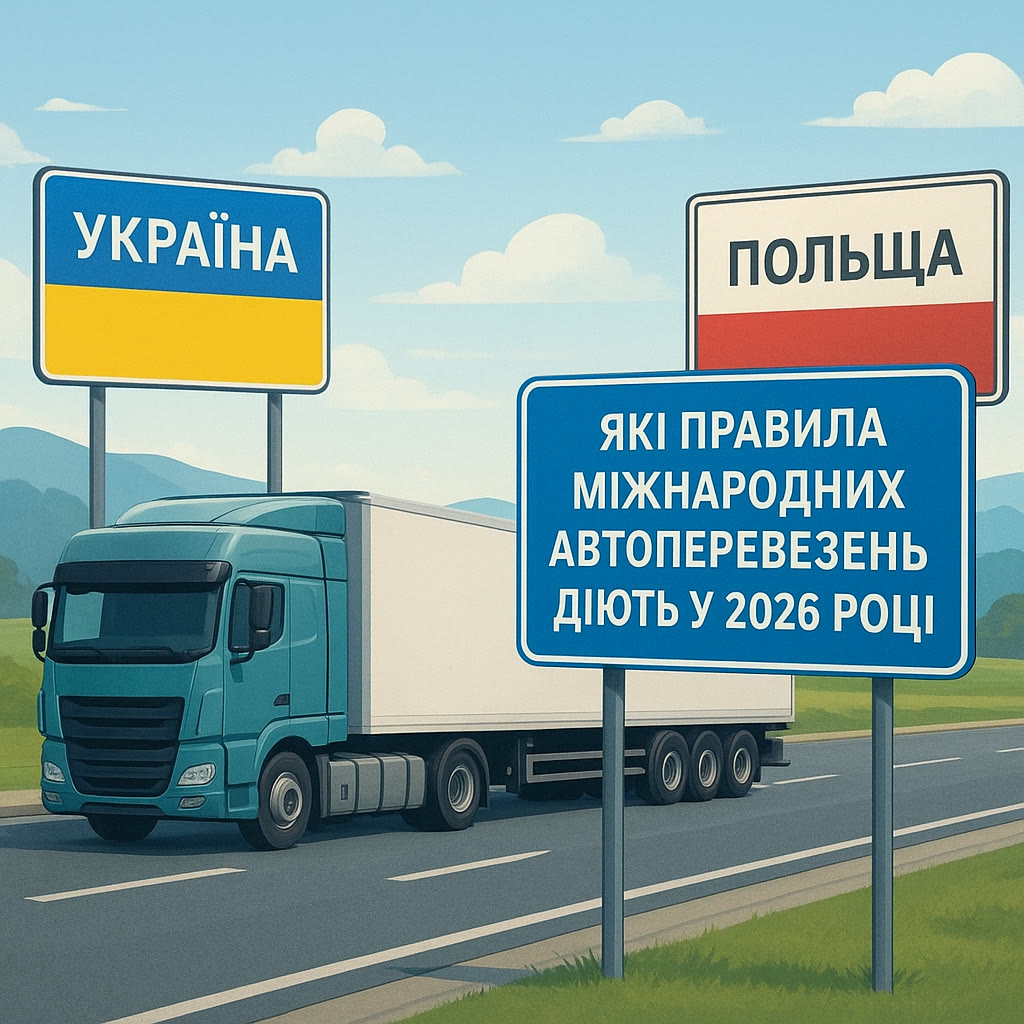
Ukraine–Poland Without Permits: What International Trucking Rules Apply in 2026
Ukraine–Poland Without Permits: What Changed in 2026
Short answer: In 2026, transport between Ukraine and Poland under the agreement on the carriage of goods by road can be carried out without single-trip permits. This applies primarily to bilateral trips and transit through the territory of the other country. At the same time, "without a permit" does not mean "without documents": a carrier still needs a licence, transport documents and proof that the trip is lawful.
| Question | What applies in 2026 |
|---|---|
| Single-trip permit for a bilateral trip | Not required under the liberalisation |
| Transit through Poland or Ukraine | Allowed without a single-trip permit under the terms of the agreement |
| Cabotage | Not automatically allowed |
| Duration of the arrangements | Until 31 March 2027, unless the parties make changes |
This material is intended for Ukrainian and Polish carriers, freight forwarders, logisticians and companies planning regular international trips. It does not replace checking a specific route, type of cargo or requirements for special transport: in international logistics, even one extra kilometre can suddenly become legally significant.
On what basis the permit-free regime operates
The liberalisation is based on the Agreement between Ukraine and the European Union on the Carriage of Goods by Road. It was concluded after the start of the full-scale war to support Ukrainian exports, imports and transit and to ensure stable logistics routes across the EU's borders.
Initially the arrangements were temporary, but they have been extended. For practical work in 2026 the key date is 31 March 2027. Until then, carriers can use the simplified regime if their trip meets the terms of the agreement and the requirements of the law.
The regime is reciprocal: it covers Ukrainian carriers heading to Poland or through its territory, and Polish companies performing the corresponding trips to Ukraine or in transit through it.
What exactly is allowed, and what remains restricted
Without a single-trip permit it is possible to carry out bilateral transport — for example, delivering cargo from Ukraine to Poland or from Poland to Ukraine. Transit is also allowed, when cargo travels through the territory of one state to a third country.
- A valid licence for international transport is required.
- The driver and the vehicle must meet the requirements of the country where they are operating.
- The trip requires a CMR, registration documents and documents for the cargo.
- Special rules and permits may apply to certain categories of cargo.
An important restriction is cabotage. Delivering cargo between two points inside Poland by a Ukrainian carrier does not automatically become allowed just because of the liberalisation. Likewise, the agreement does not remove the requirements for dangerous, oversized or special transport.
So, what international trucking rules apply in 2026: for bilateral and transit trips between Ukraine and Poland, single-trip permits are not required until 31 March 2027, but checking documents, licences and the type of transport remains mandatory.
What International Trucking Rules Apply in 2026
Documents for a bilateral and transit trip
In 2026, the absence of a single-trip permit does not remove other requirements for international transport. The carrier must prove who it is, what transport it uses, where the cargo is coming from and going to, and on what basis the trip is performed. It is the package of documents, not just the permit system, that remains the truck's main "passport" at the border.
For a typical Ukraine–Poland or Poland–Ukraine trip, the driver should have:
- a valid licence for international freight transport and a document confirming the right of the specific vehicle to operate in international traffic;
- a driving licence of the relevant category, a passport or another document for crossing the border, and, if needed, confirmation of status and the right to work;
- a registration certificate for the tractor unit and the trailer or semi-trailer, valid insurance and documents on technical condition;
- a CMR consignment note, an invoice, a packing list, a contract or other documents explaining the origin and destination of the cargo;
- customs documents: a declaration, a transit document, a guarantee or confirmation that customs procedures have been completed — depending on the route and the cargo regime.
A Polish carrier uses the documents provided for by European Union rules and Polish law. A Ukrainian company must have Ukrainian permit documents for international transport, and the vehicle must be properly registered and cleared to operate. Documents can be paper-based or available in electronic form, if such a format is accepted by the controlling authorities.
"No single-trip permit does not mean no control and no proof of the right to carry out the transport."
This principle is especially important during an inspection on Polish territory: the inspector assesses not only whether a permit exists, but also whether the trip complies with the terms of the liberalisation.
Which operations and cargoes the simplified regime covers
The liberalisation applies primarily to bilateral transport, when cargo is delivered between Ukraine and Poland, as well as to transit trips through the territory of one of the countries to another state. Empty return runs after delivery, if they are connected with an international trip, are also among the practically important operations.
| Operation | Status |
|---|---|
| Ukraine–Poland or Poland–Ukraine | Without a single-trip permit under the terms of the agreement |
| Transit through another country | Possible within the agreed regime |
| Transport between two points in Poland | Cabotage, not automatically allowed |
| A trip between third countries | Requires a separate check of the legal basis |
Separate rules apply to dangerous, oversized, heavy, perishable and temperature-controlled cargo. These may require ADR documents, special route approvals, a permit for oversized movement, temperature records or additional customs confirmations.
So, what international trucking rules apply in 2026 is determined not by the single fact that permits have been abolished, but by a combination of conditions: the carrier's legality, the correct route, the nature of the cargo, the technical condition of the vehicle and a complete set of accompanying documents.
When a Permit Is Not Needed, and When It May Still Be Required
When a trip falls under the permit-free regime
A single-trip permit is generally not required if the transport meets the terms of the international agreement and is bilateral or transit. For example, a Ukrainian carrier delivers cargo from Ukraine to Poland, picks up Polish cargo for Ukraine, or travels through Poland to another country. Likewise, a Polish company can perform the corresponding trip in the opposite direction.
An empty run can also be carried out without a permit, if it is logically connected with international transport: for example, the return of a vehicle after delivery or a trip to the loading point. However, in case of an inspection the driver must be ready to explain the purpose of the route and show documents for the previous or upcoming trip.
"What is decisive is not the direction of the truck's movement by itself, but the type of transport operation and whether it matches the terms of the agreement."
To use the preferential regime, a carrier must have a valid licence, documents for the vehicle and the cargo, and the route must not turn into domestic transport within another state.
In which situations a permit or additional approval may be needed
The most common mistake is to assume that the liberalisation allows any trip between Ukraine, Poland and third countries. If a Ukrainian vehicle is loaded in Germany and delivers cargo to Poland, this is no longer an ordinary bilateral Ukraine–Poland trip. Such operations between third countries may not be covered by the agreement and require a separate legal check, and sometimes a permit.
- Cabotage: transport between two points inside Poland by a Ukrainian carrier does not automatically become allowed. Separate rules of the country and the EU apply to it.
- Incorrect route: if the actual trip does not match the documents or has no connection to Ukraine or Poland, the grounds for the permit-free regime may be called into question.
- Dangerous goods: ADR documents, a trained driver, marking and equipment are required. Additional restrictions may apply to certain routes.
- Oversized cargo and exceeding weight limits: special transit permits, an agreed route and an escort are usually necessary, even if an ordinary single-trip permit for international transport is not required.
- Special cargo: for perishable goods, live animals, waste or goods under customs control, additional confirmations and procedures are required.
A separate risk arises if the carrier does not have documents confirming the international nature of the operation, or uses transport not listed in the licence documents. The absence of a single-trip permit does not protect against a fine for illegal cabotage, the wrong type of transport, or a breach of customs rules.
"Without a permit is a simplification of the procedure, not an exemption from the rules."
That is why what international trucking rules apply in 2026 needs to be assessed for a specific trip: who is loading the cargo, where the vehicle is going, where the loading and unloading points are located, and exactly what cargo is being transported.
Documents and Border Control: What Must Be in the Driver's Cab
The basic package of documents in the cab
Before departure, the carrier should check not only that the documents are present, but also that the data in them match. The tractor unit's number in the licence records, the registration certificate, the insurance policy and the consignment note should not turn into a "spot the difference" exercise for the inspector.
- Driver's documents: a passport or other document for crossing the border, a driving licence of the required category, documents on the legality of stay and work, if they are needed for the specific trip.
- Licence documents: confirmation of the carrier's right to perform international freight transport and a document certifying that the specific vehicle is cleared for international traffic. For a Polish carrier — documents provided for by EU and Polish rules.
- Vehicle documents: registration certificates for the tractor unit, the trailer or semi-trailer, confirmation of technical roadworthiness, and, if needed, documents for a rented or leased vehicle.
- Insurance: a valid compulsory insurance policy and an international "Green Card" insurance card, if it is required for the route.
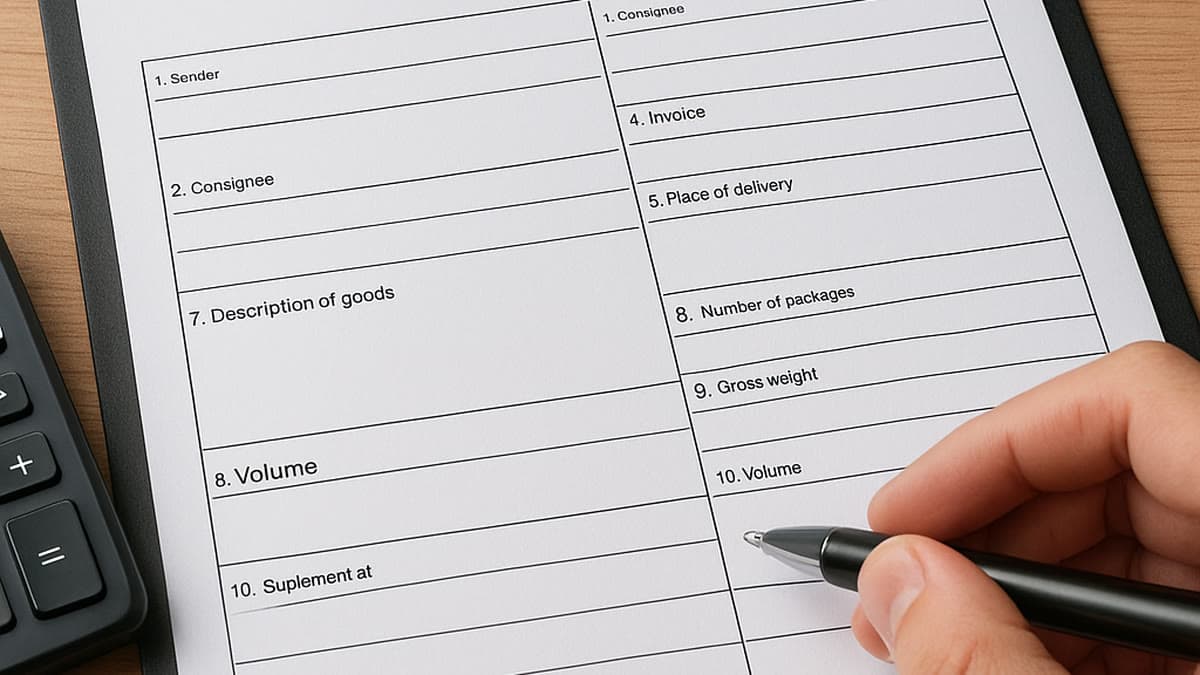
- Consignment note: a completed CMR with the details of the sender, the carrier, the consignee, the loading and unloading points, a description of the cargo and the number of packages.
- Confirmation of the cargo's status: an invoice, a packing list, a contract, a customs declaration, a transit document or another document, depending on the customs regime.
Documents can be available in electronic form, if such a format is accepted by the relevant authorities. However, for an important trip it is practical to have paper copies of the key documents: technology, the internet and an inspector's mood do not always work in sync.
"The absence of a single-trip permit does not replace the CMR, the licence, the insurance and the customs documents."
Marking of the vehicle and pre-border checks
The vehicle must have the proper registration plates and markings of the country of registration. For Ukrainian vehicles this includes, among other things, the "UA" distinguishing sign, if it is not integrated into the format of the number plate. The semi-trailer must also have correct registration and identification markings.
If dangerous cargo is being transported, the marking is additionally checked under the ADR rules, orange plates, hazard signs, written instructions and a set of emergency equipment. For oversized or heavy transport, special approvals, markings and sometimes an escort are required — even when an ordinary international permit is not.
Before departure it is useful to check:
-
Whether the data in the CMR match the actual route and cargo.
-
Whether the numbers of the tractor unit and the trailer match in all documents.
-
Whether the insurance, licence documents and technical confirmations are valid.
-
Whether the trip is not cabotage or transport between third countries.
-
Whether there are special documents for the specific type of cargo.
This is exactly the kind of checklist that helps apply in practice what international trucking rules apply in 2026: without a single-trip permit, but with a fully confirmed right to the trip.
Fines, Inspections and Common Carrier Mistakes
What carriers can be stopped and fined for
Polish control authorities can inspect a truck at the border, near a logistics terminal, on a motorway or during a roadside check. Controls are carried out by, among others, the road transport inspection, the police, customs and border services. They check not only the permit for the transport, but the whole route and the way the trip is performed.
The most typical grounds for sanctions in 2026 are missing or incorrect documents, a mismatch between the actual cargo and the data in the CMR, breaches of the driver's work and rest regime, a faulty tachograph, and exceeding weight or dimension limits. Payment of tolls through the Polish e-TOLL system is checked separately, if the vehicle is subject to it.
- performing cabotage without a proper legal basis;
- transport between third countries incorrectly documented as a Ukraine–Poland trip;
- lack of a valid licence, insurance or documents for the trailer;
- a mismatch of the vehicle number in the CMR, the registration and the licence documents;
- breaches of the rules for transporting dangerous, oversized or heavy cargo;
- lack of mandatory registration or notification for special categories of goods, if required by Polish rules.
The size of the fine depends on the nature of the breach, whether it is repeated, who bears responsibility and the specific procedure. Sanctions can be applied to the driver, the carrier, the owner of the vehicle or the party ordering the transport. In some cases the vehicle can be detained until the breach is remedied.
How to prepare for a Polish inspection
Before departure, the dispatcher and the driver should check not only the folder of documents, but the logic of the route itself. If the cargo was loaded in Poland and is unloaded in another Polish city, this can be cabotage. If the sender and the consignee are located in third countries, the trip may not fall under the simplification for Ukraine and Poland.
It is useful to check the CMR in advance against the invoice, the packing list, the customs declaration and the actual cargo. The driver should know who the carrier is, where the loading point is, which customs regime applies and why the vehicle is moving along this particular route.
It is also worth checking the operation of the tachograph, the driver's card, compliance with breaks and daily rest, axle weights, the technical condition, and payment of the road toll. Dangerous cargo requires ADR documents and the appropriate marking, and oversized cargo requires a special permit and an agreed route.
So, what international trucking rules apply in 2026 is determined not only by the regime without single-trip permits. A safe trip is the correct status of the operation, a complete package of documents, roadworthy transport and compliance with Polish requirements along the entire route.
FAQ: International Trucking Between Ukraine and Poland in 2026
Is a permit required, and how long does the simplified regime last?
Can a Ukrainian carrier travel to Poland in 2026 without a single-trip permit? Yes, if it is international bilateral transport between Ukraine and Poland, or a transit trip that meets the terms of the current agreement. Polish carriers can also use the reciprocal regime for the corresponding trips to Ukraine.
Until what date do these rules apply? For practical planning, you should work with 31 March 2027. The regime has been extended until this date, but a carrier should follow official changes: international arrangements can be clarified or changed earlier than planned.
Does this mean you can travel without any permits at all? No. The abolition of the single-trip permit does not remove the licence for international transport, the documents for the vehicle, the CMR, the customs documents, the insurance and special approvals. Additional requirements may apply to oversized, heavy or certain dangerous cargoes.
Does the permit-free regime cover transit and cabotage?
Is a permit required for transit through Poland? Transit can be performed without a single-trip permit if it meets the terms of the agreement and has a clear international character. For example, cargo travels from Ukraine to another state through Poland, or to Ukraine through Polish territory. The driver must have documents confirming the route and the status of the cargo.
Can a domestic trip be performed in Poland after delivery? The mere fact of permit-free entry does not give the right to cabotage. Transport between two points in Poland is governed by separate rules of the European Union and Poland. Breaching cabotage requirements can lead to a fine, even if all the documents for the international trip were correctly issued.
What about transport between third countries? A trip in which the cargo is loaded and unloaded outside Ukraine and Poland should not automatically be documented as Ukrainian–Polish transport. It requires a separate check of the legal basis and possible permit requirements.
What documents are required, and what should you do during an inspection?
What should the driver have? A driving licence, documents for crossing the border, registration certificates for the tractor unit and the trailer, confirmation of the licence, insurance, a CMR, an invoice or a packing list, as well as customs documents. ADR documents, route permits or other confirmations are added for special cargo.
Which electronic systems should be taken into account? On Polish toll roads, vehicles that fall under the requirements are registered in the e-TOLL system. Separate goods may be subject to electronic notification or control rules, and crossing the Ukrainian border may require using the electronic queue. These are separate procedures; they do not replace the international transport documents.
How should you behave during an inspection? The driver should calmly provide the documents, explain the route and not conceal the actual nature of the transport. If the content of the protocol is unclear, it is worth asking for an explanation or a translation before signing. The general answer to the question of what international trucking rules apply in 2026 is simple: without a single-trip permit — yes; without control and responsibility — no.
Conclusion: How to Work Safely on the Ukraine–Poland Route
In 2026, Ukrainian and Polish carriers can perform bilateral and transit freight trips without single-trip permits, if they meet the terms of the current agreement between Ukraine and the EU. The simplified regime has been extended until 31 March 2027. It does not automatically apply to cabotage, transport between third countries, passenger operations or special cargo with separate permit requirements.
Before departure, you need to check the licence for international transport, the documents for the tractor unit and the trailer, insurance, the driving licence, the CMR, an invoice or packing list, customs documents and confirmation of the route. For dangerous, oversized and heavy cargo, ADR documents, special approvals or a transit permit may be needed. Separately, you should make sure that the vehicle is registered in the e-TOLL system, if it is subject to the obligation to pay Polish tolls.
The main practical conclusion is simple: without a single-trip permit does not mean without checks. The driver must be ready to explain the route, the status of the cargo and the legal basis of the trip. It is worth following the latest changes on the official resources of the European Commission, the Polish road transport inspection, Polish state authorities, the Ministry for the Development of Communities and Territories of Ukraine, and Ukrtransbezpeka. This is how a carrier will understand what international trucking rules apply in 2026, and will be able to avoid a situation where one mistake in the documents costs more than the entire trip.

Related posts

Do you have cargo or transport?
Post your offer — and find the right partner today.