Poland–Ukraine vs Ukraine–Poland: why the return rate can differ sharply from the outbound rate
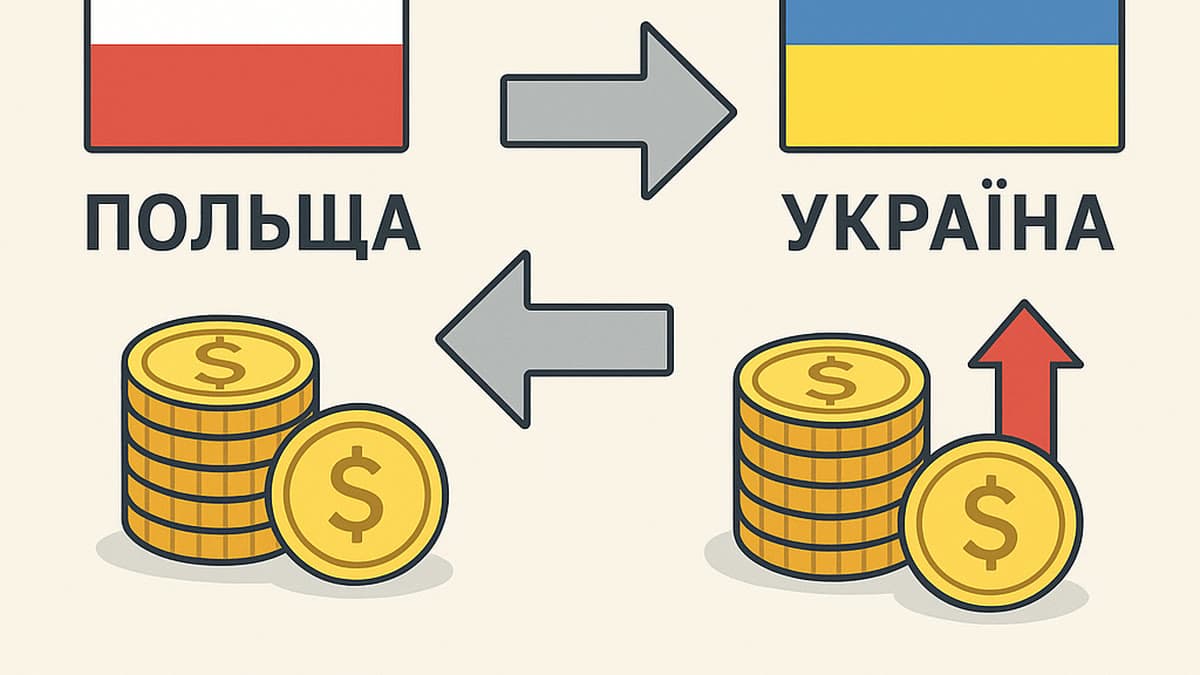
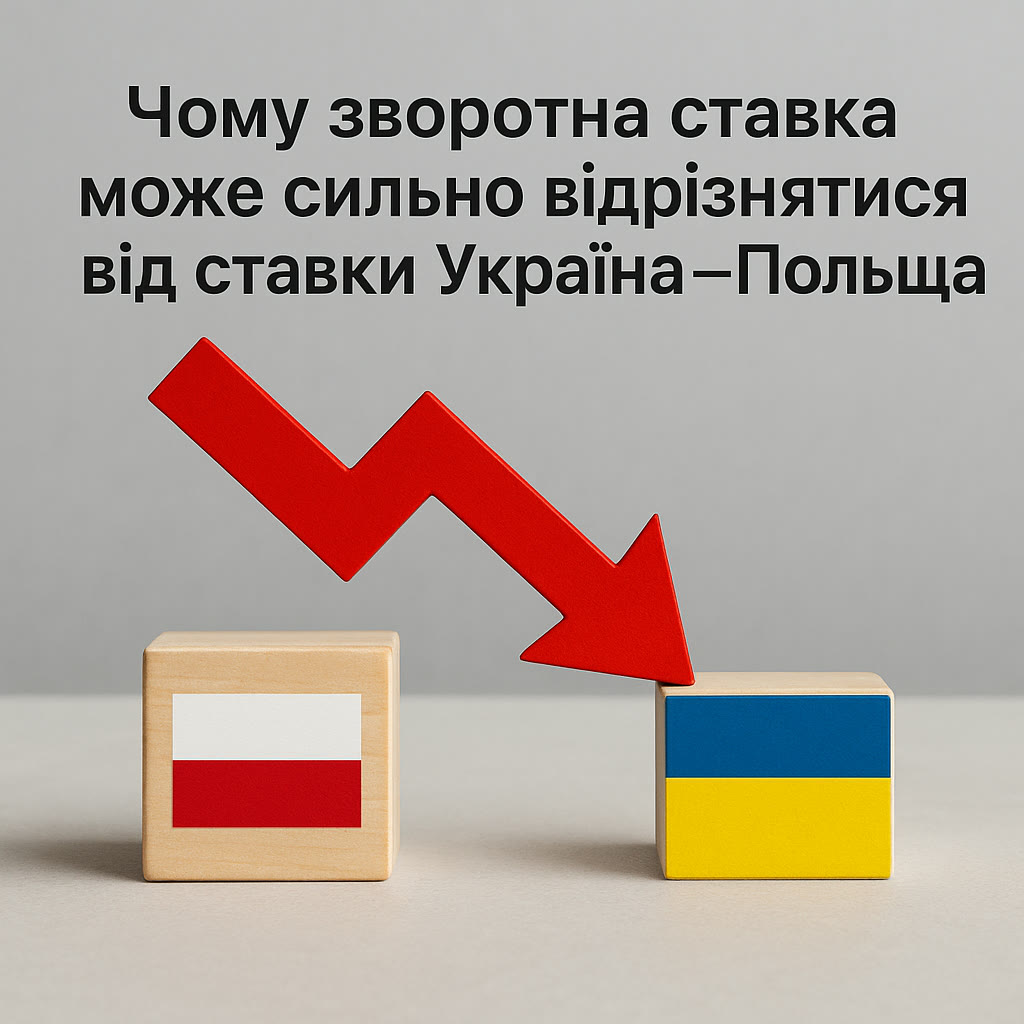
Poland — Ukraine and Ukraine — Poland: why direction changes the rate
Short answer: the rate on the Poland — Ukraine route can differ noticeably from the rate on the Ukraine — Poland route, even for the same service. The reason isn't just the exchange rate: price is shaped by demand in a specific direction, vehicle loading, availability of return trips, fees, taxes, operating costs and risks. Below is an explanation of what a return rate is and why it isn't always a mirror image of the first one.
| Direction | What can shape the price |
|---|---|
| Poland — Ukraine | Demand for inbound cargo, number of available carriers, load factor, customs and logistics costs |
| Ukraine — Poland | Demand for outbound cargo, shortage of space or vehicles, export conditions, return costs and detention risk |
This material will be useful to anyone comparing rates for transfers, delivery, transport services or international freight. It doesn't replace an individual calculation: the final amount depends on the date, the type of cargo or payment, the payment method and the specific provider.
What a return rate means
A return rate is the price of the same or a similar operation, but in the opposite direction. For example, if a company publishes a rate for transport from Poland to Ukraine, the Ukraine — Poland rate is considered the return rate. That doesn't mean, however, that it should be obtained by simply "flipping" the original price.
The situation is even clearer with currency operations. The buy rate and the sell rate differ because of the spread — the difference that covers the costs and risks of the financial intermediary. If, say, 1 Polish zloty is sold for 10 UAH, that doesn't mean you can necessarily buy exactly 1 zloty for 10 UAH. Between the two figures there can be a fee and a different conversion rate.
In transport, "reversibility" is also practical rather than mathematical. A vehicle that delivered cargo to Poland may return empty or wait for a new order. That idle time is built into the calculation, which is why the rate in the opposite direction can be higher.
Why direction changes the price
Why can the return rate differ so sharply? First of all, because of uneven demand. If a lot of passengers or cargo travel in one direction, carriers can raise the rate. If, on the other hand, the opposite direction lacks orders, the price sometimes drops to offset the empty run.
- Load factor: a full trip spreads the cost across more customers.
- Empty running: returning without cargo or passengers raises the cost of the next order.
- Customs procedures: documents, inspection and time at the border can differ depending on direction.
- Fees and taxes: for payments and transfers, these depend on the bank, the currency and the crediting method.
That's why you need to compare not just the figure but also the conditions: what's included in the rate, whether fees, insurance, border waiting time, address delivery and possible surcharges are included. Sometimes a lower rate turns out to be only the base one, and the final amount "at the till" has its own small surprise.
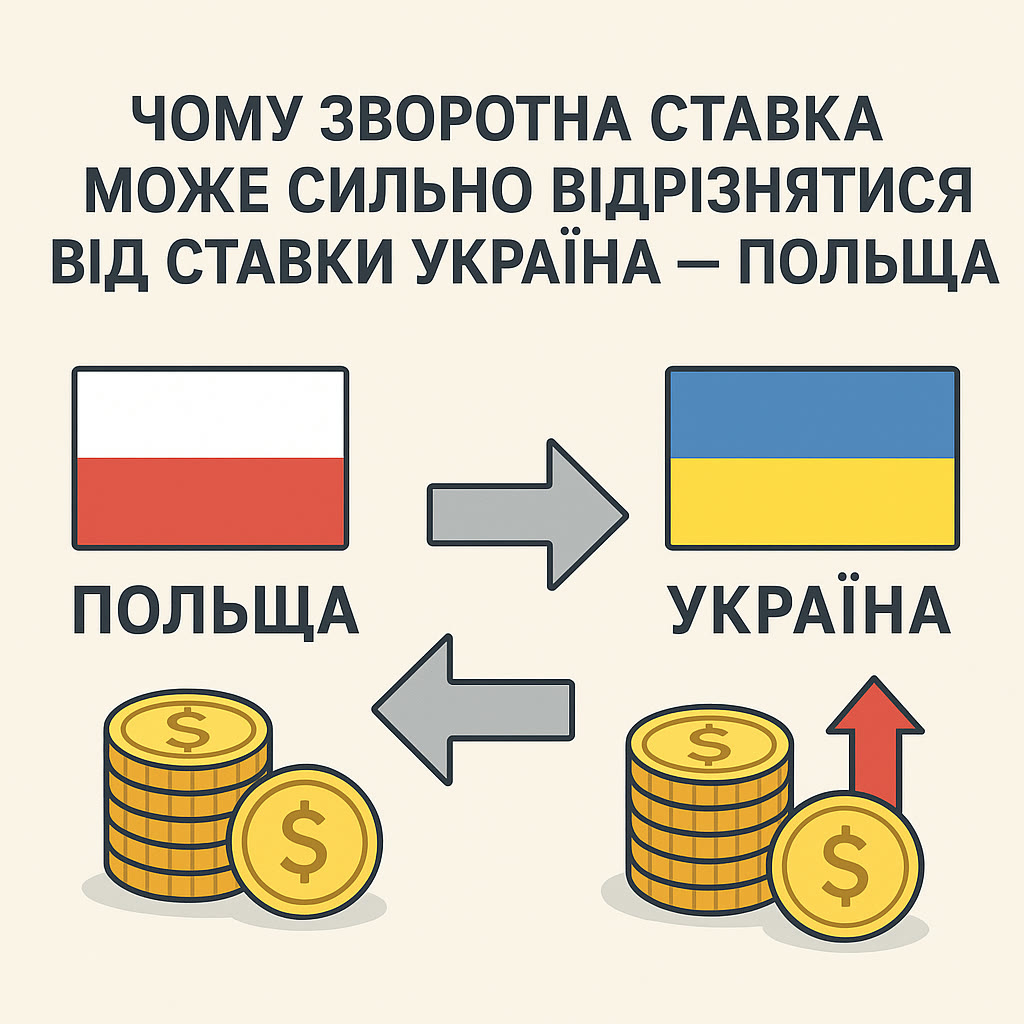
Main reasons for the difference: demand, supply and flow imbalance
Demand in the two directions is rarely the same
The market between Poland and Ukraine doesn't work like a perfect two-way arrow, where the same number of people, goods, money and vehicles move in both directions. Flows change depending on the season, holidays, the school year, labour migration, trade volumes and the situation at the border. Because of this, a carrier, a bank or a logistics operator prices each direction separately.
For example, ahead of the holidays demand for trips from Poland to Ukraine can rise sharply. Then seats in buses and minibuses sell out faster, and the rate goes up. After the holidays end, the situation can change: more people will be returning to Poland, and that direction becomes the more expensive or scarcer one.
A similar principle applies in freight transport. If Polish goods regularly head to Ukraine, it's easier for a carrier to fill a vehicle in that direction. But the return order may be smaller in volume, require a different type of vehicle, or be absent altogether. This is exactly where the answer to why the return rate can differ so sharply comes from.
"The same route on a map doesn't mean the same trip economics."
Supply, competition and flow imbalance
Price depends not only on the number of customers but also on how many providers can serve them. If many carriers work the Ukraine — Poland direction, they compete for orders, which can hold the rate down. On the Poland — Ukraine direction, fewer vehicles may be available on a given day, especially if part of the fleet is held up at the border or already tied up with long-term contracts.
The main factors include:
- seasonality: summer holidays, the school season and festive periods change demand;
- flow structure: passengers, parcels and cargo have different margins and transport requirements;
- waiting time: border delays reduce the number of trips a vehicle can make per month;
- availability of a return order: a guaranteed load makes the route cheaper, while finding a customer "on the spot" adds risk;
- competition: on a popular direction the rate can be lower even with significant demand.
So an empty return trip is almost never free for the market. The vehicle still burns fuel, wears down, needs the driver paid, insured, serviced, and takes up time. If a carrier returns without passengers or cargo, those costs don't disappear — they have to be factored into the price of the previous trip, the future order, or the overall rate.
"An empty run isn't the absence of cost — it's cost without revenue."
For the customer this means: you need to compare not just the one-way rate but the whole route model. It's worth checking whether fuel, border waiting time, address delivery, fees and possible surcharges for non-standard cargo are included. Only this way can you tell whether the return rate is really inflated, or whether it's simply offsetting a different balance of supply and demand.
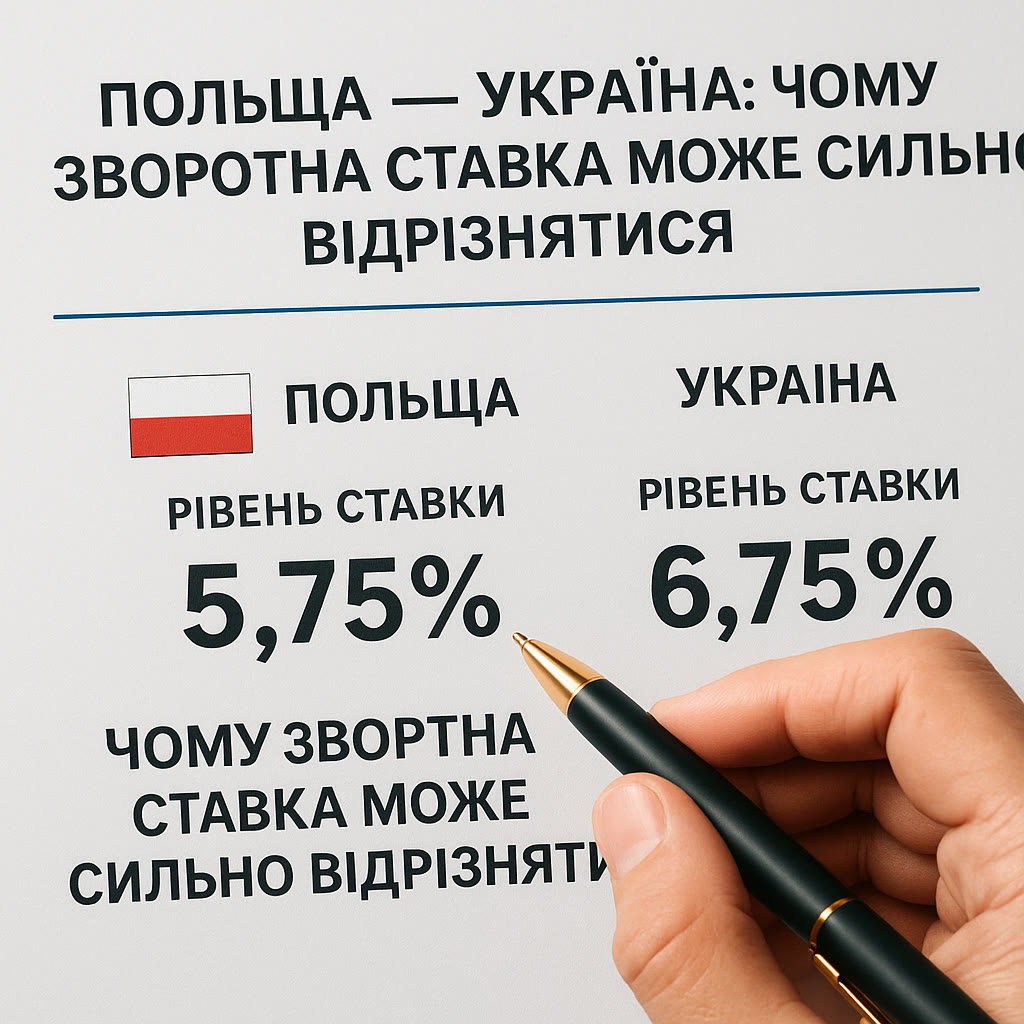
Fees, exchange rates and local rules: what the final amount is made of
Exchange rate and fees: why one sum doesn't equal another
The final cost of an operation between Poland and Ukraine is almost never limited to the figure a customer sees in an advertisement. On top of the base rate there can be costs for conversion, bank transfer, payment processing, crediting of funds and account servicing. If the service is paid in zloty and the recipient expects UAH, the outcome will depend on the rate exactly at the moment the operation is carried out.
It's important to distinguish between the official, interbank and actual rate for the customer. A financial institution or payment service can build in its own margin, as well as charge a separate fixed or percentage fee. Because of this, a rate that looks favourable at first glance doesn't always guarantee the lowest total cost once the payment is complete.
The direction of the operation matters too. A transfer from Poland to Ukraine may involve converting zloty into UAH, while the return payment may involve UAH into zloty, or first UAH into euros and then into zloty. Double conversion creates an additional difference. That's exactly why the return rate can differ so sharply — the question isn't just the rate, but the route the money takes inside the payment system.
"What should be compared isn't the rate on the screen, but the amount the sender pays and the amount the recipient receives."
Taxes, customs procedures and route costs
In transport, the base rate may or may not include fuel, toll roads, insurance, border waiting time, paperwork and delivery to a specific address. Polish and Ukrainian rules can define requirements for the goods, their documents, value and proof of origin differently. So the same cargo in opposite directions won't necessarily have the same clearance costs.
| Component | How it can affect the return rate |
|---|---|
| Fuel and toll roads | Change the cost of the route depending on length, detours and prices in a specific country |
| Customs documents | Add broker fees, document preparation or inspection time |
| Taxes | Depend on the type of service, the goods, the parties' status and taxation rules |
| Bank fee | Can be fixed, percentage-based, or charged to both parties of the payment |
Taxes shouldn't be added to every operation automatically: whether they apply depends on the type of service, the contract, the status of the seller or carrier, and the specific settlement scheme. Likewise, customs charges may relate not to the transport itself but to the goods crossing the border.
To correctly compare the Poland — Ukraine and Ukraine — Poland rates, you need to ask for an itemised calculation. It should state the currency, the rate, all fees, taxes, customs clearance, fuel surcharges and refund conditions. Otherwise, two seemingly similar offers can turn out to be quite different in the final result.
A practical example: how to compare rates without overpaying
Start from identical comparison conditions
To understand which offer is really more favourable, you first need to bring both rates to the same format. You can't compare an address-to-address transport rate with a price for delivery between terminals only. Likewise, it's incorrect to compare a sum in zloty with a sum in UAH without checking the exchange rate and the conversion fee.
Before placing an order, fix identical parameters: direction, date, type of service, weight or volume, delivery method and desired timeframe. For payments, add the sending and receiving currency; for transport, add dimensions, number of items and the nature of the cargo. Otherwise the price difference may be explained not by direction but by different order conditions.
The practical checklist can be reduced to a few checks:
- confirm in which currency the rate is stated and at what rate the conversion is done;
- check whether fees, taxes, insurance, fuel, customs clearance and address delivery are included;
- compare turnaround times and the conditions for express delivery;
- find out the rules for cancellation, date changes and refunds;
- check weight, volume and item-count limits and possible overage surcharges;
- ask for the final amount to be stated in writing, not just the base rate in an advertisement.
"The best rate isn't the smallest figure — it's the smallest final amount under identical conditions."
A sample calculation
Imagine that shipping a parcel from Poland to Ukraine costs 40 zloty. The rate already includes delivery to a pickup point, but not the 10-zloty address delivery. The payment system's fee is 2%, and exceeding the standard weight carries a 15-zloty surcharge. If the customer orders address delivery and has a heavier parcel, the actual amount will be not 40 but 65.80 zloty: 40 + 10 + 15, after which the 2% fee is added.
In the return direction, the base rate might be, say, 52 zloty. At first glance the difference looks large, but it may already include address delivery, a different weight limit or insurance. In that case, the more expensive offer isn't necessarily the less favourable one. This is exactly how it becomes clear why the return rate can differ so sharply: the components of the rate and the route risks can be different.
Check the timeframes separately too. Cheaper delivery in 5–7 days isn't a direct equivalent of express delivery in 1–2 days. For transfers, it's important to check the crediting time, the possibility of cancellation and the rate at the moment of debiting, since it can change before the funds are received.
Before paying, ask for a short estimate with the base rate, all surcharges and the final amount. If the operator can't clearly explain what each payment is charged for, that's a reason to compare another offer.
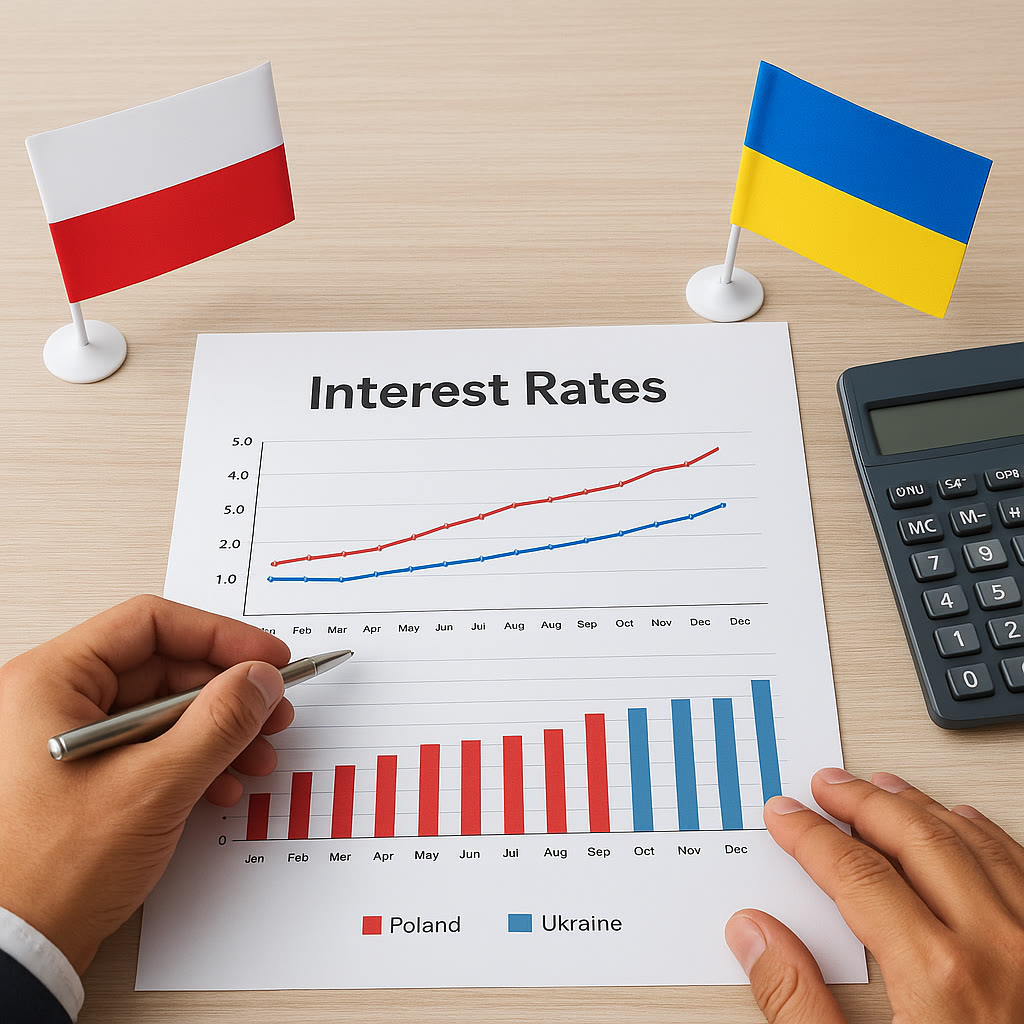
FAQ: the most common questions about Poland — Ukraine rates
Is the difference between the Poland — Ukraine and Ukraine — Poland rates legal?
Yes, the difference itself between rates on opposite directions is generally normal. Price is shaped by demand, vehicle availability, load factor, fuel costs, border waiting time, fees and the terms of the specific service. The same route in kilometres doesn't mean the same cost of the trip or the transfer.
Why can the return rate differ so sharply? For example, the Poland — Ukraine direction may have more orders, fewer free vehicles, or higher costs for returning the vehicle. For payments, the difference can be created by the conversion rate, the bank's fee and the method of crediting the funds.
The problem arises not from the fact of the difference itself, but when the provider hides surcharges, misleads the customer, or doesn't explain the terms of the calculation. Before paying, it's worth asking for the full rate, information about fees, timeframes and cancellation rules. For customs and tax questions, the type of goods, the parties' status and the current rules matter, so complex cases are best clarified with a specialist.
When can the rates become equal, and who pays the fees?
When can the rate be the same in both directions? This happens if demand and supply are balanced, the vehicle is loaded in both directions, and the operator uses a single rate. The same price is also possible for standardised services where costs barely depend on direction: for example, for a certain type of transfer or fixed delivery between points.
However, even with the same base rate, the final amount can differ because of the exchange rate, taxes or the payment method. So you need to compare not the advertised figure but the full cost after all charges.
Who pays the fee? This is determined by the contract or the service's rules. The fee can be paid by the sender, the recipient, or both parties. Sometimes the sender sees one amount, while the recipient gets less because of a crediting fee. For an international payment, there can also be intermediary bank costs, which aren't always disclosed at the first stage of ordering.
How does the exchange rate change the price, and how do you get an exact calculation?
Does the rate change because of the exchange rate? Yes, if the rate is pegged to the zloty, the hryvnia or the euro. The outcome depends on the rate at the moment of debiting or crediting, and sometimes on the rate set by the specific service. An additional difference arises from the spread and the conversion fee.
How do you get the exact amount? Before placing an order, provide full details: direction, date, currency, weight or volume, address, desired timeframe and payment method. Ask separately for the base rate, fees, taxes, insurance, customs costs and possible surcharges to be listed. The most reliable option is to get a written calculation with the final amount and its validity period.
Conclusion: the return rate isn't a mistake — it's the result of different costs and market conditions
The return rate on the Poland — Ukraine route isn't automatically a mistake or an unjustified markup. It's shaped by demand, vehicle availability, load factor, empty running, border time, fuel prices and local operating costs. For transfers, the exchange rate, the spread and bank or payment-service fees are added on top of that.
That's exactly why the return rate can differ so sharply from the Ukraine — Poland rate: it comes down to the different economics of the two directions. Even the same distance or the same service doesn't guarantee the same final price. What matters is the weight and volume of the cargo, the timeframe, the delivery method, customs procedures, insurance, cancellation terms and who exactly pays the additional charges.
Ukrainian readers should compare not the advertised figure but the full cost structure. Before placing an order, you need to clarify the settlement currency, the rate, all fees, taxes, fuel and customs surcharges, the turnaround time and the final amount payable. For transfers, it's also important to find out how much the recipient actually gets; for transport, whether delivery to the required address is included.
The most reliable approach is to ask for a written, itemised calculation under identical conditions and compare several offers. Then a higher return rate may turn out to be justified, and a suspiciously low one may be hiding future surcharges. Price matters, but only the final result shows the real value.

Related posts


Do you have cargo or transport?
Post your offer — and find the right partner today.