Potato, Vegetable and Fruit Season Has Begun: What Transport Is Used to Move the Harvest
Potato, Vegetable and Fruit Season Has Begun: How Harvest Transport Is Organised
Seasonal Demand for Agricultural Freight Transport
The potato, vegetable and fruit season has begun — a period when Ukrainian farmers harvest, sort and ship their crops to markets, processing plants, warehouses and export terminals, often all at once. The exact timing depends on the region, the weather and the type of produce: early vegetables reach the market first, while potatoes, apples, cabbage and carrots can be transported over several months. The peak for vegetables and fruit specifically fell more on August: food products, vegetables and fruit then made up about 23% of cargo listings on SAMO-TRANS, versus roughly 4% for 1–17 September 2026. In other words, the wave of early produce has already passed, and September is now carried by potatoes and late-season vegetables — cabbage, carrots, beets, onions (more on these seasonal shifts: what cargo moves around Ukraine in autumn).
This is when demand grows both for short runs from the field to the sorting line and for long-haul deliveries to retail chains and logistics centres. A key feature of agricultural freight is uneven demand: once the harvest is in, a farmer may suddenly need several trucks at once, and even a delay of a few hours can sometimes affect the quality of the produce.
What Determines the Choice of Body for the Harvest
The choice of vehicle depends on what exactly is being carried, over what distance, and under what conditions the cargo will be kept. For potatoes, onions, beets and other relatively hardy vegetables, flatbed trucks, tippers or curtain-side trucks are often used. They allow produce to be loaded quickly in bulk or in containers, but need protection from rain, sun and mechanical damage.
For berries, herbs, peaches, grapes and other sensitive fruit, reefers are used more often. These vehicles maintain a set temperature en route, which slows spoilage and helps preserve the produce's marketable appearance. At the same time, refrigerated transport does not replace pre-cooling: if produce is loaded overheated or damaged, the refrigeration unit will not undo the consequences.
- Box-body and curtain-side trucks — for potatoes, cabbage, carrots, onions and packaged produce.
- Reefers — for berries, herbs, fruit and other temperature-sensitive goods.
- Small vans — for fast delivery of small batches to shops, restaurants and markets.
- Container and rail transport — for large export consignments over long distances; within the country the harvest almost always travels by road, since access to the field and door-to-door delivery are required.
Why the Right Logistics Affects How Well the Harvest Keeps
During transport, it's not just the type of vehicle that matters, but also the packaging, ventilation, the way the load is stacked, and the length of the route. Vegetables and fruit must not be over-packed: pressure from the lower layers causes cracks and bruises. Crates, pallets or special ventilated containers are used for delicate produce.
Before dispatch, the carrier and the cargo owner need to agree on the temperature regime, loading time, stopping points and unloading conditions. For produce that loses quality quickly, direct runs without unnecessary transshipment are preferred. It's precisely this kind of organisation that helps reduce losses, keep the harvest fresh, and deliver it to the buyer in proper condition.
What Transport Is Most Often Used to Move Potatoes and Vegetables
Flatbed Trucks, Tippers and Curtain-Siders for Field Transport
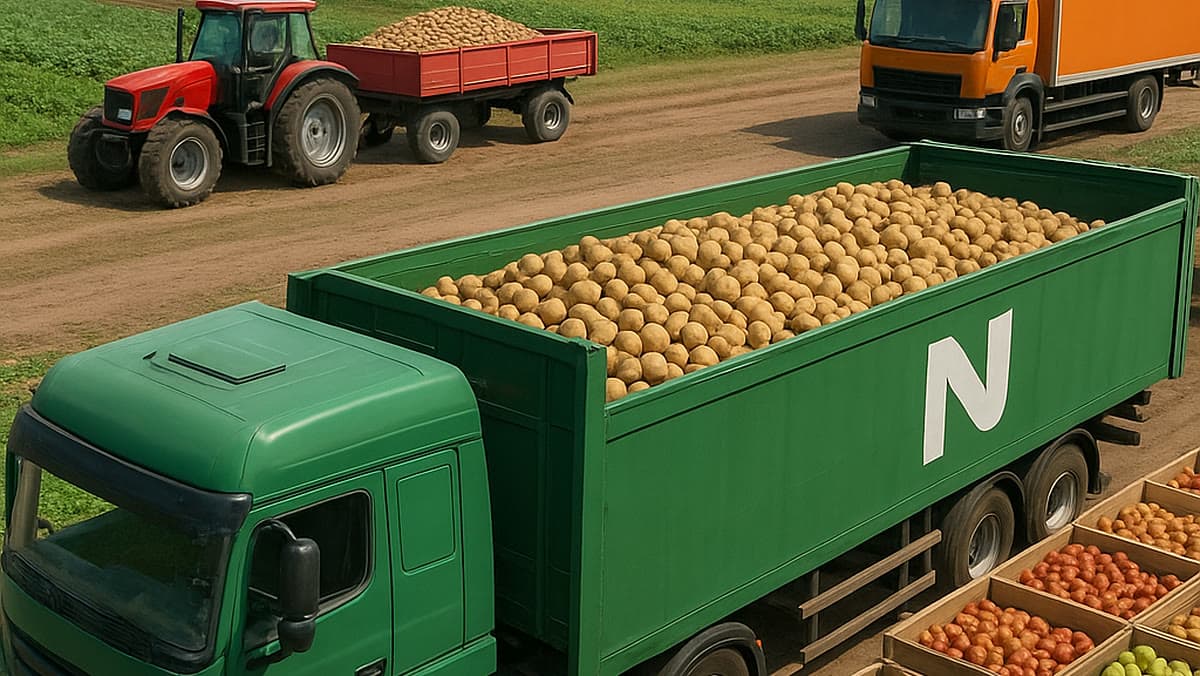
Once the potato and vegetable season begins, the heaviest load falls on vehicles that can quickly pick up the harvest from the field and deliver it to a sorting point, vegetable store or wholesale market. Flatbed trucks, curtain-side trucks, tippers and special trailers are the ones most often used for this.
Flatbed vehicles are suitable for carrying potatoes, onions, carrots, beets and cabbage in sacks, crates or containers. The curtain-side cover protects produce from rain, dust and direct sunlight, but doesn't create a stable temperature regime (for how curtain-side transport generally works, see the linked article). That's why this kind of transport is better suited to short and medium routes, especially when the vegetables don't need cooling.
Tippers are convenient for large consignments of sugar beet, pumpkins, industrial and processing-grade potatoes, and other relatively hardy crops. They cut loading and unloading time, but have an important drawback: produce can be bruised when it falls or shifts in bulk. To reduce losses, the drop height during unloading is controlled and the body is kept clear of sharp or rusty parts. Marketable potatoes bound for a shop shelf, by contrast, are carried in packaging — sacks, crates or containers.
For field logistics, what matters is not only a vehicle's payload capacity, but also how gently it handles the produce.
Grain trucks are designed primarily for bulk crops — grain, maize, sunflower and seed. For potatoes or vegetables they're sometimes used only if the body is suitable, has protective covering, and the transport conditions have been agreed. A standard grain semi-trailer isn't always suitable for delicate produce, since pouring it out can cause impacts, crushing and skin damage.
Reefers and Specialised Transport
Reefers are chosen for vegetables and fruit that lose quality quickly: herbs, berries, early cabbage, cucumbers, tomatoes, grapes, peaches and other sensitive goods. The refrigeration unit maintains a set temperature throughout the route, but it doesn't replace pre-cooling. If warm produce is packed tightly into the body, temperature swings and condensation can build up inside. At the same time, this kind of body is far from needed on every run: in September 2026, a reefer was specified in roughly 8% of cargo listings on SAMO-TRANS, while a curtain-sider was accepted in ≈73%, and a grain truck or tipper was needed in ≈18% (for how refrigerated runs are organised, see the overview of reefer transport).
Specialised vegetable trucks have ventilation openings, convenient tie-down systems, tail lifts or equipment for handling pallets. They're suitable for packaged potatoes, crates of vegetables, and produce that needs to be delivered without transshipment. Retail chains and processing plants also use insulated box vans, container platforms and vehicles with multiple temperature zones.
| Type of Transport | Suitable For | Main Advantage |
|---|---|---|
| Curtain-side truck | Potatoes, onions, carrots, cabbage in packaging | Weather protection and versatility |
| Tipper | Hardy root vegetables and large consignments | Fast loading and unloading |
| Reefer | Berries, herbs, fruit, early vegetables | Temperature control |
| Vegetable truck | Packaged produce and pallets | Less mechanical damage |
The final choice depends on distance, delivery deadline, packaging method and buyer requirements. For a short run from the field with hardy root vegetables, a tipper may be enough, while for long-haul delivery of perishable vegetables a reefer is the safer choice.
The right choice of transport helps preserve the harvest even before it reaches the warehouse or the shop shelf.
How Fruit Is Transported: Temperature Regime, Packaging and Protection from Damage
Temperature and Microclimate During Fruit Transport
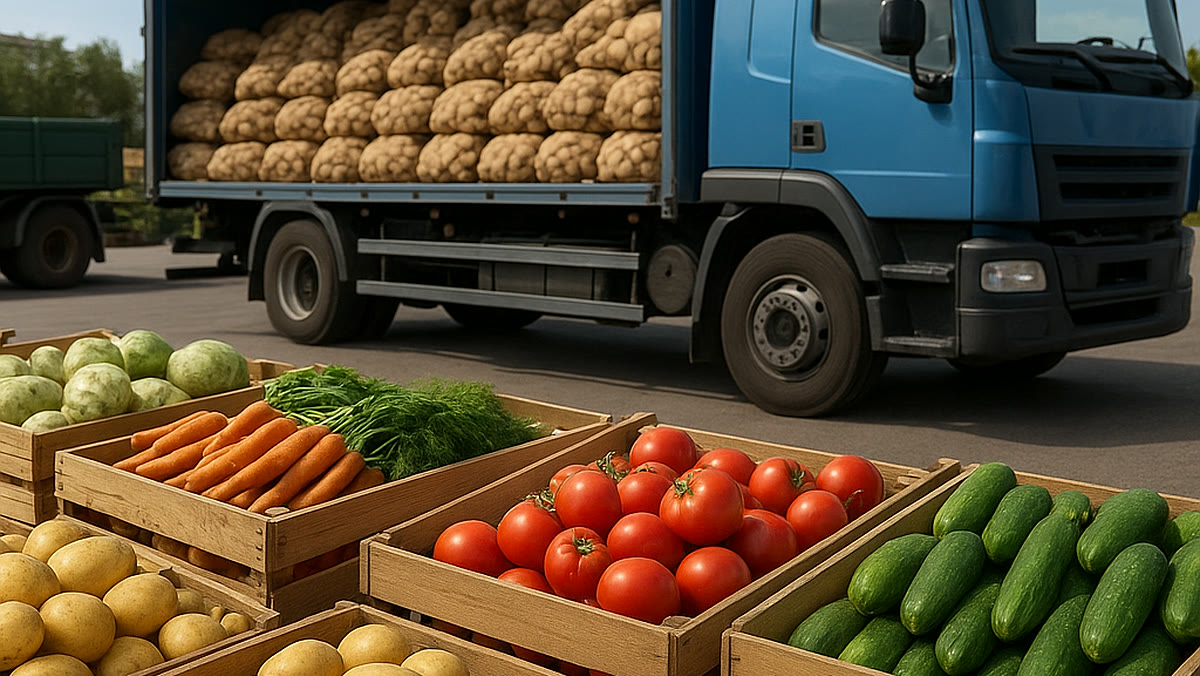
Fruit is significantly more sensitive to delivery conditions than most root vegetables. Once the potato, vegetable and fruit season begins, carriers work simultaneously with produce that can keep for weeks and with late-season berries that lose their marketable appearance within a single day. That's why the permissible temperature, humidity level, route duration and loading method are determined in advance for each consignment.
Apples are usually carried in refrigerated transport at a temperature close to zero, though the exact regime depends on the variety, ripeness and length of delivery. Grapes often need moderate cooling, which slows ripening and helps the berries keep their firmness. Strawberries, raspberries, blueberries and other delicate berries need fast pre-cooling and a consistently low temperature without sharp fluctuations.
A reefer should not operate on a "the colder, the better" principle. Excessive cooling can damage certain types of fruit, and freezing the cells will cause a loss of texture once thawed. It's also important not to block the air channels with boxes: the cold needs to circulate evenly between the rows of produce.
Packaging, Ventilation and Protection from Impact
Packaging is chosen based on the weight, shape and firmness of the fruit. Apples and pears are carried in plastic or cardboard crates with dividers, trays or soft padding. Grapes are packed in shallow containers so the bunches aren't crushed by the layers above. Small ventilated containers are used for berries, allowing heat and moisture to escape.
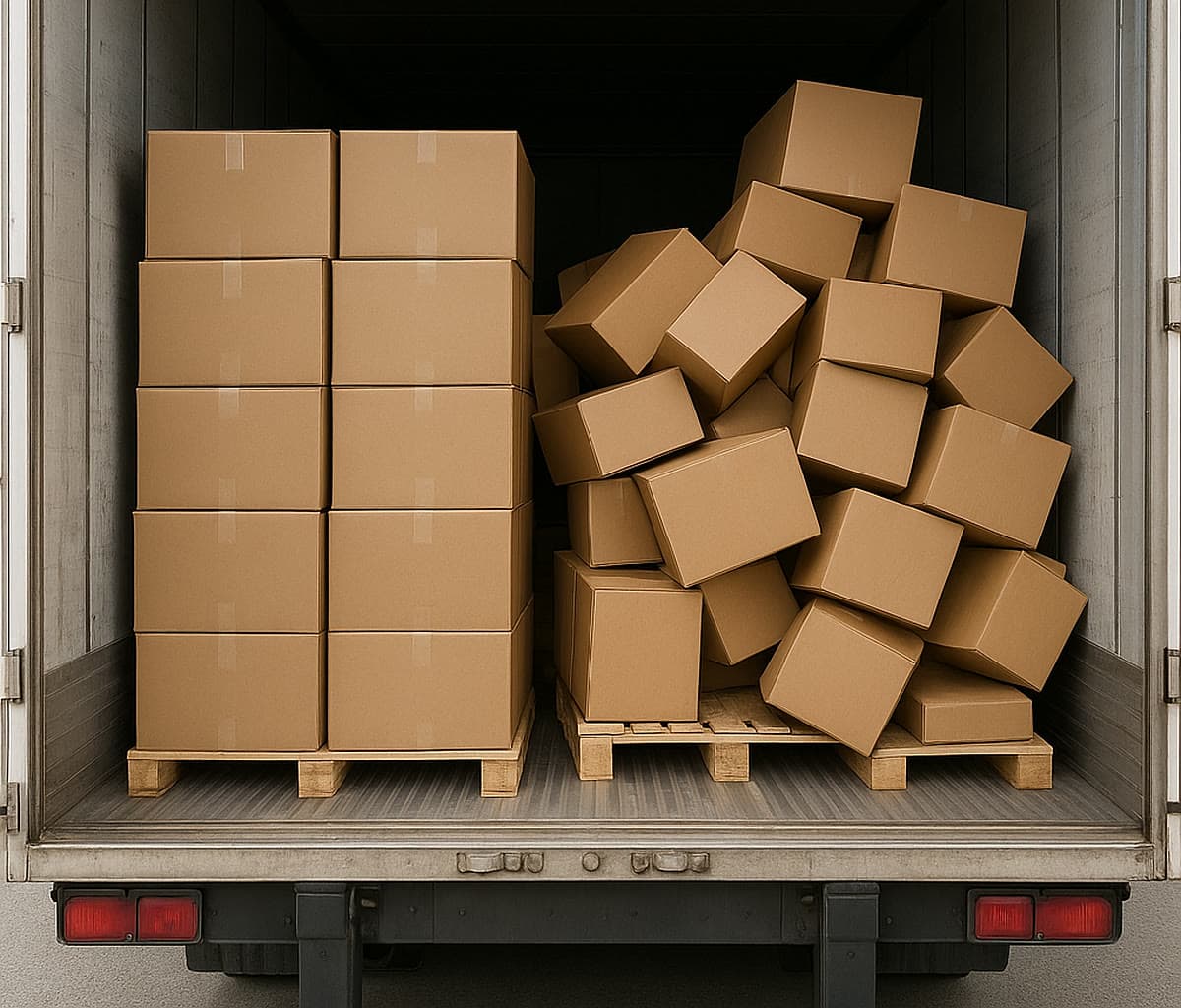
Most damage occurs not while the vehicle is moving, but during loading, transshipment and sudden braking. That's why packaging is secured to pallets, prevented from sliding, and fragile consignments are placed away from heavy cargo. Damaged or overripe fruit should ideally be sorted out before dispatch: it spoils faster and can speed up ripening in neighbouring produce.
- use clean, dry and sturdy packaging with ventilation openings;
- don't fill crates so full that the fruit is deformed under the lid;
- reduce the number of transshipments and don't mix goods with incompatible temperature regimes;
- pre-cool perishable produce before loading.
Delivery Speed and Route Control
For berries and ripe fruit, a direct run from the farm to the shop, sorting centre or processing plant is best. Every extra stop increases the risk of a broken temperature regime, mechanical damage and delayed unloading.
During long-haul delivery, the temperature inside the body, the condition of the packaging and the time the doors are opened are all monitored. In hot weather, it's best to load the vehicle in the morning or evening, when the ambient air temperature is lower. This approach helps preserve the freshness, marketable appearance and food quality of the fruit right up to the point of sale.
From Field to Shop: How Transport Is Chosen for the Harvest
Distance, Volume and Cargo Characteristics
Once the potato, vegetable and fruit season begins, choosing transport starts not with the vehicle make, but with the characteristics of the specific consignment. First, the route is determined: a short trip from the field to a warehouse has one set of requirements, while delivery to a retail chain in another region has quite different ones. The longer the route, the more important a stable temperature regime, reliable securing of the packaging, and the ability to monitor the cargo's condition become.
The volume and weight of the produce are also calculated. For a small consignment of early vegetables or berries, a van or a light-duty reefer may be enough. Large volumes of potatoes, onions, carrots or cabbage are carried by trucks, tippers, curtain-side vehicles or container platforms. It's important not to focus solely on maximum payload capacity: over-packing produce increases the risk of deformation and spoilage.
The type of product directly determines the requirements for the body. Dry, hardy vegetables can travel in a well-ventilated box body, while berries, herbs, grapes and ripe fruit need a reefer. For packaged harvest, a tail lift, pallet loading and the ability to secure the boxes safely all matter.
Road Conditions and Technical Requirements for the Vehicle
Ukrainian routes can include field roads, stretches of uneven surface, dirt access roads and city streets with restrictions for trucks. That's why, when choosing a carrier, it's worth confirming whether the vehicle can safely reach the farm, warehouse or shop. For difficult access points, it's sometimes better to order a more manoeuvrable vehicle with a smaller capacity, even if that means several runs.
Before loading, the cleanliness of the body and the condition of the doors, floor, curtain cover and tie-downs are checked. For refrigerated cargo, the operation of the refrigeration equipment and the presence of a thermometer or temperature-logging system are additionally checked. If produce is carried in packaging, it's important to make sure the crates have no cracks, sharp edges or traces of previous contamination.
- agree on the exact loading and unloading address;
- determine the permissible temperature and route duration;
- check the payload capacity and internal dimensions of the body;
- clarify who is responsible for packaging, securing and monitoring during the run;
- allow spare time for weighing, paperwork and unloading.
Seasonality and Carrier Reliability
In the period when the potato season and the mass harvest begin, demand for freight transport spikes in a specific region — even if, in overall listing statistics, the share of vegetables and fruit in September is already small. Because of this, it's better to look for a vehicle in advance, especially for regular deliveries to shops or wholesale depots: available transport for a specific direction and date is found on the freight and transport exchange, where shippers post listings and carriers post their free vehicles. The parties agree on the rate between themselves: the platform doesn't set it and doesn't take on the cargo itself. For perishable produce, what matters isn't just an affordable price, but also keeping to schedule: a delay can cost more than a pricier but more reliable run.
When choosing a carrier, it's worth confirming their experience with agricultural freight, the terms of liability for damage, the availability of backup transport, and the procedure in case of a breakdown. Clearly agreed terms help reduce losses and deliver the harvest from field to shop without unnecessary transshipment or downtime.
FAQ: Answers to Common Questions About Harvest Transport
Is Special Transport Needed for Potatoes and Vegetables?
Once the potato season begins, a reefer isn't necessarily required for most root vegetables. Potatoes, carrots, beets, onions and cabbage are often carried in curtain-side trucks, flatbed vehicles, tippers or special vegetable trucks. What matters is that the body is clean, dry, free of sharp parts, and protects the produce from precipitation and direct sun.
How should potatoes be transported correctly? Potatoes are delivered in sacks, crates, containers or in bulk. Packaging shouldn't be overfilled, and during loading and unloading, produce should be kept from falling from a great height. For long routes, ventilation, protection from overheating and the absence of sharp temperature swings are important. Damp or damaged potatoes should ideally be kept separate from dry, undamaged ones.
Is a reefer needed for vegetables? Not always. For hardy vegetables on short routes, a box body or curtain-sider may be enough. A reefer makes sense for herbs, early vegetables, cut produce and goods that lose quality quickly. The temperature regime is chosen based on the type of vegetable, its ripeness and the length of delivery, since excessive cooling can also harm certain crops.
How Are Fruit and Berries Transported Without Spoiling?
Is a reefer needed for fruit and berries? For most perishable fruit and berries, refrigerated transport is the most reliable option. Apples, pears and grapes are carried in sturdy ventilated crates, while raspberries, strawberries, blueberries and other delicate berries go in shallow packaging that prevents crushing. Before loading, it's best to pre-cool the produce, since a refrigeration unit can't instantly remove heat from a large consignment.
What most often causes spoilage? The main causes include delays en route, overheating, condensation, insufficient ventilation, over-packed containers and repeated transshipment. To reduce these risks, the carrier should secure the pallets, avoid blocking the air channels, and minimise how often the reefer doors are opened. For berries and ripe fruit, it's best to plan a direct route with unloading and no long wait.
What Documents Are Needed to Transport the Harvest?
What documents are issued for domestic delivery? Usually a consignment note (TTN) or its electronic form is required, along with cargo documents and details of the sender and recipient. The consignment note records the name of the produce, quantity, weight, route and the parties to the shipment. The exact list can depend on the type of goods, the terms of the contract and the buyer's requirements.
Are additional documents needed for export? International transport may require a phytosanitary certificate, documents of origin, customs declarations and confirmation of the produce's quality or safety. The exact list depends on the destination country and the cargo category, so it's best to check the requirements before loading. Arranging the documents in advance helps avoid delays at the border and hold-ups for perishable produce.
Conclusion: Why the Right Transport and Fast Logistics Matter for the Harvest
The potato, vegetable and fruit season has begun — and the quality of the harvest now depends not only on timely picking, but also on properly organised delivery. For potatoes, onions, carrots and other hardy vegetables, curtain-side trucks, tippers or vegetable trucks are often enough. Berries, herbs, grapes and ripe fruit, on the other hand, need reefers with stable temperature and ventilation.
When choosing transport, distance, consignment volume, packaging type, road conditions and route length are all taken into account. It's important that the body is clean, dry and in good working order, and that the produce is securely placed in crates, containers or on pallets. Pre-cooling perishable goods, protection from the sun, minimising transshipment and controlling temperature all help reduce mechanical damage, moisture loss and premature spoilage.
It's equally important to agree the loading and unloading schedule in advance, check the paperwork, and choose a carrier with experience in agricultural freight. Well-coordinated logistics makes it possible to deliver the harvest from field to warehouse, shop or processing plant faster. Ultimately, the right transport isn't just a way of moving produce — it's an essential condition for preserving its freshness, safety, marketable appearance and value.

Related posts


Do you have cargo or transport?
Post your offer — and find the right partner today.