What You Can't Transport Together in One Truck: Cargo Shippers Forget About
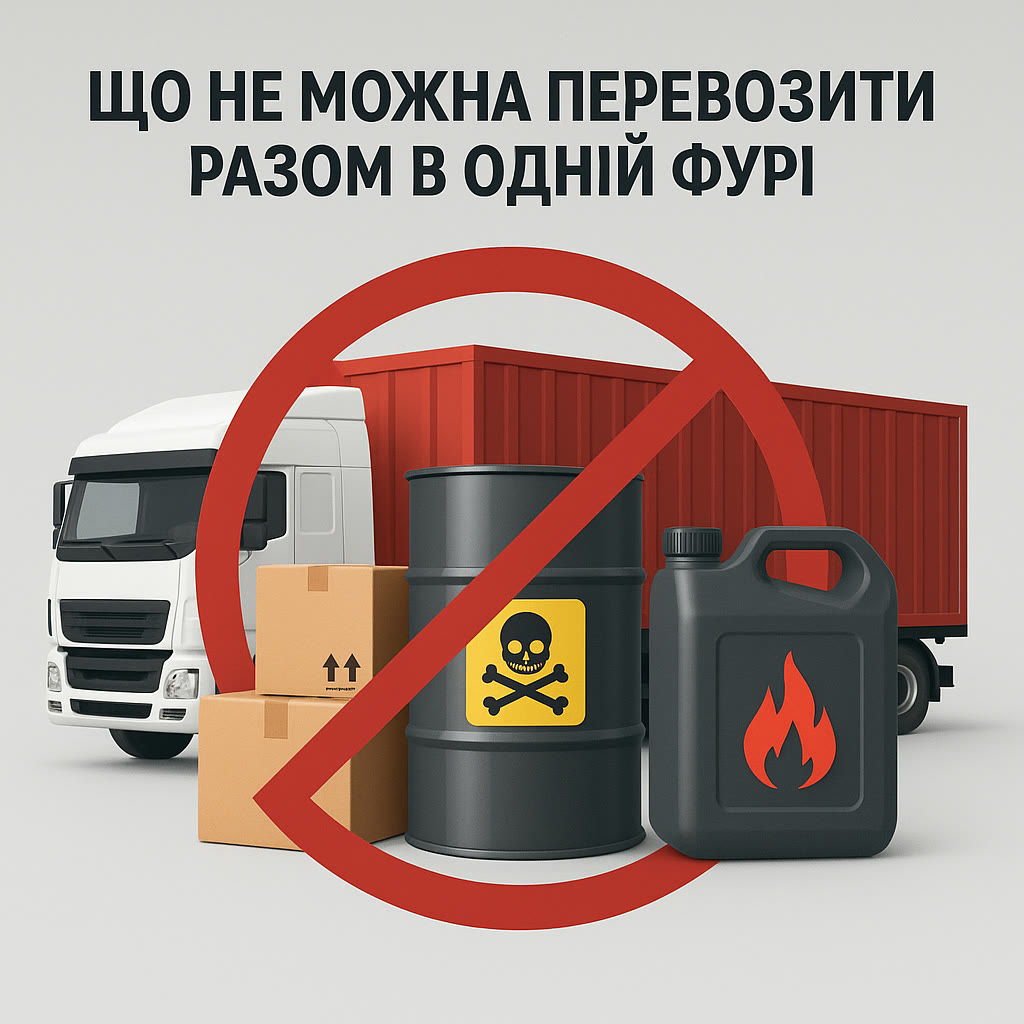
What Can't Be Transported Together in One Truck: The Main Rule of Cargo Compatibility
A shipper can carefully check the weight, dimensions and route, and still run into a problem after the truck has already been loaded. The reason is incompatible goods in the same body: food absorbs odours, moisture damages packaging, and hazardous substances create a risk of fire or leakage. So the question of what can't be transported together in one truck concerns not only chemical cargo, but also ordinary goods that can spoil one another.
Cargo Compatibility Is Not Just About Bans
Compatibility means that goods can be safely placed in the same vehicle, taking into account their physical, chemical and sanitary properties. Cargo must not react with one another, damage packaging, change quality or create hazardous conditions for the driver, warehouse staff or other participants in the transport process.
Before loading, it is not only the name of the product that is checked, but also its actual characteristics: composition, hazard class, temperature regime, ventilation requirements, sensitivity to moisture and the ability to give off odours. For dangerous goods, the data from the safety data sheet, the UN number, the ADR class and the rules for joint transport are essential.
What Factors Determine Whether Cargo Can Be Combined
| Factor | Why it matters |
|---|---|
| Temperature | Frozen, chilled and temperature-sensitive goods may require different regimes. Transport without temperature control leads to spoilage or loss of properties. |
| Humidity | Moisture damages cardboard, electronics, metal, paper and some food products. Cargo with different dryness requirements is best not mixed. |
| Odours | Perfumery, household chemicals, paints or scented materials can transfer their smell to food, textiles and other porous goods. |
| Hazard class | Flammable, toxic, oxidising and corrosive substances are subject to special rules for separation, marking and securing. |
| Packaging | Even goods that are compatible in properties should not be combined if the container leaks easily, tears, or cannot withstand stacking. |
The Main Rule for the Shipper
Compatibility cannot be assessed simply by whether the boxes fit in the body. Before planning the loading, the carrier must be given an accurate description of each batch, documents for hazardous substances, temperature requirements and information about the packaging.
If in doubt, cargo is separated with a partition, packed in separate containers, or a separate vehicle is ordered. Particular care should be taken when combining food and non-food goods, substances with a strong odour, liquids and cargo that can be damaged by pressure. It is precisely this preliminary check that helps to establish what can't be transported together in one truck before the trip is even arranged.
Incompatible Cargo by Hazard Class
Why Hazard Classes Cannot Be Ignored
When putting together a consolidated load, it is not enough to check whether all the pallets fit into one truck. If hazardous substances are among them, what becomes decisive is not volume but their chemical compatibility. If the packaging is damaged or the substances come into contact, the consequences can include ignition, explosion, release of toxic vapours, or corrosive damage to the body of the vehicle.
The rules for the international carriage of dangerous goods by road are set out in ADR. Each such cargo is assigned a UN number, a hazard class, a proper shipping name, and requirements for packaging, marking and documents. Identical-looking packaging does not mean an identical level of risk, so the decision on joint loading is made based on the documents, not on the verbal description of the goods.
"The most dangerous mistake is to assume that sealed packaging automatically makes any cargo compatible."
Which Combinations Create the Greatest Risk
Certain categories of substances require special attention when planning a trip:
- Flammable materials — solvents, petrol, some paints, aerosols and gases. They are not placed near heat sources, open flames, spark-generating cargo, or substances capable of intensifying combustion.
- Oxidisers — compounds that can sustain or accelerate combustion. Their proximity to combustible materials, oils, paper or organic substances can sharply increase the fire risk.
- Toxic and infectious substances — cargo that can harm people in the event of a leak. It is transported with additional requirements for tightness, marking and preventing contact with food products.
- Corrosive substances — acids, alkalis and other aggressive compounds. They can damage the metal, plastic or packaging of neighbouring cargo, and some acids are dangerous to combine with alkalis or metals.
- Explosive cargo — materials and articles sensitive to impact, heating, friction or ignition. The strictest rules apply to them regarding joint transport, route, vehicle and personnel training.
This does not mean that every cargo of one class is automatically forbidden to combine with any other. Subclasses, compatibility groups, special provisions and specific UN numbers all matter. For example, different flammable liquids may have different conditions for joint transport.
How to Check Compatibility Before Loading
Before the trip, the carrier or the responsible person checks the data in the transport documents against the ADR compatibility tables. The UN number, hazard class and subclass, packing group, type of packaging, quantity and separation conditions are all checked. If necessary, hazardous items are separated with partitions, secured separately, or a separate vehicle is assigned.
The shipper must report all hazardous properties of the goods in advance, rather than limiting the description to a general term like "chemicals" or "technical fluid". It is precisely complete data that helps establish what can't be transported together in one truck and prevent dangerous proximity.
Food, Chemicals and Other Cargo That Cannot Be Mixed
Food Products and Household Chemicals: Incompatible Neighbours
Food cargo should not be transported in the same body as laundry detergents, cleaning agents, disinfectants, bleaches, glass cleaning fluids or other household chemicals. Even sealed containers do not rule out leaks, packaging damage or the release of odours during jolting and temperature fluctuations.
The danger is not limited to direct contact. Cardboard, paper, fabric and some types of plastic are able to absorb vapours and odours. If a bottle of cleaning agent loses its seal, not only the neighbouring boxes but also the floor, pallets and other goods can become contaminated. After that, food products may lose their marketable appearance and become unfit for sale.
Mixed transport of food and non-food chemicals also creates sanitary risks. Even when the two batches are physically separated, the carrier must assess whether this is permitted by the requirements for the specific product, packaging and vehicle.
"For food cargo, the absence of a visible leak does not yet mean the absence of a contamination risk."
Odours, Fuel, Paints and Fertilisers
Tea, coffee, groats, flour, spices, confectionery, tobacco products, textiles and paper goods are especially sensitive to their surroundings. They should not be loaded together with paints, varnishes, solvents, adhesives, fuel, lubricants, rubber articles with an intense odour, or scented household products.
Fertilisers also require separate assessment. Some of them can be oxidising, hygroscopic or aggressive towards packaging. Their proximity to food is unacceptable due to the risk of dust contamination, spillage and chemical contact. Certain types of fertiliser must not be placed near fuel, oils, flammable materials or organic substances — this is already a matter of fire and chemical safety.
- food and cleaning agents;
- food products and fuel, lubricants or solvents;
- flour, groats or tea and paints, varnishes, adhesives;
- food raw materials and fertilisers;
- textiles or paper and substances with a strong odour.
These combinations may be directly prohibited for a specific type of product, or at the very least create a high risk of claims upon receipt.
How to Avoid Contamination During Loading
Before dispatch, the cleanliness and dryness of the vehicle body should be checked, along with the absence of residue from the previous cargo and foreign odours. Food products are transported only in packaging that matches their type, and potentially hazardous goods are not placed above or directly next to food.
If cargo has different sanitary requirements, a separate vehicle is the most reliable solution. A partition or additional film does not always remove the risk: it may not protect against vapours, dust or leaks. So, when determining what can't be transported together in one truck, it is necessary to consider not only the packaging but also the possible consequences of its damage.
Temperature Regime, Humidity and Odours: The Hidden Causes of Incompatibility
Why One Temperature Regime Doesn't Suit All Cargo
In a reefer, different batches are often combined to reduce delivery costs. However, a single set temperature does not mean that all goods are in safe conditions. Frozen meat, chilled dairy products, fresh vegetables and heat-sensitive beverages can have different requirements for temperature, air circulation and humidity.
If the regime is set for frozen cargo, chilled products may partially freeze, losing their texture or marketable appearance. If, on the other hand, the setting is based on chilled goods, the frozen produce risks partially thawing. Refreezing after partial thawing can adversely affect the quality and safety of the product.
Compatibility in terms of humidity must also be taken into account separately. Cargo that releases a lot of moisture can create condensation on the walls of the body and on the packaging. Cardboard becomes soggy, labels peel off, and damp surfaces contribute to the spoilage of some of the goods.
"The temperature regime in the truck must match not the average figure for all goods, but the most sensitive batch and the agreed conditions for its transport."
Odours and Humidity as a Hidden Risk
Some goods actively absorb foreign odours. These include tea, coffee, spices, chocolate, dairy products, fresh baked goods, textiles and paper. It is undesirable to transport smoked products, fish, onions, garlic, scented goods, household chemicals or products with an intense smell alongside them.
The problem can arise even without a leak. Odours travel with the air flows inside the reefer, and porous materials absorb them quickly. As a result, the goods formally remain intact but lose their consumer properties.
For dry cargo, moist products, insufficiently cooled goods and packaging with condensation are all hazardous. Placing bags of groats or boxes of biscuits under cargo that could leak is a typical mistake. In a curtain-side truck, the risk is increased by rain, snow, temperature fluctuations and insufficient tightness of the curtain.
Typical Mistakes When Loading Cargo Together
- setting the temperature "in the middle" between the requirements of different cargo;
- loading frozen and chilled goods without checking the permissible range;
- placing products with strong odours next to food or textiles;
- lack of control over humidity, condensation and the condition of packaging;
- blocking air channels with pallets or excessive compaction of the cargo;
- using a curtain-side truck for goods that need a stable temperature.
Before loading, the requirements of each batch must be recorded, the thermograph checked for proper operation, the body pre-cooled, and the air circulation channels left clear. If the regimes differ significantly, it is safer to use a separate vehicle. That is precisely why the question of what can't be transported together in one truck covers not only hazardous substances but also ordinary goods with different sensitivity to temperature, moisture and odours.
How to Properly Organise Joint Loading of a Truck
Start With Documents and Marking
Joint loading must be planned before the truck arrives, not at the ramp. The shipper must provide a complete description of each batch: the name of the product, quantity, type of packaging, temperature regime, humidity requirements and special handling conditions. For dangerous goods, the UN number, hazard class, packing group, ADR marking and transport documents are additionally checked.
You should not rely on general names such as "chemicals", "liquid" or "technical product". The same everyday name can conceal substances with different properties and different rules for joint transport. Compatibility is determined by the specific cargo data and the ADR tables, not just by the outward appearance of the packaging.
- Compare the description of each cargo item with the documents, labels and actual contents.
- Identify goods that cannot be placed next to each other due to hazard class, odour, temperature or sanitary requirements.
- Check whether the transport rules allow the joint placement of the remaining batches.
Assess the Packaging, Separation and Securing
Even goods that are compatible in their properties can become dangerous if their packaging is damaged or cannot withstand stacking. Before loading, the integrity of boxes, canisters, barrels, bags and pallets is checked, along with the absence of leaks, bulging, cracks and signs of moisture. Cargo with damaged packaging should not be accepted for a joint trip without an additional decision from the responsible person.
Incompatible batches are physically separated. Rigid partitions, separate pallets, protective trays or special containers can be used for this. Film alone does not protect against vapours, odours or leaks, so it cannot be considered a universal barrier.
Securing equipment is selected with regard to the weight, shape and fragility of the cargo. Straps, chocks and anti-roll devices must prevent shifting during braking and turns, without deforming the packaging. Heavy items are not placed above fragile ones, and liquids are not placed above goods that are easily spoiled by moisture.
"A correct loading plan protects not only the goods but also the people who work with them on the road and in the warehouse."
Draw Up a Plan and Monitor Conditions En Route
It is best to draw up the loading plan in advance: marking the location of each batch, the unloading sequence, the separation zones and the securing points. This is especially important for consolidated trips, when cargo is unloaded in different cities and some pallets cannot be moved or opened en route.
For reefers, the pre-cooling of the body, the operability of the refrigeration unit, the temperature settings and the operation of the data logger are checked. Pallets must not block the air channels. In a curtain-side truck, the dryness of the floor, the tightness of the curtain and protection from precipitation are additionally assessed.
- if there is no complete documentation or marking;
- if the temperature regimes are mutually incompatible;
- if the packaging is damaged or there are signs of leakage;
- if the required separation or reliable securing cannot be ensured.
In such cases, the trip should be halted until the conditions are clarified, or a separate vehicle should be chosen. This algorithm helps to determine in advance what can't be transported together in one truck and reduces the risk of cargo damage, fines and emergency situations.
FAQ: Answers to Common Questions About Cargo Compatibility
Can Different Goods Be Transported in One Truck?
Yes, different goods can be combined in one vehicle if they are compatible in terms of temperature regime, humidity, odours, sanitary requirements, packaging properties and hazard class. It is important that one cargo cannot contaminate, damage or alter the properties of another while in transit.
For example, dry non-food goods can usually be transported together provided they are reliably secured. Food, on the other hand, should not be placed next to household chemicals, fuel, paints, fertilisers or products with a strong smell. Frozen and chilled goods also cannot be combined without checking the permissible temperature ranges. So the answer to the question of what can't be transported together in one truck depends on the specific characteristics of the batches, not just their name.
Who Is Responsible for Checking Compatibility, and When Is an ADR Carrier Needed?
The shipper is responsible for the correct description of the cargo, its classification, packaging and the provision of accurate documents. If they conceal hazardous properties or describe the goods inaccurately, the carrier will not be able to plan the trip properly. The carrier, for its part, checks whether the cargo can be accepted, the technical condition of the truck, the securing, the marking and compliance with the agreed transport conditions.
For dangerous goods covered by ADR requirements, a carrier with the relevant approval, a properly equipped vehicle and trained personnel is needed. The driver must have the necessary training and documents, and the cargo must have proper packaging, marking and accompanying paperwork. Specific exemptions depend on the type of substance, the quantity and the transport conditions, so they must be checked against the current ADR provisions.
What to Do With Food or Damaged Packaging?
Food products are transported in a clean vehicle that meets the requirements for the specific product. Contact with chemicals, fuel, lubricants, fertilisers, waste and cargo with an intense odour must be excluded. If a temperature regime is required, it is agreed before the trip begins, not after loading.
If a torn box, a crack in a canister, leakage, bulging packaging or signs of contamination are found during acceptance, the cargo cannot simply be placed next to the other pallets. It is isolated, its condition is recorded with photographs and a note in the documents, and the shipper and carrier are notified. In the event of a hazardous substance leak, the container should not be touched without proper protection; action must be taken according to the emergency instructions, and responsible specialists must be involved.
If safe separation, repackaging or cleaning is not possible, the trip is cancelled until the problem is resolved. This is cheaper and safer than risking the entire batch, the vehicle and people's health.
Conclusion
Before dispatching a truck, it is not enough to check only the weight, volume and dimensions of the pallets. The shipper must find out whether the goods are compatible in terms of hazard class, temperature regime, humidity level, odours, sanitary requirements and type of packaging. Food products cannot be combined uncontrollably with household chemicals, fuel, paints, fertilisers or cargo with a strong smell. Frozen, chilled and dry goods may also require different transport conditions.
To determine what can't be transported together in one truck, it is necessary to check the documents, marking, UN number and ADR class for hazardous substances, as well as the condition of the packaging. Damaged packaging, the possibility of leakage, the formation of condensation or the transfer of odour can make even a formally permitted combination risky. Cargo should be correctly separated, secured, protected from shifting and positioned with regard to the unloading sequence.
It is best to agree the loading plan before the vehicle arrives. A preliminary consultation with a logistics specialist or a transport professional will help assess the compatibility of the batches, choose a reefer or a curtain-side truck, determine the need for partitions and check the ADR requirements. This approach reduces the risk of cargo spoilage, contamination, delays, fines and dangerous situations. So the question of what can't be transported together in one truck must be resolved at the planning stage, not after loading.

Related posts



Do you have cargo or transport?
Post your offer — and find the right partner today.