What Is a CMR Consignment Note? A Field-by-Field Guide With No Common Mistakes

What Is a CMR and Why You Need This Consignment Note
What is a CMR in plain terms? It is the international consignment note used for road freight transport between countries that have joined the CMR Convention. It records who is carrying what, from where, to where, and under what conditions. Below we break down the purpose of the document, its significance for everyone involved in delivery, and the limits of what it actually covers — no bureaucratic fog, no magic stamps.
| Question | Short answer |
|---|---|
| What does a CMR confirm? | The conclusion of an international road transport contract and the carrier's acceptance of the cargo. |
| Is a CMR a customs declaration? | No. It accompanies the cargo but does not replace customs documents. |
| Who needs it? | The shipper, the carrier, the consignee, the freight forwarder, the insurer, and customs authorities. |
This material is useful for Ukrainian companies, sole proprietors (FOP), logistics specialists, and drivers who organise or accompany international road transport. It does not replace consulting a customs broker or a lawyer in a complex situation — for example, during a dispute over damaged cargo or detention at the border.
CMR: A Definition Without the Jargon
CMR comes from the name of the international convention that governs the contract for the carriage of goods by road. In everyday use, the word refers both to the convention itself and to the document — the CMR consignment note. In Ukraine, it is most often issued for commercial transport between Ukraine and European countries, or other states to which the relevant rules apply.
The consignment note contains the key details of the route and the cargo: the name and address of the shipper and the consignee, the carrier's details, the place of acceptance and delivery, a description of the goods, the number of packages, the weight, the packaging, accompanying documents, and reservations. A correctly completed CMR helps avoid a situation where one box in the paperwork suddenly turns into "the goods were somewhere out there."
What Functions Does the Consignment Note Serve
A CMR confirms that a contract for international road transport exists between the shipper and the carrier. It also certifies the fact that the cargo was accepted for carriage, though by itself it is not proof of ownership of the goods.
- For the shipper: it records the cargo, route and special delivery terms handed over to the carrier.
- For the carrier: it contains carriage instructions and helps confirm the condition and quantity of the cargo at the time of acceptance.
- For the consignee: it allows checking exactly what arrived, in what quantity, and with what visible damage.
- For customs authorities: it is one of the documents used to control the movement of goods, but it does not replace a declaration, an invoice, or other permits.
A CMR is usually issued in several copies, so that one stays with the shipper, one accompanies the cargo, and one is handed to the consignee. The exact order can depend on the terms of carriage and the parties' internal arrangements. It is especially important that any corrections, or reservations about packaging, quantity or damage, are clear and agreed upon, because silence in the consignment note can sometimes cost more than the delivery itself.
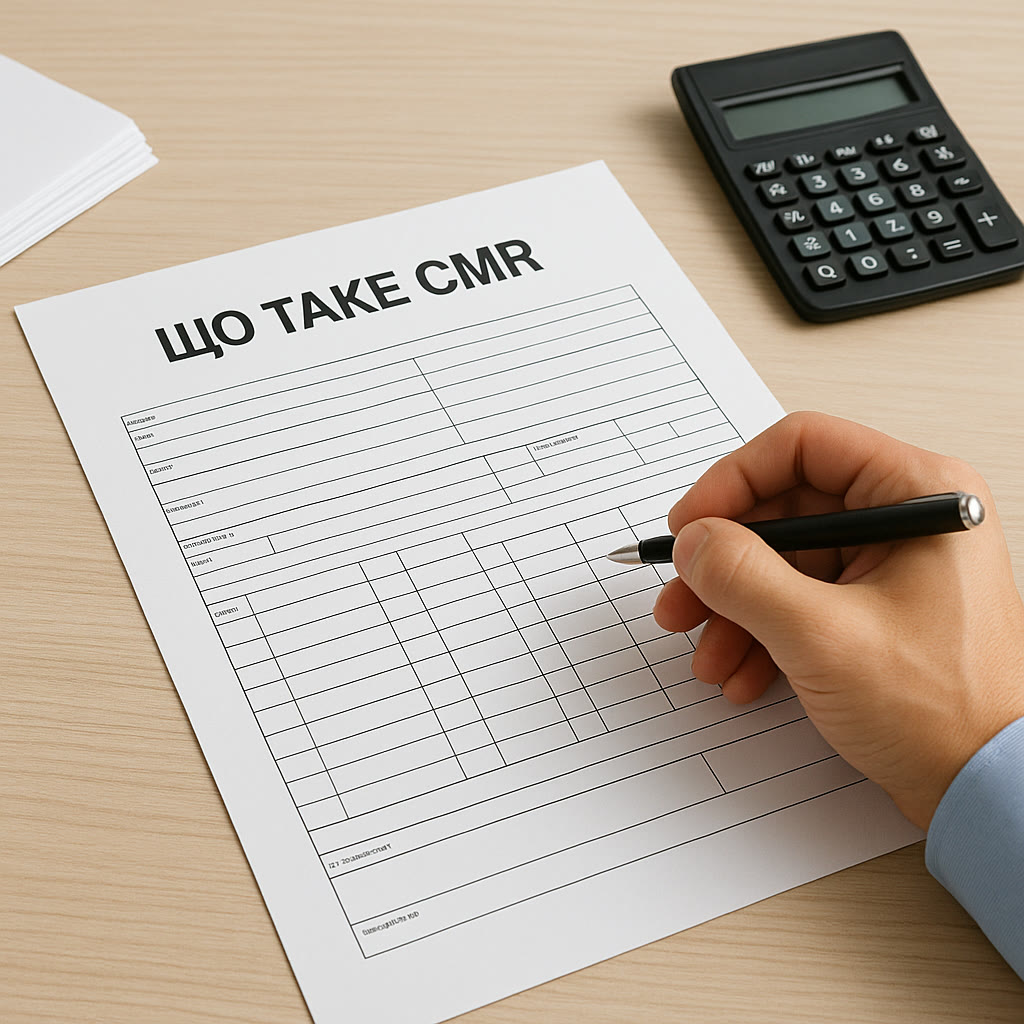
What Data to Prepare Before Filling In a CMR
Start With the Details of All the Parties
Before figuring out what a CMR is and which field each piece of data goes into, gather the up-to-date details of all the parties. The smallest mistake in a company name or address can raise unnecessary questions during delivery, customs control, or a claim review.
- Shipper: full company name or the entrepreneur's name, legal address, country, contact person, phone number, email, and, if needed, a tax number.
- Consignee: exact name, delivery address, country, contact person and phone number.
- Carrier: official name, address, contact details, and the details of the responsible person. If a freight forwarder is involved, it is worth checking separately who is actually carrying the cargo.
- Loading and unloading places: full addresses, the warehouse's working hours, the driver's or dispatcher's contact, and the available time windows.
Company names are best taken directly from the contract, the invoice, or the registration documents, rather than written from memory. Logistical creativity has no place here: a CMR wants precision, not improvisation.
Prepare an Accurate Description of the Cargo
Check the goods in advance against the packing list, the invoice and the order. The CMR needs a clear description of the cargo, the number of packages, the type of packaging, the marking, the total weight, and, if needed, the volume, dimensions and other characteristics.
| What to prepare | What to pay attention to |
|---|---|
| Name of the goods | Not too general a name like "products"; where possible, add the article number or model. |
| Number of packages | Check boxes, pallets, crates, rolls or other packaging units separately. |
| Weight | Confirm whether it is gross weight; the figures must match the other documents. |
| Special properties | Temperature regime, fragility, hazard, upright-position requirements. |
If the cargo is dangerous, perishable, valuable, or requires a special regime, prepare the relevant classification data, instructions and permits. For dangerous goods, in particular, the data required under the ADR rules matters: the UN number, the proper shipping name, the hazard class and the packing group, where they apply.
"The description of the cargo should make it possible to understand exactly what the carrier accepted."
Check the Route, Customs Documents and Delivery Terms
Before filling in the consignment note, prepare the country and address of loading, the final delivery point, the transit countries, the agreed route, and the terms of carriage. If the parties have agreed on a temperature regime, sealing, partial loading, restrictions on stops, or delivery to a specific terminal, these requirements should be clearly communicated to the carrier.
Separately, gather the invoice number, the packing list, the export or import declaration, permits, certificates and the customs broker's details. A CMR may reference such documents, but it does not replace a customs declaration.
Before dispatch, check that all the figures match: the number of packages, the weight, the number of pallets, and the description of the goods. During loading, the driver should inspect the packaging and record any visible damage or reservations in the consignment note.
"It is better to spend a few minutes checking documents than a few days explaining discrepancies at the border."
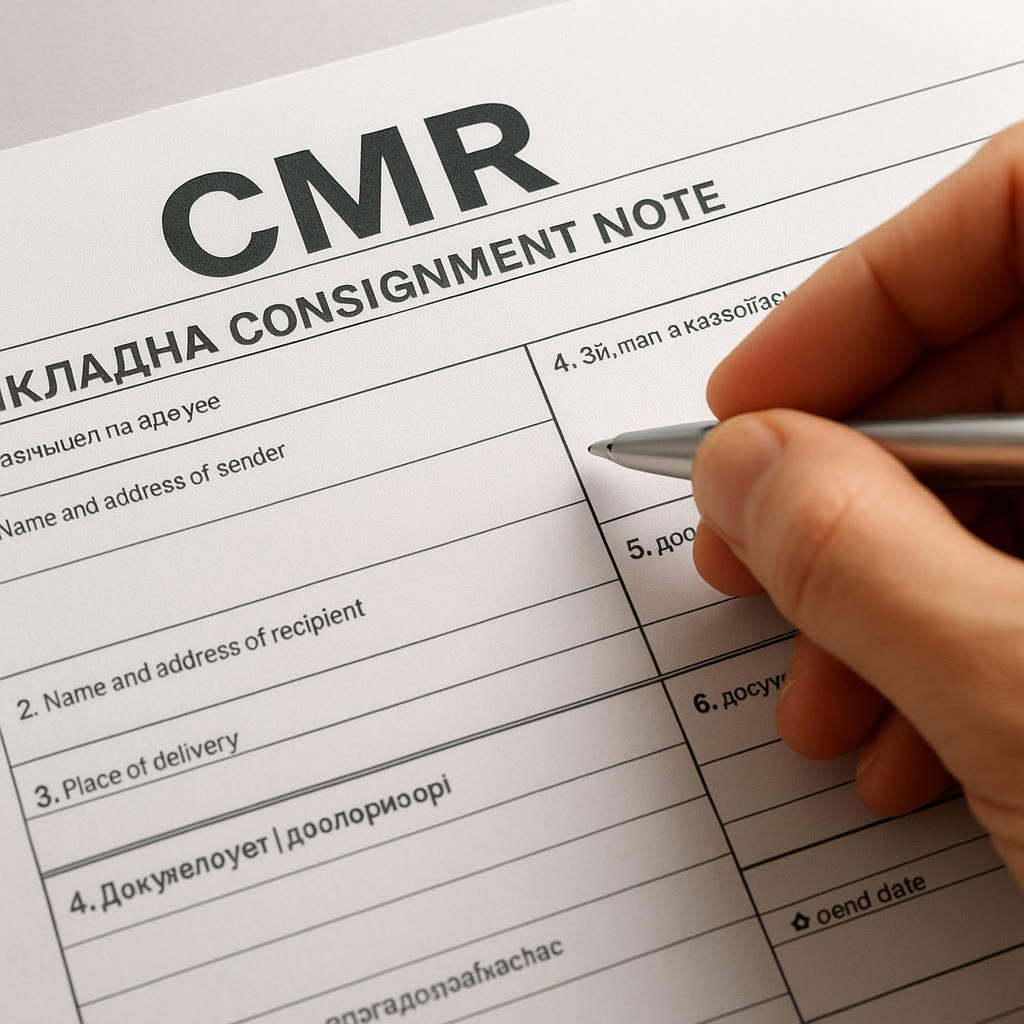
How to Fill In a CMR: A Step-by-Step Breakdown of the Fields
Start With the Parties, the Route and the Date
Filling in a CMR usually starts with the shipper, since it is the shipper who has the information about the goods, the order and the consignee. The carrier checks this data, adds its own details, and enters reservations if the actual condition of the cargo or packaging does not match the description.
In the first fields, the shipper, the consignee and the carrier are stated: full name, address, country and contact details. It is not enough to give just the company's trading name — it is better to use the details from the contract or the invoice. Next comes the place and date of acceptance of the cargo, as well as the planned delivery point.
If the CMR is issued by a freight forwarder, it is essential to be clear about who is stated as the carrier. The freight forwarder and the actual carrier can be different parties, so they should not be mechanically entered in the same field.
Enter the Data on the Cargo, the Documents and Payment
In the cargo fields, state the name of the goods, the type of packaging, the number of packages, the marking, the gross weight and, if needed, the volume or dimensions. A description like "goods" or "spare parts" can be too general. It is better to add an article number, model, product type or other designation that allows the cargo to be identified.
| CMR block | What to state |
|---|---|
| Packages | The number of boxes, pallets, crates or other packaging units. |
| Accompanying documents | The number and date of the invoice, packing list, declaration, certificate or permit. |
| Payment for carriage | Who pays for delivery, the currency, the agreed amount, or a reference to the contract. |
| Special conditions | Temperature regime, seal, careful handling, customs instructions. |
In the payment field, it is important not to confuse the value of the goods with the payment for carriage. The value of the cargo and the declared value are separate pieces of information. If Incoterms trade terms apply, they can be stated in the relevant place or in the special instructions, but they do not replace the agreement on payment to the carrier.
Check the Reservations, Signatures and a Sample Example
Customs documents are usually stated by number or name — for example, invoice No. 45 dated 12.03.2025, the packing list, and the customs declaration number. The CMR itself is not a customs declaration. If the packaging is damaged, the seal is missing, or the number of packages cannot be verified, the carrier must enter a clear reservation before accepting the cargo, and the shipper must agree to it with a signature.
For example, the consignment note might state: "Shipper — Dnipro-Tech LLC, Ukraine; consignee — Baltic Parts OÜ, Estonia; cargo — car filters, 10 pallets, 240 boxes, 1,850 kg gross; invoice No. 45; loading — Kyiv, delivery — Tallinn." If one pallet has damaged film wrapping during acceptance, this is recorded separately, not left as a problem "for later."
After loading, the shipper and the carrier sign, and after delivery, the consignee confirms receipt. In the event of damage or a shortage, the consignee must state their remarks before signing the documents. This is exactly how a CMR explains what a CMR is in practice: it is a consistent record of the cargo, its handover, and its delivery.
Common Mistakes in a CMR and How to Correct Them
The Most Common Mistakes
Even when the parties understand what a CMR is, inaccuracies can easily creep into the consignment note during rushed loading. The most typical problem is a discrepancy between the actual cargo and the records in the document. For example, the CMR states 20 pallets and 12,000 kg, while the packing list states 19 pallets and 11,700 kg. During customs control or acceptance, this can raise questions, cause delays, and lead to a dispute over liability.
- Incorrect details: a mistake in the company name, address, country, code, or contact details.
- A vague description: entries like "goods," "equipment," or "spare parts" without article numbers, models, or other identification.
- Discrepancies in quantity and weight: a mismatch between the CMR, the invoice, the packing list, and the actual number of packages.
- Missing reservations: damaged packaging, a missing seal, moisture, or the impossibility of checking the contents is not recorded.
- Missing signatures: no signature from the shipper, the carrier or the consignee, and sometimes no date or signature transcript.
The consequences depend on the situation: from extra explanations at the border to difficulties proving a shortage or damage to the cargo. A vague document does not automatically make the carriage invalid, but it weakens the parties' evidentiary position.
"An empty field in a CMR does not always mean the circumstance did not occur — sometimes it just means no one recorded it."
How to Correctly Fix Mistakes in the Consignment Note
If an inaccuracy is found before the document is signed, the best approach is to make the correction immediately and have it agreed by all the parties it concerns. Do not erase the entry, paint over it with correction fluid, or change a figure in a way that makes the original value impossible to make out.
For a minor correction, the incorrect text is usually crossed out with a single line, the correct version is written in, and the date, initials or signatures of the authorised representatives are added nearby. The specific requirements can depend on the form of the document, the contract, and the company's rules, so it is important to keep the original entry legible.
If the mistake is significant — for example, the consignee, the quantity of cargo, or the route is stated incorrectly — it is safer to issue a new CMR or an additional document agreed by the parties. In that case, the previous copy should not simply be destroyed: it is kept with a note that it has been replaced, so that a clear documentary trail remains.
A Checklist to Run Before Dispatch
Before departure, check the CMR against the invoice, the packing list, the customs documents and the actual cargo. Check the names of the parties, the addresses, the number of packages, the gross weight, the description of the goods, the seal numbers and the accompanying documents. Separately, inspect the packaging and record all visible reservations before signing.
After delivery, the consignee must check the quantity and condition of the cargo. If there is a shortage or damage, this must be clearly recorded in the CMR, rather than left to a verbal "we'll sort it out later." This is exactly how the document works as evidence, rather than simply travelling along with the driver.
FAQ: Answers to Common Questions About CMR
Frequently Asked Questions About CMR
What is a CMR, and is it mandatory to issue one? A CMR is the international consignment note for road freight transport between countries to which the rules of the CMR Convention apply. For such carriage, it is the standard document and is practically essential for confirming the delivery terms, the acceptance of the cargo, and its handover to the consignee. At the same time, a CMR is not a customs declaration, an invoice, or a document confirming ownership of the goods.
Who fills in the CMR? The main details are usually entered by the shipper: the parties' details, the description of the cargo, the number of packages, the weight, the route, and the list of accompanying documents. The carrier checks the entries, adds its own details, enters reservations about the packaging or the condition of the cargo, and signs the consignment note. If the document is prepared by a freight forwarder, the party that provided or confirmed the data still remains responsible for its accuracy.
How many copies of a CMR are needed? Traditionally, at least three original copies are issued: one stays with the shipper, the second accompanies the cargo, and the third is handed to the consignee. In practice, additional copies may be used for the carrier, the freight forwarder, the customs broker, or the archive. It is better to agree on the number of copies in advance, since the requirements can depend on the route and the participants' internal procedures.
Can a CMR be issued electronically? Yes, an electronic format is possible within the rules for the electronic consignment note, provided the relevant states, the carrier, the customer, and the exchange system all support that format. An electronic CMR must ensure the identification of the parties, the integrity of the records, access to the document, and the ability to record changes or signatures. Before the trip, check whether it is accepted by the specific customs, border and contractual parties involved. If in doubt, it is better to keep a paper copy as a backup.
What to Do About Damage or a Mistake
What should you do if the cargo is damaged? The consignee must inspect the cargo before signing the CMR and clearly record any visible damage, shortage, packaging violations or seal issues. A phrase like "accepted with remarks" is not enough: you need to describe exactly what was found. Where possible, take photographs, involve a representative of the carrier, and draw up a separate report.
What should you do if there is a mistake in the CMR? Before the document is signed, it is corrected so that the original entry remains legible: the incorrect data is crossed out, the correct data is written in nearby, and the correction is confirmed with the signatures or initials of the authorised persons. Correction fluid must not be used, and figures must not be rewritten unnoticeably. If the mistake is significant, it is safer to issue a new consignment note or an agreed additional document.
"A CMR works best when every important circumstance is recorded before the cargo leaves the warehouse."
So, what is a CMR in practical terms? It is a shared documentary record of the cargo, the route, the parties, and its condition at the moment of handover. The more precisely it is filled in, the less room there is left for disputes at the border and during delivery.
Conclusion: How to Check a CMR Before Dispatching the Cargo
So, what is a CMR? It is the document that records the parties to the carriage, the route, the characteristics of the cargo, the accompanying papers, and the delivery terms. Before dispatch, it is important not just to fill in every field, but to check them against the actual cargo, the invoice, the packing list and the customs documents.
The final check should cover the names and addresses of the shipper, the carrier and the consignee, the loading and delivery places, the number of pallets or other packages, the description of the goods, the gross weight, and the seal and invoice numbers. Make sure the special conditions are stated: temperature regime, fragility, hazardous properties, and packaging or customs clearance requirements. If there is damage, a shortage, or the contents cannot be checked, this must be recorded in the CMR before signing.
Do not leave corrections unconfirmed: the strikethrough, the new entry, and the signatures of those responsible must be clear. It is safer to fix a significant mistake by issuing a new consignment note or an agreed additional document. After loading, the shipper and the carrier sign, and after delivery, the consignee checks the condition and quantity of the cargo and states any remarks, if there are any.
A correctly completed consignment note does not replace a customs declaration or other mandatory documents, but it helps confirm how the carriage went and protects the interests of everyone involved. A simple rule for the final check: every figure in the CMR must match the actual cargo, and every important circumstance must be recorded in writing.

Related posts




Do you have cargo or transport?
Post your offer — and find the right partner today.