Ukraine — Poland: How Long Cargo Delivery Really Takes and Where Time Is Lost
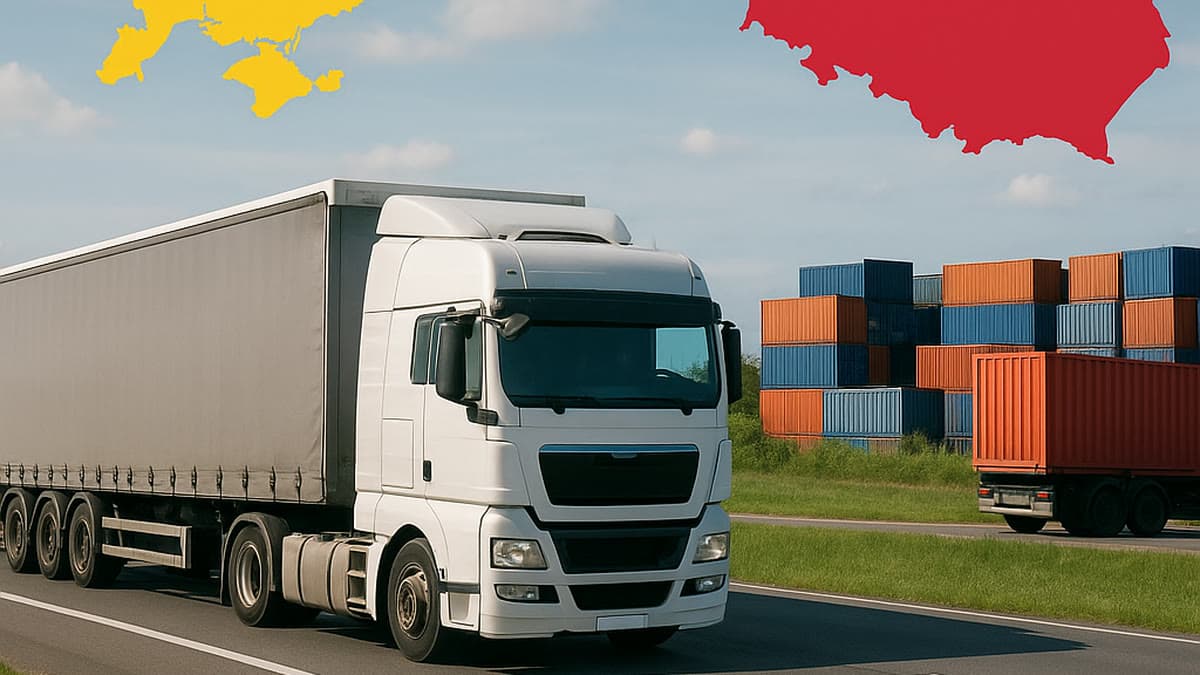
Ukraine — Poland: how long cargo delivery really takes
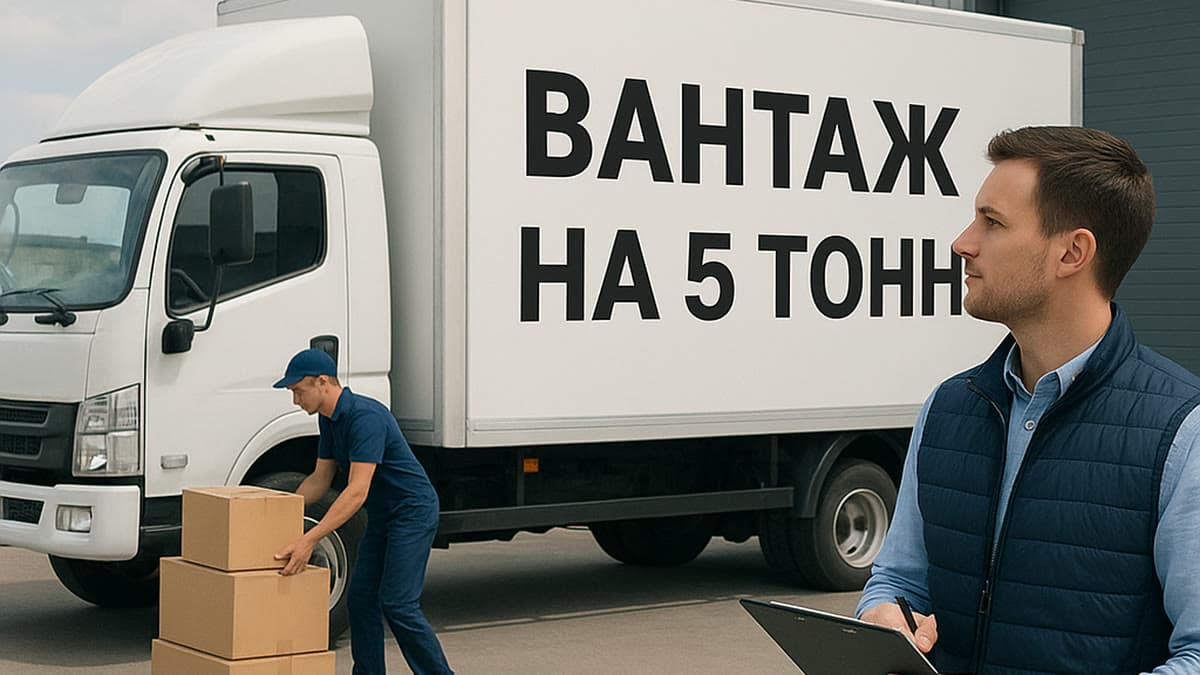
Ukraine — Poland: delivery of cargo by truck usually takes from 2–3 business days for an urgent shipment up to 5–10 days for groupage cargo. The truck's actual driving time is often just 10–20 hours, while the rest of the time goes on waiting at the border, customs clearance, loading, transshipment, and delivery to the final address.
This material will be useful for companies, importers, exporters, and private shippers who are planning transport between Ukraine and Poland and want to set a realistic timeline. It does not replace an individual calculation for dangerous, temperature-controlled, oversized, or perishable cargo — in such cases the route and paperwork can significantly change the schedule.
| Type of transport | Time on the road | Realistic total lead time |
|---|---|---|
| Direct road transport | 10–20 hours | 2–5 business days |
| Groupage cargo | 1–2 days with transshipments | 5–10 business days |
| Express delivery of small shipments | 1–2 days | 2–4 business days |
| Rail or combined transport | 2–5 days | 5–14 days |
How long transport by truck takes
For the Lviv — Krakow or Lviv — Warsaw route, a truck can cover the distance in roughly 8–14 hours, not counting the border, driver breaks, and city delivery. From Kyiv, Dnipro, or Odesa to a Polish warehouse, time on the road is often 18–30 hours, depending on the route and destination.
However, promising delivery "in one day" is only realistic for individual urgent runs with documents prepared in advance and a favourable situation at the crossing. For ordinary planning, it is safer to allow 2–5 business days. One unlucky coincidence, and the calendar starts moving slower than the truck.
Why the total lead time is longer than the driving time
The biggest variable on the Ukraine — Poland direction is crossing the border. Waiting can last from a few hours to a full day or more, especially during seasonal peaks, rule changes, strikes, or a build-up of queues.
- preparing the invoice, packing list, contract, and customs documents;
- the queue at the checkpoint and cargo inspection;
- customs clearance in Ukraine and Poland;
- reloading at a warehouse or consolidation of groupage cargo;
- waiting for an unloading slot at the consignee.
For groupage shipments, time is added for accumulating the batch, sorting, and the route through a logistics hub. That is why a small pallet can travel longer than a fully loaded truck, even though the distance between the cities is the same.
How to calculate the delivery time more precisely
When placing an order, it's worth clarifying not just the departure date but the full logistics cycle: cargo pick-up, crossing the border, customs clearance, delivery to the warehouse, and the possible assignment of a specific time slot for the vehicle.
For standard cargo, a practical reserve is at least 1–2 business days. If the goods have a strict deadline, it is better to choose a direct run, check the documents in advance, and not tie receipt to the last hour before production or shipment.
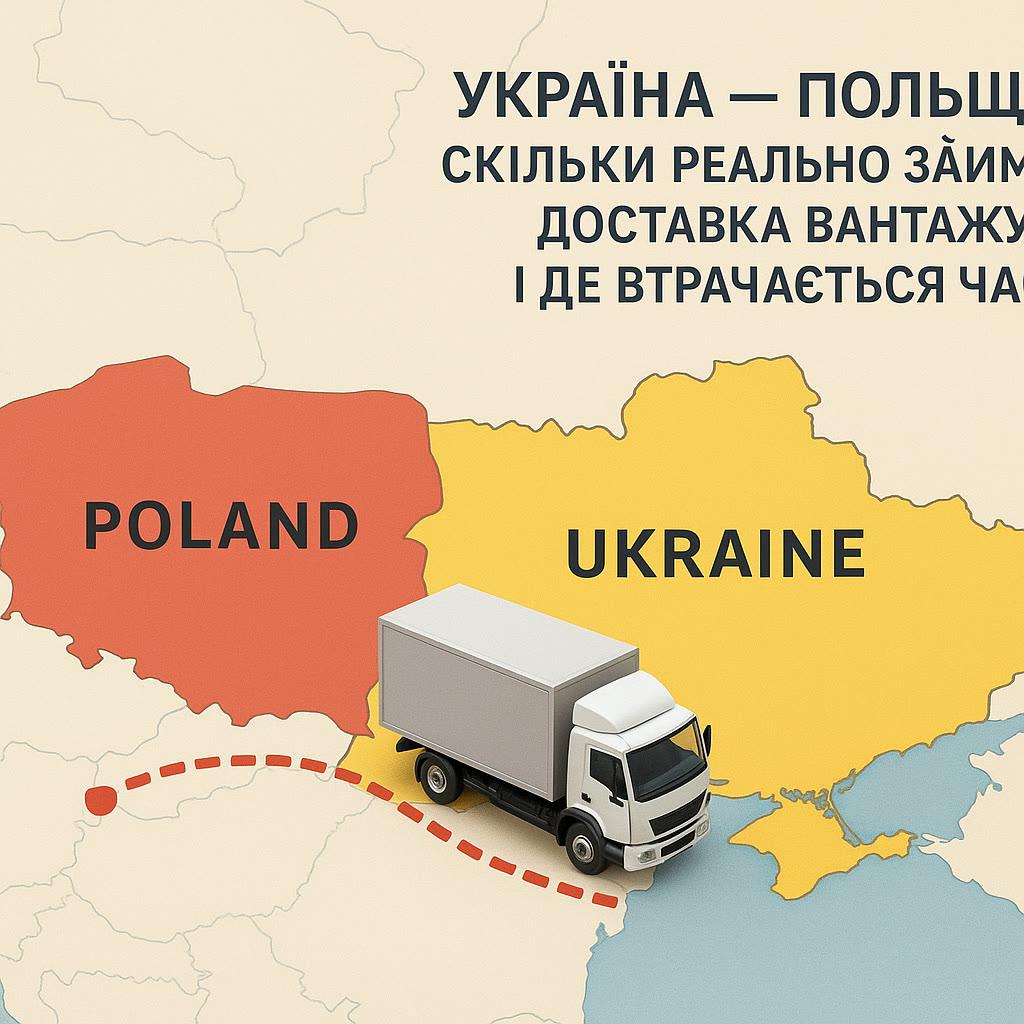
What the transport time depends on: route, cargo, and documents
Route and geography: kilometres are not the only factor
On the Ukraine — Poland direction, delivery time starts with specific addresses, not just country names. A shipment from Lviv to Przemysl can arrive much faster than cargo from Kyiv to Warsaw, even if both runs cross the same border. On top of the distance come the time to dispatch the vehicle, loading, the domestic run to the checkpoint, and delivery from the Polish terminal to the consignee.
The choice of checkpoint also matters a great deal. Queues, temporary traffic restrictions, road repairs, or changed priorities for certain categories of transport can make a shorter route slower. That is why a carrier assesses not just the distance but also how busy the crossings are, the state of the road infrastructure, and the possibility of bypassing a problem section.
"The shortest route on the map is not always the fastest route in real logistics."
For an accurate forecast, you need to state in advance the city or address of departure, the final point in Poland, the desired loading date, and the delivery mode: direct run, groupage cargo, or transport via a warehouse.
The type of cargo and the customs regime change the schedule
Standard palletised goods are usually simpler to prepare for transport than dangerous, temperature-controlled, oversized, or excise cargo. These categories may require additional permits, marking, special vehicles, certificates, and approvals. Every extra check adds another point where the schedule can slip.
It's also worth distinguishing between export, import, transit, and temporary import. Each customs regime has its own requirements for documents, payment security, and proof of the goods' origin. If the cargo is cleared at a terminal rather than directly at the border, the total time gains the delivery to the warehouse, the queue for clearance, and the release of the goods.
- Groupage cargo may wait for consolidation and sorting at a warehouse.
- A full truckload usually moves faster because it has no intermediate loadings.
- Temperature-controlled or dangerous cargo needs special control and the right equipment.
- Oversized cargo may require permits and an agreed route.
Documents and the carrier: where time is saved or lost
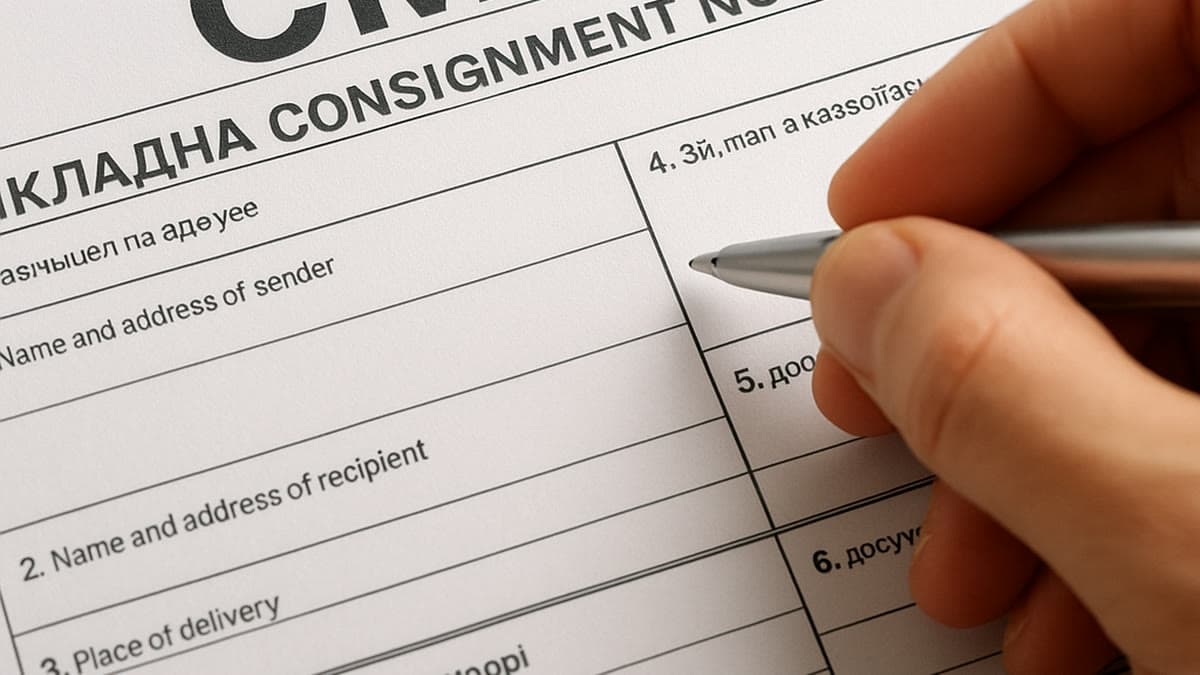
An incomplete invoice, an error in the commodity code, or a discrepancy in weight or the number of packages can delay clearance by hours or days. The basic package usually includes an invoice, a packing list, a waybill, sender and consignee details, and, where needed, certificates, permits, and documents on the origin of the goods.
A reliable carrier checks the documents before loading, clarifies each party's responsibility, and explains whether customs services are included in the price. It's also important to ask whether the run will be direct, where any intermediate warehouses are located, and what reserve is built in for the border.
To plan a Ukraine — Poland route, it's better to count not just the time on the road but the full cycle: preparation, loading, customs, the border, transshipment, and unloading. This approach gives a realistic lead time, not an optimistic figure from a navigator.

Where time is most often lost on the Ukraine — Poland route
The border: the main source of unpredictable delays
On the Ukraine — Poland route, the time to cross the border can range from a few hours to a full day or more. The exact duration depends on the checkpoint, the day of the week, the season, the type of cargo, and the current traffic organisation. Even if the truck arrives at the border on time, that doesn't mean it will go straight to inspection.
Delays arise from queues of freight transport, document checks, vehicle inspection, or the need to clarify details about the goods. Temporary traffic restrictions, roadworks, weather conditions, and uneven load across different crossings add to this. In the periods before holidays or after long weekends, queues often grow, since several days' worth of delayed shipments pile up almost at once.
"Time at the border is better planned as a range, not as an exact number of hours."
For example, a direct run from Lviv to a Polish warehouse may involve about ten hours of driving, but in an unfavourable situation at the crossing, the total lead time can easily grow by another 12–24 hours. That is why a responsible carrier builds in a reserve rather than promising delivery "by noon" without clarifying the conditions.
Customs, warehouses, and transshipment: the route's invisible hours
After crossing the border, cargo doesn't always go straight to the final consignee. If it's a groupage delivery, the vehicle may arrive at a logistics warehouse, where the batch is unloaded, sorted, and combined with other shipments. This scheme is usually more cost-effective, but it adds anywhere from a few hours to one or two business days to the schedule.
A separate stage is customs clearance. An error in the invoice, the packing list, the commodity code, or the weight can halt the release of the cargo until the information is clarified. If a physical inspection is required, the wait depends on how busy the terminal is and whether an inspector is available.
- the cargo arrived at the warehouse earlier than the scheduled receiving window;
- no space was prepared for the pallet, or warehouse equipment is lacking;
- part of the documents arrived later than the vehicle itself;
- during transshipment, packaging damage or a discrepancy in the number of packages was discovered.
A practical example: two pallets from Kyiv to Warsaw can physically travel for about two days including pick-up and delivery. If they are moved as groupage cargo through an intermediate hub, sorting, waiting for consolidation, and a separate run to the consignee are added to that time.
Waiting for the vehicle and how to cut lost time
A delay can arise even before the movement starts. The vehicle didn't arrive on time because of a previous run, a breakdown, driver working-time restrictions, or a body type that doesn't match the cargo's characteristics. If the goods are ready but the vehicle arrives the next day, the shipment effectively starts late.
To reduce risks on the Ukraine — Poland direction, it's worth agreeing in advance on the loading time, the number of packages, the weight, the dimensions, the type of packaging, and the full set of documents. It's also necessary to clarify whether intermediate transshipments are planned, where customs clearance takes place, and what reserve is built in for the border.
"The cargo that arrives fastest isn't the one that simply left earlier, but the one for which unnecessary steps were removed in advance."
The simpler the route, the more accurate the documents, and the more transparent the communication between the shipper, the carrier, and the consignee, the less chance that the delivery turns into a logistics quest with an unplanned second season.
How to shorten cargo delivery times from Ukraine to Poland
Prepare the documents before the vehicle is dispatched
In Ukraine — Poland transport, the simplest way to shorten the lead time is not to leave customs formalities until the moment of loading. The carrier or customs broker should be given the invoice, packing list, contract, transport details, and sender and consignee information well in advance, and, where needed, certificates, permit documents, and proof of the goods' origin.
All the data must match: the name of the product, the number of packages, the weight, the value, the marking, and the commodity code. Even a small discrepancy between the invoice and the actual cargo can lead to clarifications, inspection, or a delayed release. It's especially important to check the documents carefully for goods with additional requirements, including food products, chemicals, equipment, and excise or temperature-controlled cargo.
"Documents need to be checked before loading, not once the vehicle is already standing at the border."
A useful practice is to create a short checklist and assign a person responsible for checking the package before departure. Electronic copies are best sent to the broker in advance, and the originals should be prepared so the driver can quickly receive them together with the cargo.
Choose the route, the vehicle, and the loading time
The shortest route doesn't always provide the fastest delivery. Before booking transport, you need to compare not just the distance but also how busy the checkpoints are, any restrictions for the specific type of cargo, and the warehouses' working hours. For an urgent batch, a direct run without intermediate consolidation is usually more practical, even if it costs more.
Agree in advance with the Polish consignee on the time window for unloading. If the warehouse only accepts vehicles at certain hours, being a few hours late can push the operation to the next business day. For regular shipments, it's worth booking the loading date and time, confirming the goods' readiness, and checking whether the warehouse has the equipment needed to handle pallets or heavy equipment.
- for urgent cargo — a direct vehicle and minimal intermediate operations;
- for planned, cost-effective delivery — groupage transport with pre-agreed lead times;
- for oversized goods — a route with checks on permits, dimensions, and warehouse access;
- for temperature-controlled products — a vehicle with the required mode and temperature control.
Packaging and shipment control without unnecessary pauses
Reliable packaging shortens time not just at loading but also during inspection and transshipment. Pallets must be stable, boxes marked, and the number of packages must match the packing list. For fragile goods, protection against impact, moisture, and shifting inside the body must be provided.
After departure, ask the carrier for the vehicle's number, the driver's or dispatcher's contact, the estimated arrival time at the border, and the procedure for notifying about changes. For businesses with regular deliveries, useful control points are: loading, crossing the border, arrival at the warehouse, and handover to the consignee.
These steps don't remove all external risks, but they noticeably reduce internal delays. As a result, delivery on the Ukraine — Poland route becomes more predictable, and the business gets not just an approximate date but a clear action plan at every stage.
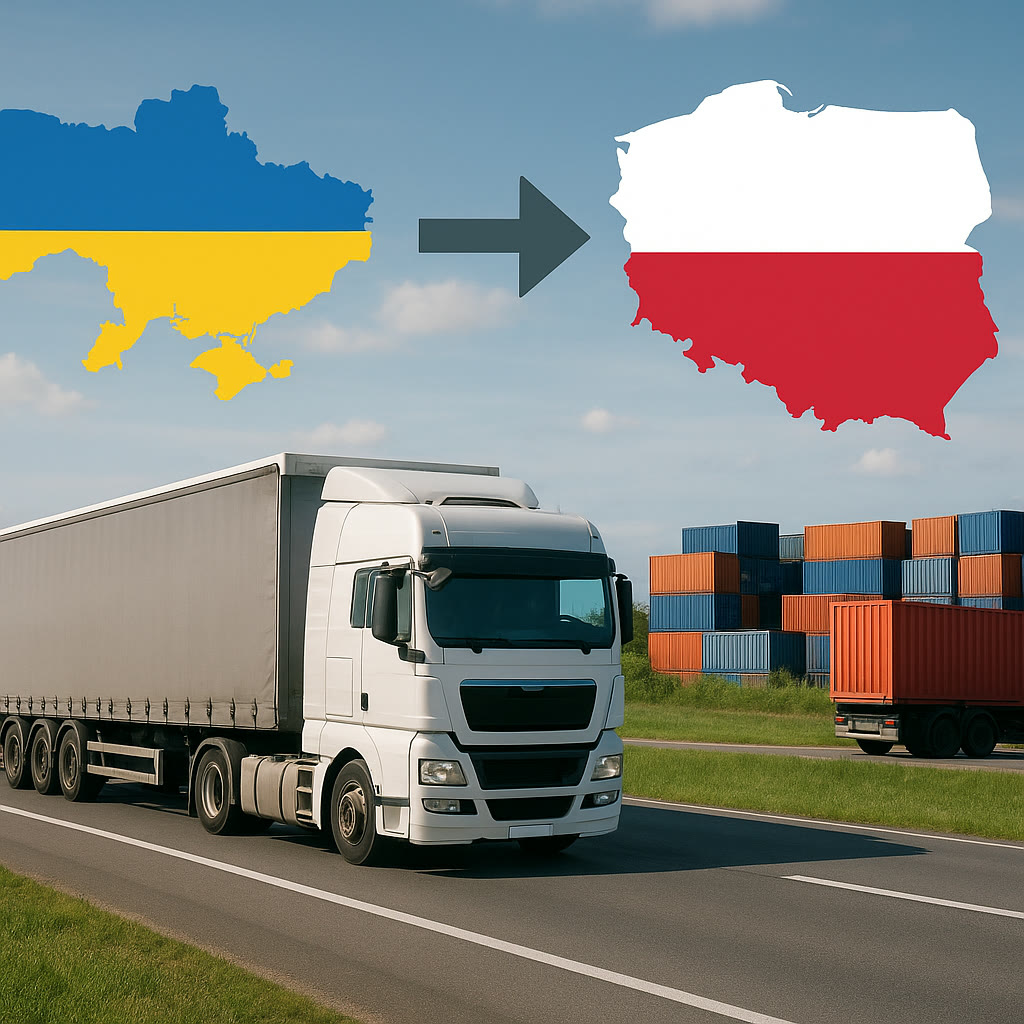
FAQ: answers about cargo delivery between Ukraine and Poland
How long does delivery from Ukraine to Poland typically take?
For direct road transport of standard cargo, a realistic lead time is usually 2–5 business days. This period includes cargo pick-up, loading, crossing the border, customs clearance, and delivery to the final address. The vehicle's actual driving time can take about 10–30 hours depending on the city of departure and the destination, but it is only part of the whole process.
If the cargo departs from Kyiv, Dnipro, or Odesa to Warsaw, Poznan, or Wroclaw, the route gains extra time for the domestic run across Ukraine. For the Ukraine — Poland direction, you should also allow a reserve for the situation at the border and a possible delay in receiving at the consignee's warehouse.
How long does the border take, and can it be avoided?
Crossing the border can take from a few hours to a full day or more. The duration is affected by truck queues, the checkpoint, seasonal load, the type of cargo, the completeness of the documents, and the need for an additional inspection. It is impossible to name the exact waiting time in advance, so carriers usually build in a time reserve.
It's not possible to avoid border procedures entirely, but the risk of delay can be reduced. To do this, check the invoice, the packing list, the transport documents, the commodity code, and any required permits well in advance. An error in the number of packages or the weight can delay clearance even when the queue at the crossing is small.
Is urgent transport possible? Yes, if the cargo is ready, the documents are in order, and the carrier can dispatch the vehicle without waiting. A direct run without an intermediate warehouse is usually faster than groupage delivery. At the same time, urgent transport does not cancel the border and customs control, so a promise of delivery "in one day" cannot be universal.
What's the difference with groupage cargo, and how do you track it?
Groupage cargo is transported together with batches from other clients. It can be more cost-effective, but it requires time for accumulation, sorting, transshipment, and delivery from a logistics hub to the consignee. On average, this format takes about 5–10 business days, although the timeline depends on the route, the batch volume, and the consolidation schedule.
For tracking, the carrier can provide a booking number, a link to a monitoring system, the driver's details, or the dispatcher's contacts. The most important checkpoints are: cargo pick-up, departure, arrival at the border, crossing it, arrival at the warehouse, and handover to the consignee. If there's no online tracking, it's worth agreeing in advance on how often you'll receive status updates.
Ultimately, the exact delivery time is determined by more than just the distance between the countries. An objective estimate needs to take into account the type of transport, the readiness of the documents, the customs regime, the situation at the border, and the method of delivery to the final address.
Conclusion: how to plan Ukraine — Poland delivery without unnecessary delays
Delivery on the Ukraine — Poland route takes on average 2–5 business days for a direct road run and about 5–10 business days for groupage cargo. The truck's driving time is usually shorter than the total transport lead time: loading, customs clearance, waiting at the border, transshipment, and receiving at the warehouse are added on top of it.
The biggest risks arise at three points: at the checkpoint, during document checks, and at an intermediate warehouse. Queues, seasonal load, inspection of the goods, or an error in the invoice can shift the schedule by hours or even days. For groupage shipments, extra time is needed for consolidation, sorting, and delivery from a logistics hub.
To calculate the lead time more accurately, you need to check the documents in advance, agree on the loading address and time, describe the cargo correctly, pack it reliably, and choose the transport format according to urgency. For important deliveries, it's better to book a direct run and build in a reserve of at least 1–2 business days.
It's also worth agreeing with the carrier on control notifications: dispatch of the vehicle, departure, arrival at the border, crossing it, and delivery to the consignee. This control won't speed up customs or the queue, but it will help you react quickly to a problem. In logistics, an accurate forecast is born not from an optimistic figure, but from accounting for every stage and a real time reserve.

Related posts

Do you have cargo or transport?
Post your offer — and find the right partner today.