5-Tonne Cargo: Is It Worth Booking a Dedicated Truck or Looking for a Part Load?

5-Tonne Cargo: Why the Choice of Vehicle Affects Price and Timing
A 5-tonne load doesn't always mean you need a vehicle rated for exactly 5 tonnes. If speed, route control and minimal reloading matter, a dedicated vehicle is often the more practical choice. A part load can be cheaper, but it only works when the cargo isn't urgent, can be flexibly fitted into a route, and the loading conditions allow for some waiting.
| Option | When it fits | Main trade-off |
|---|---|---|
| Dedicated truck | Urgent delivery, complex route, a strict loading window | Higher price |
| Part load | Non-urgent cargo and flexible deadlines | Possible waiting and route changes |
This material will be useful for companies, manufacturers, shops and private customers who need to move a significant volume without unnecessary costs. It doesn't replace a detailed calculation for dangerous, temperature-controlled or oversized cargo — those require special conditions.
Body Type and Volume: Five Tonnes Is Not Just a Figure on the Scale
When choosing transport, it's important to consider not only the weight but also the cargo's dimensions. Five tonnes of metal parts, palletised goods or construction materials can take up very different volumes. If the cargo is light but bulky, the vehicle can fill up before it reaches its allowed payload.
Palletised goods usually need a curtain-side body with side or top loading. For goods that can't be exposed to precipitation, a box van is more practical. And for machinery, metal structures or oddly shaped cargo, a flatbed or specialised transport may be needed.
You should also check the body's internal dimensions, the number of pallet spaces, the securing method and whether there's a tail lift. Otherwise you might book a vehicle with the right payload only to find the cargo fits it only "in theory".
Route and Loading Directly Affect the Cost
The cost of transport depends on the distance, road conditions, the number of loading and unloading points, and waiting time. A single direct trip between cities is usually easier to calculate than a delivery route with several addresses.
- Can a large vehicle actually reach the warehouse or building?
- Is there a loading ramp or forklift, or is a tail lift needed?
- Who is responsible for packaging, securing and counting the cargo?
- Does loading need to happen at a set time?
If there's no loading equipment on site, costs can rise because a crane truck or extra loaders have to be brought in. And long waiting time is billed separately and can quickly cancel out the advantage of a cheaper rate.
Urgency: When Savings on a Part Load Turn Out to Be Illusory
A part load means the carrier combines your 5-tonne cargo with other shipments. This is worthwhile with a flexible schedule, but the departure date may depend on when the full route comes together. Delivery can also take longer because of extra stops.
A dedicated vehicle costs more, but it gives you control over the departure time, the order of stops and a direct route. So the choice should be based not just on the rate, but on the full cost: waiting time, the risk of detention, cargo-preservation requirements and the price of a delay.
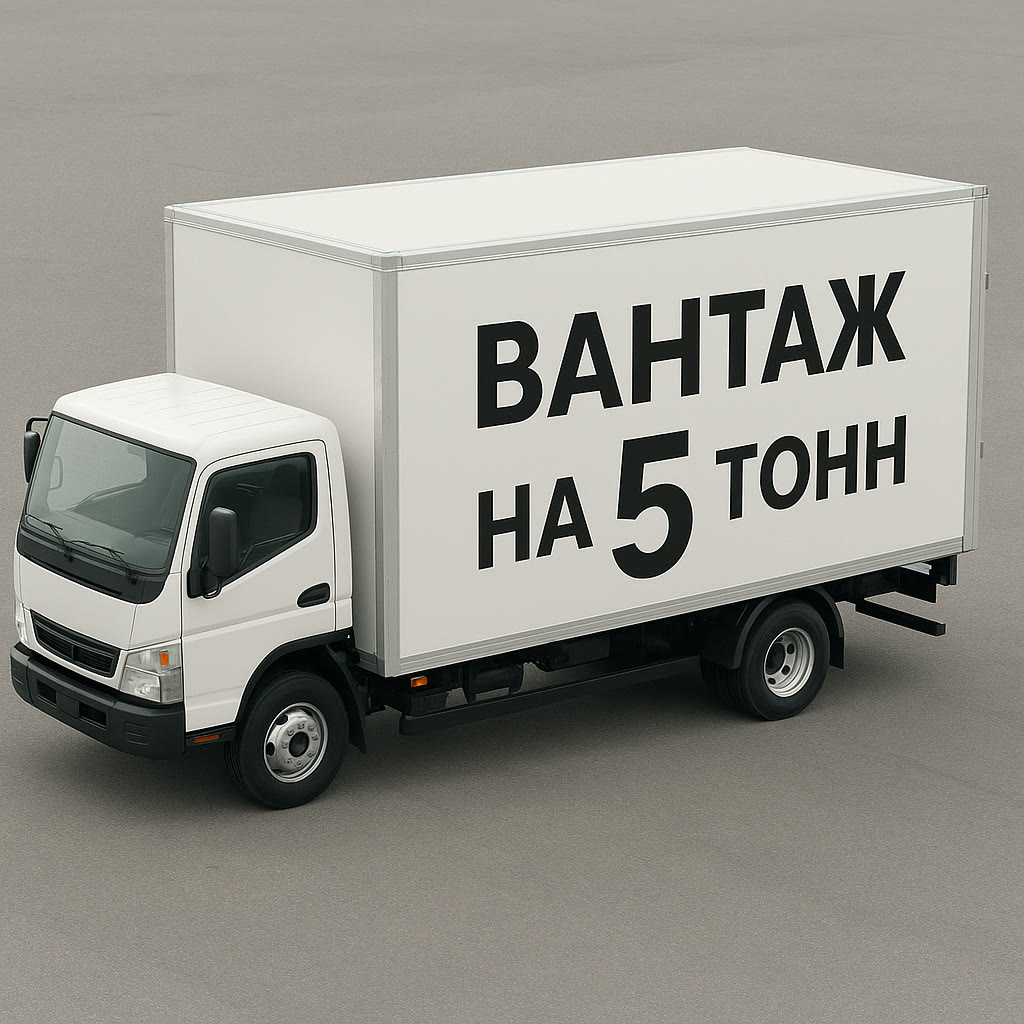
Dedicated Truck or Part Load: What's the Difference
Dedicated Truck: More Expensive, But on Your Schedule
If a 5-tonne load needs to be transported on a specific day and without unnecessary stops, a dedicated vehicle is usually the most convenient option. The vehicle picks up only your shipment, moves along an agreed route, and doesn't wait for the carrier to find other clients to add to the load.
The main advantage is control. The customer agrees in advance on the time the vehicle arrives, the loading address, the route and the unloading location. This matters especially for manufacturing, construction, retail, and situations where the site has a limited receiving "window". If the vehicle needs to arrive by 10:00, rather than "sometime after lunch", a dedicated trip noticeably cuts down on nervous phone-checking.
At the same time, this format costs more: the customer effectively pays for the whole trip, even if the cargo takes up only part of the body. The price may also include the cost of positioning the vehicle, toll roads, waiting time, loading operations or special equipment.
"A dedicated vehicle is payment not just for transport, but for predictability."
Part Load: A Lower Price in Exchange for Flexibility
A part load lets the cost of the trip be split between several customers. If the carrier's route runs in the right direction, your cargo is added to another consignment. As a result, the rate can end up lower than for a full vehicle.
But the savings come at a price — less control over the schedule. The departure date depends on when the route is finalised, and delivery time can increase because of extra loading and unloading stops. Sometimes you have to wait several days, especially if the direction is unpopular or the cargo needs to be placed in a specific part of the body.
A part load is worth considering when:
- the delivery isn't urgent;
- an approximate, rather than exact, arrival time can be agreed;
- the cargo is packaged, labelled and ready for trans-loading;
- the route allows extra stops without risking damage to the goods.
Before booking, it's worth checking whether the cargo will travel without being reloaded into another vehicle. A direct part load is usually safer than a scheme with several intermediate warehouses.
Comparison by Key Criteria
| Criterion | Dedicated truck | Part load |
|---|---|---|
| Cost | Higher, the whole trip is paid for | Usually lower, costs are shared |
| Speed | Direct route and agreed schedule | Depends on how the trip and stops come together |
| Control | Maximum | Limited by the carrier's conditions |
| Risk of delay | Lower, but not zero | Higher, due to other clients and route stops |
For an urgent or valuable shipment, a dedicated vehicle is most often justified. But if the main criterion is the lowest price and the timeframe allows some leeway, a part load can be a sensible choice.
"A cheaper rate doesn't always mean cheaper delivery, if a delay brings work to a halt."
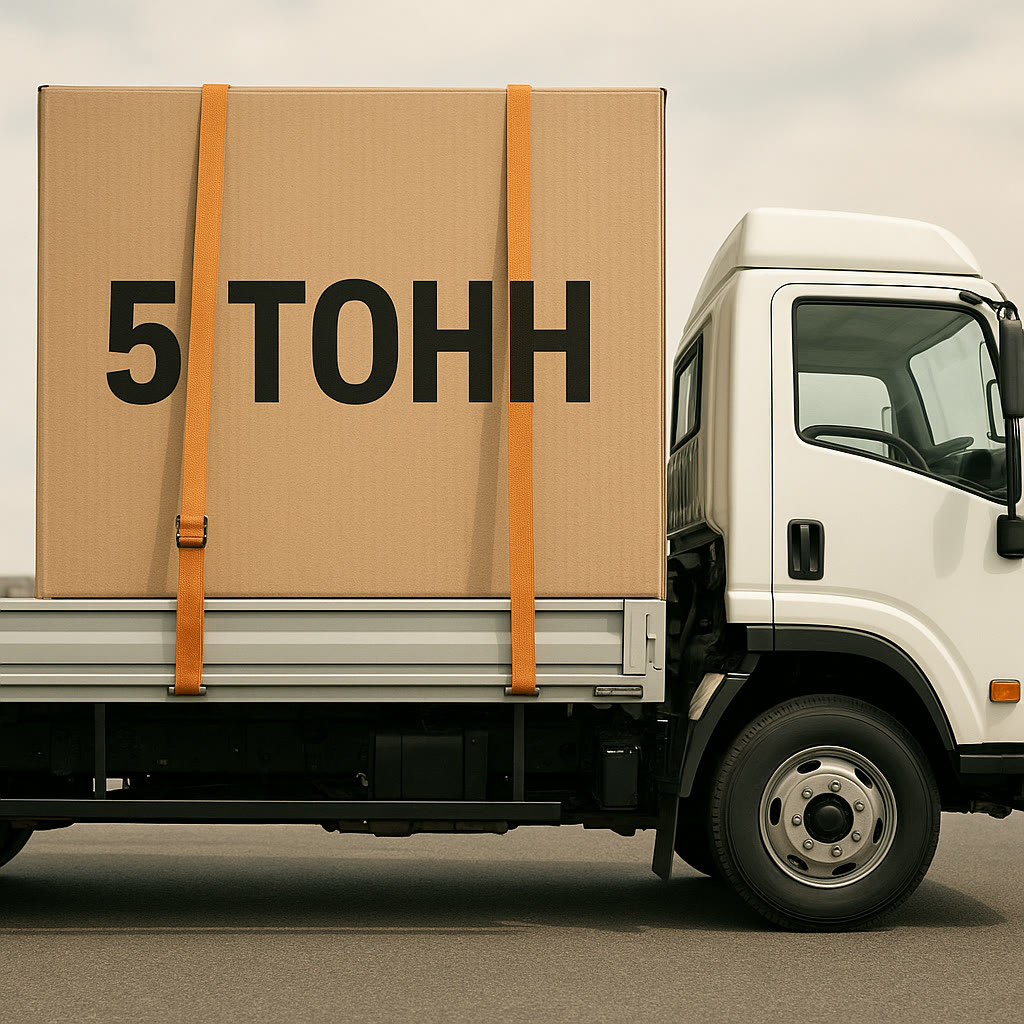
When It Pays to Book a Dedicated Truck for a 5-Tonne Load
Urgency and a Precise Delivery Window
A dedicated vehicle for transporting 5-tonne cargo is most often justified when time has a specific price tag. If goods need to arrive before the start of a work shift, at a construction site on a set day, or before a production line starts up, waiting for a part load can create far higher costs than a full trip.
With a dedicated vehicle, the customer agrees on the pick-up time, the route and the loading order. The vehicle isn't held up by other clients and doesn't detour to extra addresses. This doesn't guarantee there'll be no traffic jams, breakdowns or weather risks, but it removes one of the main causes of unpredictable delays — dependence on other people's shipments.
This option is especially worthwhile if downtime for a crew, a shop or production costs more than the difference between the rates. In logistics, it's sometimes cheaper to pay extra for the vehicle once than to spend hours explaining to clients why the goods are "almost there".
Fragile, Expensive or Trans-Loading-Sensitive Cargo
A part load means sharing space with other shipments and, sometimes, extra handling during loading and unloading. For sturdy packaging this can be fine, but glass, equipment, furniture, electronics, medical devices or goods with an expensive finish need a more careful approach.
A dedicated vehicle allows the loading method, securing and protection against shifting to be agreed in advance. The cargo doesn't have to be moved each time to free up space for another consignment. It also reduces the risk of mix-ups with labelling or an incomplete handover of goods at an intermediate point.
Before booking, it's worth clarifying whether straps, padding, palletising, a tail lift or a special temperature regime are needed. The mere fact that the vehicle travels without a part load doesn't automatically make it safe: incorrect securing can ruin even the most reliable trip.
Non-Standard Dimensions and a Complex Route
If 5-tonne cargo has non-standard length, width or height, a part load may turn out to be inconvenient or simply impossible. The cargo takes up a lot of space, needs side or top loading, and its shape doesn't allow other pallets to be safely placed alongside it.
A dedicated vehicle is also better for routes with several addresses, narrow access roads, restrictions on large vehicles, or a complex warehouse working schedule. In such a situation, the carrier can plan the order of stops in advance, check road accessibility, and choose a body that fits the real conditions, not just the figure in the listing.
It's worth booking a dedicated vehicle if the following matter:
- a precise arrival time;
- minimal trans-loading and third-party stops;
- special requirements for securing or the vehicle body;
- full responsibility for a single cargo throughout the trip;
- delivery along a complex or non-standard route.
"For non-standard cargo, the right vehicle matters more than an attractive figure in the rate."
When a Part Load Helps You Save Without Extra Risk
When Flexible Deadlines Work in Favour of a Part Load
A part load is a sensible choice if the 5-tonne cargo doesn't need to be delivered on a fixed day. The carrier can add the shipment to a trip that's already planned, and the transport costs are shared between several customers. As a result, the price is often lower than for a dedicated vehicle, especially on regular routes.
This format suits goods that can wait a few days without consequences for the business. For example, if the warehouse has a stock reserve, construction work doesn't depend on a specific delivery, and the recipient is ready to accept the cargo within an agreed time range, there's no point paying extra for urgency.
Before placing the order, you need to clarify not just the rate but also the estimated departure and delivery dates. The phrase "as soon as the truck fills up" sounds optimistic, but it isn't enough for planning deliveries. A reliable carrier names a time range and explains what happens if the trip is postponed.
A Standard Load and a Popular Route Reduce the Risks
A part load works best with standard goods: palletised products, boxes, construction materials, packaged furniture, or other shipments that are easy to count, secure and fit into the body. The cargo should be prepared for transport, clearly labelled, and not require a special temperature regime or complex equipment.
The direction also matters. On popular routes between major cities, carriers more often have regular trips and free space in their vehicles. This shortens the wait and increases the chance of finding transport without booking a full vehicle.
But a "popular route" doesn't automatically mean next-day delivery. Timing is affected by seasonality, warehouse workload, weekends, weather conditions and traffic restrictions. Some buffer in the schedule is still needed.
What to Check Before Booking a Part Load
The savings will be worthwhile if partial loading doesn't create extra costs. The customer should agree in advance whether trans-loading is allowed, how many stops the route will have, and exactly how the cargo will be protected from shifting. For valuable or fragile goods, even one extra reloading stage can wipe out the advantage of a lower rate.
- Confirm the actual weight, volume and number of pallets.
- Clarify the minimum and maximum delivery timeframes.
- Find out whether it will be a direct trip with no change of vehicle.
- Agree on the receiving time, unloading conditions and responsibility for detention.
- Check that the body suits your packaging and loading method.
A part load makes sense when the cargo is typical, the route is stable, and the recipient has time to spare. But if a delay would stop work, or the goods need special handling, the savings may turn out to be just an attractive figure in the preliminary estimate.

How to Calculate the Real Cost of Transporting a 5-Tonne Load
Compare Not the Rate, But the Full Amount Payable
To correctly assess the cost of transporting 5-tonne cargo, you shouldn't rely only on the price per kilometre or the overall figure in the carrier's quote. A cheaper offer might not include positioning the vehicle, loading operations, waiting time or extra addresses. As a result, the final bill can differ noticeably from the initial estimate.
The first step is to send all carriers the same data: cities and addresses, the cargo's weight and volume, the number of pallets, the packaging type, the desired dates, and the loading and unloading method. If one manager quotes for a curtain-side vehicle and another for a box van with a tail lift, the comparison will be flawed before negotiations even begin.
The base amount can be thought of as a starting formula:
total cost = trip or per-kilometre rate + vehicle positioning + loading and unloading + waiting time + extra addresses + agreed surcharges.
What Costs to Include in the Calculation
Ask exactly what's included in the quoted price. Pay particular attention to waiting time: it may be charged after a free period, or by the hour. If queues often form at the warehouse, this point shouldn't be treated as a minor detail.
- the cost of positioning the vehicle and reaching a specific address;
- loading, unloading, and the work of loaders or a crane truck;
- toll roads, ferries, permits and other route-related costs;
- the vehicle waiting at the warehouse or at the recipient's site;
- extra loading or unloading points;
- insurance, special securing, temperature control or other equipment.
Insurance also needs to be clarified separately. It's important to know whether it's included in the rate, what sum it's arranged for, and which cases it covers. The carrier's contractual liability and voluntary cargo insurance aren't always the same thing.
How to Compare a Dedicated Truck and a Part Load
| Cost item | Dedicated truck | Part load |
|---|---|---|
| Base rate | Payment for the whole trip | A share of the route cost |
| Waiting | Usually easier to control | Possible waiting for the trip to be formed |
| Extra stops | Agreed for a single route | Can increase the time and the rate |
| Trans-loading | Often not needed | Needs to be clarified in advance |
Once you've received the offers, draw up the same list of costs for each and ask the carrier to confirm the final amount in writing. This makes it easier to see whether a part load really is cheaper, rather than just having an attractive base rate.
For 5-tonne cargo, the final decision should take into account not just the money, but also the price of a delay, the risk of damage, and the cost of detention. The best offer isn't necessarily the lowest one, but the one with no unpleasant surprises once the vehicle arrives.
FAQ: Answers to Questions About Transporting a 5-Tonne Load
What Vehicle Is Needed for a 5-Tonne Load?
5-tonne cargo is transported using a vehicle whose permitted payload matches the actual weight and characteristics of the shipment. You shouldn't book transport "right on the limit": you need to allow for the weight of the packaging, pallets, packing materials and any extra equipment.
The body is chosen according to the type of cargo. For pallets and goods that need protection from precipitation, a curtain-side vehicle is often suitable. For products sensitive to the environment, a box van is more appropriate. Long, wide or non-standard items may need a flatbed, an open body or special securing.
The body's internal dimensions, the loading method, whether there's a tail lift, and access to the warehouse also matter. The payload figure alone doesn't guarantee that all the cargo will physically fit in the vehicle.
What Documents Are Needed and Who Is Responsible for the Cargo?
Transport usually requires the sender's and recipient's details, the loading and unloading addresses, a description of the cargo, its weight, the number of items, and the agreed timeframe. For commercial shipments, a consignment note (TTN), a delivery note, an invoice or other documents required by the nature of the transaction may be used.
Before the trip begins, it's worth recording in writing the price, the route, the pick-up time, the payment terms, the loading procedure and the parties' responsibilities. It's also worth clarifying who packages and secures the cargo, who oversees its handover, and how damage or shortages are documented.
The carrier's liability is determined by the contract and the applicable transport rules. You need to find out whether insurance is included in the price, what sum it covers, and what exceptions apply. A verbal agreement may be convenient for a quick phone call, but it offers weak protection if a dispute arises.
"Transport safety doesn't begin with the vehicle setting off, but with an accurate description of the cargo and the conditions of its handover."
Is It Safe to Ship Cargo as a Part Load, and How Long Does It Take?
A part load can be safe if the cargo is properly packaged, labelled and securely fastened. Before booking, you need to ask whether the shipment will travel without being reloaded into another vehicle, how many intermediate stops are planned, and whether sharing space with other goods is allowed.
Standard palletised or boxed cargo is usually easier to fit into a consolidated trip. For fragile, expensive, bulky or temperature-sensitive goods, a dedicated vehicle often reduces the number of risks.
The exact timeframe depends on the route, the date the trip is formed, warehouse workload, the number of stops and weather conditions. A dedicated vehicle usually gives more control over the schedule, while a part load can be more cost-effective when there's time to spare. Before paying, you should get not just an estimated price but also an agreed delivery time range.

Conclusion: How to Choose the Best Transport Format
The optimal transport format for 5-tonne cargo depends on more than just the price of the trip. If an exact date, a specific arrival time, a direct route and minimal trans-loading are needed, it's more advisable to book a dedicated vehicle. This is especially important for urgent, fragile, expensive or non-standard cargo, as well as for deliveries to sites with difficult access or a limited working schedule.
A part load is worth choosing when the timeframe is flexible, the cargo is standard, well packaged, and can travel together with other shipments without extra risk. The best chances of saving money are on popular routes, where carriers regularly put together consolidated trips. At the same time, you need to clarify in advance the departure date, the number of stops, the possibility of trans-loading, and the terms of liability for the goods' condition.
For an accurate calculation, prepare the loading and unloading addresses, the weight, volume, number of items or pallets, dimensions, packaging type, loading method, desired timeframe, and the need for a tail lift, loaders or special securing. Also report any extra stops, temperature requirements, the cargo's value and the need for insurance. The more complete the data, the lower the likelihood of surcharges and unpleasant surprises once the vehicle arrives.
When comparing offers, assess the full cost: the rate, vehicle positioning, waiting time, loading operations, extra addresses, toll roads and insurance. For urgent delivery, paying extra for a dedicated vehicle is often justified, while with time to spare, a part load can be a sensible saving. The main thing is to choose not the lowest figure, but the format that matches the real requirements of your shipment.

Related posts



Do you have cargo or transport?
Post your offer — and find the right partner today.