Cargo Arrived Damaged: Who Pays and What to Photograph Before Shipping

Cargo Arrived Damaged: Who May Be Liable for the Loss
The situation where cargo arrives damaged usually starts the same way: the recipient opens the body of the truck or the packaging, sees dents, torn packaging or spoiled goods — while the carrier is already ready to move on. At this point it's important not to argue at random, but to establish exactly when the damage occurred, who was in control of the cargo, and what documents confirm it.
When the carrier is usually liable for damage
If the cargo was accepted for carriage without reservations, the carrier is usually liable for its safekeeping from the moment of acceptance until handover to the recipient. This concerns not only the goods themselves, but also their quantity, outward condition and the integrity of the packaging — within the scope of the obligations set out in the contract and the rules of the specific mode of transport.
The carrier may be held liable if the damage arose from improper securing, a fall, tipping over, an impact during loading or unloading, moisture ingress, a breach of the temperature regime, or other negligent handling. In such a case, key evidence would be photos taken before shipping, photos taken on receipt, the consignment note, the report, and the notes of the driver or a warehouse representative.
At the same time, the mere fact of damage does not automatically mean payment of the goods' full value. The party making the claim has to confirm the amount of the loss and the link between the carrier's actions and the damage. The calculation can be based on invoices, consignment notes, inspection reports, an expert's opinion, or repair documents.
When liability may shift to the shipper or the recipient
The shipper risks being held liable for the loss if the goods were packed incorrectly, not marked as fragile, loaded with a hidden defect, or if the carrier wasn't given full information about the cargo's particulars. For example, an ordinary cardboard box with no protection may not be enough for glass, appliances or furniture if the terms of carriage call for special packaging.
The recipient can make it harder to recover damages if they signed the documents without comment even though the damage was obvious. A signature doesn't always forfeit the right to a claim, especially when the defect is hidden and can't be detected without unpacking. Still, visible dents, signs of getting wet or torn packaging should be recorded immediately.
- open damage — note it in the consignment note before signing;
- a hidden defect — notify the carrier and draw up a report after unpacking;
- a disputed case — don't throw away the packaging, seals or securing elements.
Which documents help identify the party at fault
First of all, check the contract, the carriage order, the consignment note or the international CMR consignment note. These may state the condition of the packaging, the number of items, the shipper's reservations, the route, the temperature regime and the acceptance procedure.
It's critically important whether comments were entered at the moment the cargo was handed over. Photos and videos should show not only the defect itself, but also the general appearance of the packaging, the markings, the seals, and the vehicle or shipment number. If the cargo arrived damaged, the recipient should record this before any repair, disposal or further movement of the goods.

What to Photograph Before Shipping to Protect Your Interests
If the cargo arrives damaged, proving exactly when the problem occurred can be difficult without "before" and "after" photos. Simply saying the box was intact when it was shipped usually isn't enough. A series of sequential photos will help show the condition of the goods, the packing method, and exactly how the cargo was handed over to the carrier.
Start with the goods themselves and their completeness
Before packing, photograph the goods from every side. Capture the overall view, the corners, the surfaces, the joints, glass, screens, fittings and other details that could be damaged in transit. For equipment, it's worth separately recording the serial number, model, inventory code and meter readings, if any.
The photos should be sharp enough that scratches, cracks or other features can be made out. If the goods already have a minor defect, show it in close-up as well as in an overall shot, so it can't later be mistaken for damage sustained in transit.
"A photo taken before shipping records not just the goods, but their condition at the specific moment they were handed to the carrier."
Check completeness: photograph all the components, cables, accessories, documents and any extra items. For expensive goods, it helps to add a shot of the item next to the order document or label, without covering up any important data.
Record the packaging, markings and internal protection
Photograph the packing process step by step: the goods in protective material, the filled voids, the padding, the corners, the straps, the stretch film and the closed box. Show separately that there is no free space inside through which the goods could shift during braking or an impact.
- every side of the box or crate, including the bottom and the top;
- markings such as "Fragile," "This Side Up," "Do Not Tilt," or a note on the temperature regime;
- the barcode, the shipment number, the address labels and the number of items;
- any packaging damage, if it occurred before the cargo was handed over;
- seals, straps, locks and other protection against opening.
Don't limit yourself to a single shot of the closed box. Take a photo of each side separately, and for oversized cargo, also a shot that gives a sense of scale — next to a person or a standard pallet, for example.
Show the pallet, the securing and the ready cargo from every side
If the cargo is carried on a pallet, photograph its condition before loading: no cracks, no broken boards, no signs of getting wet or being skewed. After the goods are placed, show how they were secured: with straps, corner protectors, film, netting or locking blocks.
Take overall shots from the front, back, left and right, as well as from above if possible. They should clearly show the cargo, the pallet, the securing and the markings. If seals are used, record their numbers in the consignment note and photograph them in close-up.
Keep the original, unedited photos together with the date, the time and the shipping documents. Such a set of evidence will make it much easier to establish the circumstances if, after delivery, the cargo arrives damaged.
What to Do When Receiving Damaged Cargo
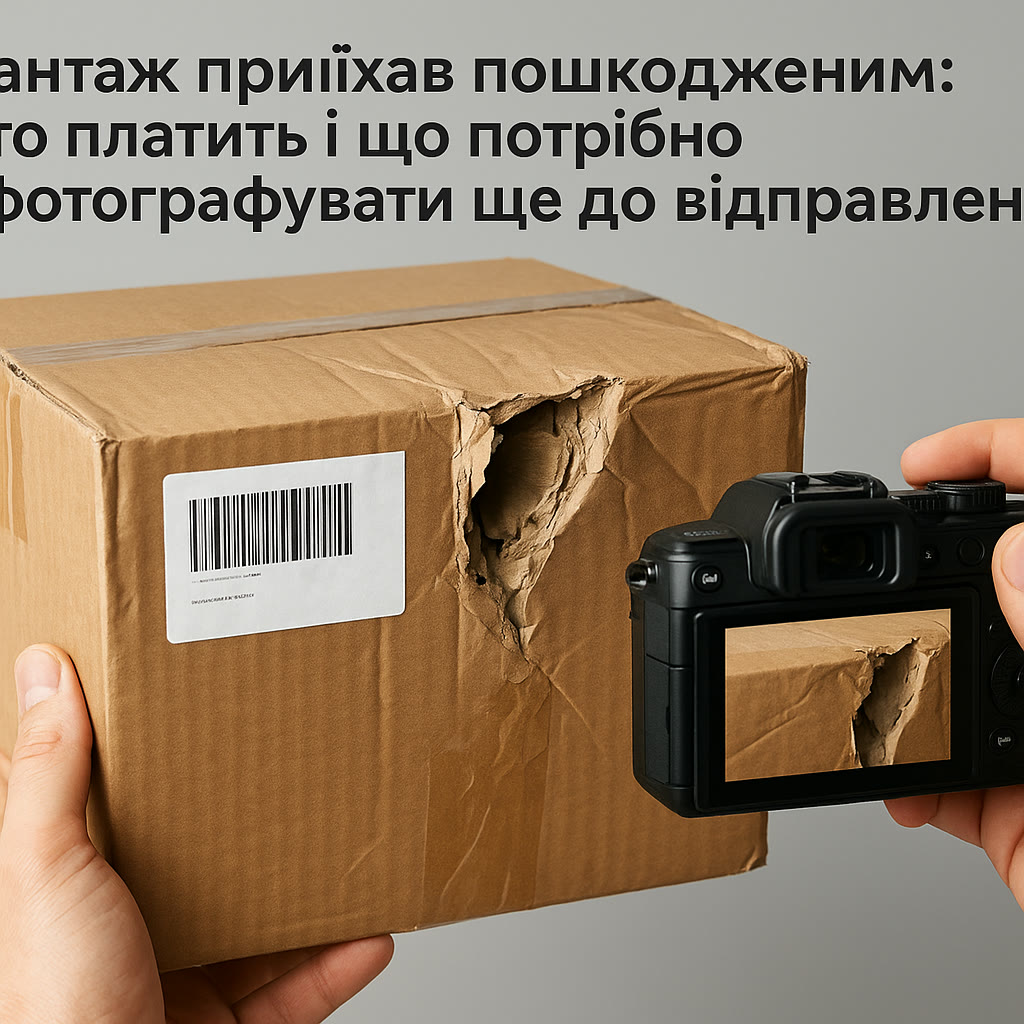
If the cargo arrives damaged, don't rush to take it without comment and sign the documents right away. Even a few minutes of careful inspection will help preserve evidence and work out whether compensation can be claimed from the carrier, the shipper or another liable party.
Inspect the cargo before signing the consignment note
Ask the carrier's employee or driver to wait until the inspection is finished. Check not only the number of items, but also the condition of the packaging: whether there are tears, dents, punctures, signs of moisture, torn film or damaged seals.
If the packaging looks suspicious, inspect the goods in the driver's presence. For equipment, furniture, glass and other fragile property, it's important to check the corners, the housing, the surfaces, the mechanisms and completeness. Don't throw away the boxes, the filler material, the pallet or the securing elements: they can show where and how the damage occurred.
- Count all the items and check them against the consignment note.
- Check the integrity of the packaging, the seals and the markings.
- Take photos and video of the cargo's overall condition.
- Shoot each defect in close-up and from a distance.
- Compare the actual condition with the photos taken before shipping.
"A signature without comment can make it harder to prove that the damage occurred before the moment of receipt."
Note the damage in the consignment note and draw up a report
If cargo arrives damaged, don't just sign in the receipt field. The consignment note or the electronic document needs a clear description of the defect's nature: "torn packaging," "dent on the housing," "signs of getting wet," "damaged seal," "goods received with visible damage."
Don't use general phrases like "there are complaints." They don't explain what actually happened. State the number of damaged items, the outward condition of the packaging and, if possible, a preliminary estimate of the loss. Make sure the driver or the carrier's representative also signs the document.
If the carrier refuses to enter comments, record this refusal on video, bring in a witness and make the corresponding note in the documents. Don't sign a blank report form or a document stating there are no complaints.
Record hidden defects and notify the carrier
Damage isn't always visible on a surface inspection. If a defect is found after unpacking, stop using the goods, keep the packaging and immediately take photos or video. The shots should clearly show the goods, their markings, the packaging and the shipment number.
Draw up a report on the concealed damage following the procedure set out in the contract or the carrier's rules. Send notice of the problem within the set time limits, and attach copies of the consignment note, the report, the photos, the invoices and documents confirming the value of the goods.
"The faster the damage is recorded, the less room there is for a dispute about exactly when it occurred."
Until the inspection is complete, don't repair, dispose of or hand the goods over to third parties without documentation. This will help preserve the evidence if the parties can't reach a voluntary agreement.
What Documents and Evidence Are Needed for Compensation
If the cargo arrives damaged, photos of the defect alone usually aren't enough. To get compensation, you need to show the full chain: what condition the goods were in when handed over, who accepted them, when the damage was discovered, and what the actual amount of the loss is.
Gather photos, video and evidence of the cargo's condition
Attach to the claim photos taken before shipping and on receipt. They should show the goods as a whole and in close-up, the packaging from every side, the pallet, the securing, the seals, the markings, the shipment number and the visible damage.
Video can complement the photos, especially if it shows the unpacking as one continuous recording. Keep the original files, not just shots re-sent through a messenger. Don't edit or crop them in a way that removes the date, the time, the markings or part of the packaging.
If the defect wasn't spotted right away, photograph the packaging, the internal protection, the goods and the site of the damage before any repair. Don't throw away the box, the film, the seals or the securing elements: the carrier or an expert may ask to inspect them.
"The evidence needs to explain not only that the goods are damaged, but also what condition they were handed over in and when the defect was discovered."
Confirm the fact of carriage and acceptance
The basis of a claim is the transport documents: the consignment note, the express waybill, the international CMR consignment note, the acceptance report, the carriage order or the contract with the carrier. Check that the name of the goods, the number of items, the date, the shipper, the recipient and the shipment number match across them.
An important piece of evidence is the consignment note with the recipient's comments. It should describe the specific defects: torn packaging, a dent, signs of getting wet, a broken seal or an incomplete set. Attach a damage report signed by the carrier's representative, the driver or other people present. If the representative refused to sign the report, record this in writing and keep proof of the refusal.
- the consignment note or the carriage contract;
- a damage report or a discrepancy report;
- photos and video before, during and after receipt;
- correspondence with the carrier or the delivery service;
- invoices, receipts and documents on the value of the goods;
- an appraiser's opinion, a repair estimate or a restoration invoice.
Confirm the amount of the loss and file the claim
Attach to the compensation claim documents confirming the price of the goods: an invoice, a sale and purchase contract, a delivery note, a payment order or an invoice. If the damaged goods can be repaired, submit an estimate or invoice from a service centre. For goods that are a total loss, a valuation or an expert opinion may be needed.
Keep all correspondence with the delivery service: inquiries, replies, claim/ticket numbers, notices of inspection and settlement proposals. File the claim in a way that lets you confirm the date and the fact of submission. The time limits for filing depend on the contract, the mode of carriage and the applicable rules, so check them right away.
In the end, the materials need to consistently prove three things: the goods were handed over in good condition, the damage was discovered during or immediately after delivery, and the claimed amount is backed up by documents.

FAQ: Answers to Common Questions About Damaged Cargo
Can I take delivery of a parcel if the packaging is damaged?
Yes, the recipient can accept the cargo, but it shouldn't be done without recording its condition. Before signing the documents, inspect the box, the pallet, the film, the seals and the markings. If you see dents, tears, signs of moisture or other defects, enter a specific description in the consignment note or the electronic document. The phrase "received with damaged packaging" is more useful than a general "there are complaints."
Take photos and video of all the damaged spots, the cargo's overall appearance and the shipment number. If the carrier allows an inspection before acceptance, check the goods themselves too. When the cargo arrives damaged, don't sign a document marked as having no complaints if the defect is already obvious. Refusing to take delivery is possible if the terms of carriage allow for it, but it isn't always the best solution: sometimes it's safer to accept the cargo with comments and draw up a report.
What to do if there's no report or the carrier didn't draw one up?
First of all, ask the carrier's representative to draw up a damage report or a discrepancy report. If they refuse, record this refusal in the consignment note, the electronic system or correspondence. State the date, the time, the shipment number, the nature of the defect and the details of the person who refused to sign the document.
Additionally, take detailed photos and video in the presence of witnesses, keep the packaging and, if possible, get written confirmation from a warehouse or pickup-point employee. Notify the delivery service immediately through an official channel and ask them to register the complaint. The lack of a report makes it harder to prove your case, but it doesn't take away the right to claim compensation if there's other evidence: the consignment note, correspondence, video recording, photos taken before shipping and documents on the value of the goods.
Who pays for hidden defects, and what to do if compensation is refused?
A hidden defect is discovered only after unpacking, when the packaging could have looked intact from the outside. In such a case, don't use or repair the goods until you've recorded their condition. Take photos of the packaging, the internal protection, the markings and the defect itself, and keep all the packing materials.
Notify the carrier within the time limit set by the contract or the delivery rules, and ask for an inspection. If the damage occurred during carriage, liability is usually determined based on the documents, the terms of the contract, the packing method and the circumstances of handover. Improper packing can be grounds for a claim against the shipper, while a breach of the carriage conditions can be grounds for a claim against the carrier.
If the delivery service refused compensation, demand a written explanation of the reasons. Then file an official claim with photos, the report (or an explanation of why there isn't one), the transport documents, the invoices and a calculation of the loss. If the dispute can't be settled voluntarily, it's worth seeking legal advice and assessing whether it's worth pursuing your claim further.
Conclusion: How to Reduce the Risk of Losing Money to Cargo Damage
To avoid losing money to damage during carriage, start protecting your interests before shipping. Pack the goods securely according to their properties, fill the voids, use protective materials, securing and seals. Before closing the packaging, photograph the goods themselves, their completeness, the markings, the pallet, the securing and every side of the packaging.
If the cargo arrives damaged, don't rush to sign the documents without an inspection. Check the number of items, the condition of the packaging, the seals and the goods themselves. Note every visible defect specifically in the consignment note or the report: a tear, a dent, signs of moisture, a broken element or an incomplete set. Add photos and video, keep the packaging, and don't repair the goods until the record is complete.
If the damage turns out to be hidden, notify the carrier immediately after unpacking and draw up a report following the procedure set out in the contract or the delivery rules. A representative's refusal to sign the document doesn't mean the evidence is lost: record it, keep the correspondence, the consignment note, the photos, the video, the invoices and the documents on the cost of repair or the goods. A clear sequence of actions will help establish the liable party and improve the chances of compensation.


Related posts



Do you have cargo or transport?
Post your offer — and find the right partner today.