Grain shipping season 2026: where the cargo is and what transport you need
Grain shipping season 2026: what September already shows
Freight volumes are shaped by the harvest and external demand
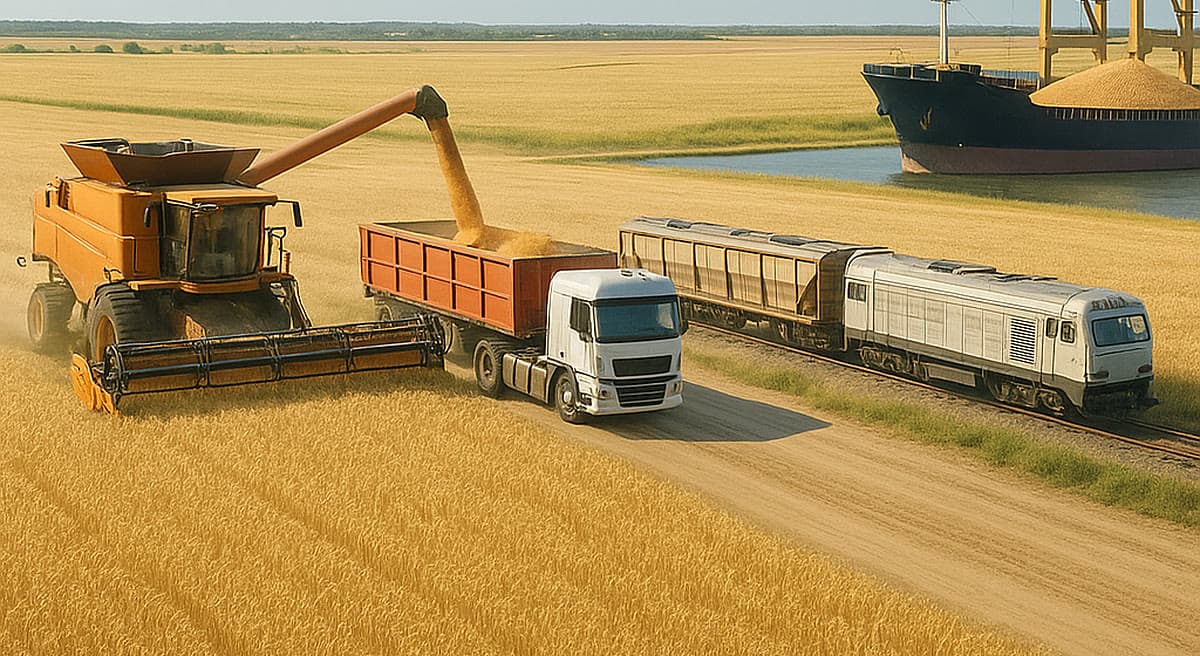
Grain shipping season 2026 is already in full swing: in the first half of September 2026, grain and oilseed crops account for about 19% of cargo listings on SAMO-TRANS, and a grain truck or tipper is needed in roughly 18% of listings — more detail in the statistics on autumn cargo. Freight volumes depend not only on the area under crops, but also on actual yields, the structure of the harvest and how quickly it is sold. Given favourable weather, farmers may bring in larger batches of wheat, corn, barley and oilseeds. At the same time, drought, excessive rainfall, frost or power-supply problems can reduce the harvest and shift the shipping schedule.
Export demand will remain an important factor. If Ukrainian grain sees stable demand in the markets of Europe, the Mediterranean, the Middle East and North Africa, carriers will be working at high utilisation. The largest cargo volumes will traditionally be generated by regions with developed agricultural production and storage capacity: the central, southern and western oblasts. Part of the flow will head to sea terminals, and part — through the western border crossings.
Ports and border routes will remain key
Sea logistics can move large batches at a lower cost on long export routes. That is why port throughput, vessel availability, terminal operations and security conditions will directly affect how much grain needs to be delivered to the coast by rail and road.
As long as port infrastructure keeps running smoothly, the main load falls on rail routes and grain trucks bringing produce to elevators and terminals. If sea shipments face restrictions or a temporary cut, the role of overland export through the EU border will grow. This can increase queues, the need for transshipment and delivery times.
- rail will be needed for regular large batches over medium and long distances;
- road transport will provide flexible haulage from farms to elevators, stations and ports;
- river and multimodal routes may supplement the main channels where this is economically justified.
The security situation affects routes and carriers' reserves
In 2026, the agricultural market already factors in the risk of infrastructure damage, changes in the availability of certain routes, and uneven operation of transport hubs. Because of this, companies need alternative routes, a reserve of railcars and trucks, additional storage capacity and more precise planning of loading windows.
So, the 2026 grain shipping season will most likely be flexible and will depend on the combination of harvest, demand and security. The market players who win will be those who combine rail, road and port solutions in advance, rather than relying on a single route.
Where the most grain cargo will be generated
The central and southern oblasts will remain the main loading zones
The most grain cargo in the 2026 season is likely to be generated in oblasts with large sown areas, developed agricultural production and a dense network of elevators. These zones include Poltava, Chernihiv, Sumy, Kharkiv, Kirovohrad, Cherkasy, Vinnytsia, Dnipropetrovsk, Odesa and Mykolaiv oblasts. Actual volumes will depend on yields, the crop structure, field accessibility and the security situation.
The central regions matter because they combine large production areas with capacity for processing and storage. Here grain moves from farms to linear and transshipment elevators, and after accumulation it is directed to ports, border crossings or domestic consumers. The southern oblasts simultaneously serve as a production base and a gateway to sea logistics, so during periods of active export, demand for railcars and grain trucks there can grow quickly.
The heaviest transport load does not arise where grain was simply grown, but where it is simultaneously harvested, stored and prepared for shipment.
Elevator hubs will determine where batches move
After harvest, grain rarely goes directly from the field to the end buyer. First it is delivered to the nearest elevator for cleaning, drying, laboratory testing and temporary storage. That is exactly why transport demand will concentrate around elevator zones, railway stations, transshipment terminals and major highways.
For domestic transport, road haulage will be used most often: it makes it possible to collect small batches directly from farms and bring them in over short distances. Rail will be more efficient for large volumes between oblasts, elevators and ports. In places where certain stations lack sufficient throughput, the importance of transshipment between different modes of transport will grow.
Export directions: ports, the western border and combined routes
Export flows will take shape under two main scenarios. The first is delivering grain by rail or by road to the ports of Greater Odesa and the Danube ports of Reni and Izmail, if sea logistics is running smoothly; both Danube ports regularly appear as unloading points in grain listings on the cargo board. The second is transport through the western border crossings to terminals and buyers in EU countries. The choice will depend on cost, queues, railcar availability, processing speed and the conditions on a specific route.
- Domestic routes: field — elevator — processing plant or railway station.
- Port routes: elevator — rail or road — sea terminal.
- Western routes: elevator — border terminal — European buyer or warehouse.
So, the 2026 grain shipping season will create the greatest need for transport at the junction of production regions, elevators and export hubs. Shippers need to identify a backup route in advance, and carriers need to plan their fleet with peak post-harvest periods in mind.
What transport will be needed to move grain in 2026
Rail: the backbone for large, regular batches
In the 2026 grain shipping season, rail will likely remain the main mode of transport for moving large volumes over medium and long distances. Grain hopper cars make it possible to form block trains from an elevator or station to a port terminal, a border crossing or a domestic processing plant. This is especially important for farms and traders working with thousands of tonnes of produce.
The advantages of rail are high capacity, relatively predictable cost on long routes and less dependence on road conditions. At the same time, delivery speed can drop because of a shortage of railcars, queues at stations, limited crossing throughput and the need to change bogies or reload cars at the border. That is why rail works best where cargo can be planned well in advance in large batches.
Road transport: flexibility from field to elevator and border
Trucks will remain irreplaceable on the first and last mile. It is grain trucks and tippers that collect the harvest directly from the field, deliver it to the nearest elevator, and can also quickly bring produce to a railway station, a port or a border terminal. Road transport does not need to be tied to a track and allows a route to be changed quickly depending on queues and road conditions.
Its weak points are a smaller batch per trip, higher sensitivity to fuel prices, road conditions and border delays. Over long distances, road transport usually becomes more expensive, especially if the truck returns without a return load — we calculated separately how much a carrier loses on empty running. However, for short and medium routes, urgent shipments and pickup from scattered farms, it is often the most practical solution.
River and sea transport: capacity for export flows
River transport is worthwhile for large batches that can be accumulated near a terminal and delivered by inland waterways to ports or transshipment complexes. It can reduce the load on roads and rail, but it depends on the navigation season, vessel draught, the condition of berths and the availability of transshipment.
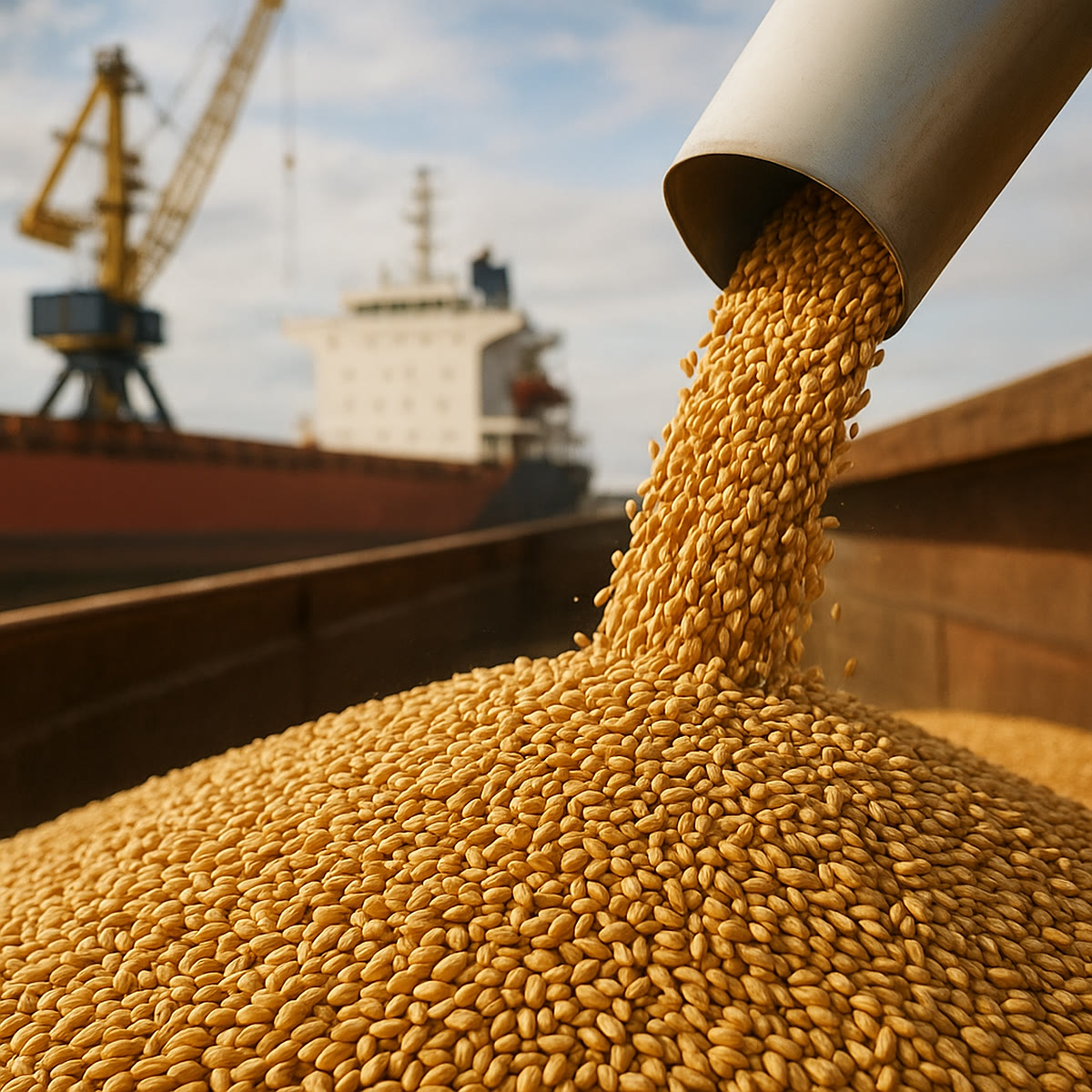
Sea vessels provide the greatest capacity and are best suited to long-distance export. At the same time, this mode requires accumulating a batch in advance, terminal operations, a stable security situation and a coordinated schedule of vessel calls. For most Ukrainian shippers, the optimal scheme is multimodal: a truck delivers grain to the elevator, rail or a river vessel takes it to the port, and sea transport takes it to the final market.
| Mode of transport | Best suited for | Key advantage | Main limitation |
|---|---|---|---|
| Rail | Large long-haul batches | Capacity and stable cost | Queues and dependence on infrastructure |
| Road transport | Short routes and haulage | Flexibility | Fuel cost and downtime |
| River transport | Large batches to ports | Energy efficiency | Seasonality of navigation |
| Sea transport | Long-distance export | Greatest capacity | Dependence on ports and security |
Logistics bottlenecks: what can affect delivery speed and price
Rolling-stock shortages and the seasonal rate spike
One of the main risks for the 2026 grain shipping season could be a shortage of available grain hopper cars during periods of mass harvest. After the harvest, many farms simultaneously try to move produce out of temporary storage and elevators. If the railcar fleet cannot keep up with demand, waiting times will increase and shippers will have to compete for priority shipments.
A similar situation is possible with trucks. The need for grain trucks rises sharply during peak harvest, while in the off-season part of the fleet may stand idle or switch to other cargo. This creates seasonal rate fluctuations: on short routes, price will depend on truck availability, fuel cost, distance to the elevator and the ability to load and unload the vehicle quickly.
The final cost is affected not only by the carrier's rates but also by downtime. A queue at a station, near a terminal or at the border means extra costs for railcar rental, driver pay, fuel and fleet maintenance. So the cheapest rate per kilometre does not always mean the lowest total delivery cost. The trip profitability calculator helps compare the full economics of a trip — including fuel, downtime and empty return.
The border, terminals and ports can slow down the whole chain
The western border crossings operate with varying throughput, and grain cargo often needs extra paperwork and reloading because of differences in rail infrastructure. Under high demand, this can create queues of railcars and trucks. Waiting time will depend on the crossings' working hours, documents, batch approval and how quickly terminals can accept cargo.
Port logistics also has its own limitations. Even with enough grain, shipments slow down if there isn't enough space for accumulation, drying capacity, weighing equipment, berths or storage tanks. Security will remain an additional factor: a change in the availability of certain routes or infrastructure facilities may require urgently redirecting flows.
Reliable logistics doesn't start with finding the cheapest trip, but with a backup plan in case of delay.
How to reduce the impact of logistics bottlenecks
Agricultural companies and traders should plan shipments ahead of the peak period, agree on loading windows and not rely on a single carrier or a single route. Practical measures can include:
- booking railcars and grain trucks in advance for the busiest weeks;
- using several elevators with different shipping directions;
- combining road delivery with rail or river transshipment;
- building in a time buffer at the border, at the port and during transshipment;
- comparing the full cost of a route, including downtime, rather than just the base rate.
So, in the 2026 grain shipping season, delivery speed and price will be determined by how well-coordinated the whole chain is — from field to end buyer. Early planning, route diversification and a reserve of transport capacity will help reduce dependence on queues and sudden rate swings.
FAQ: answers to the main questions about the 2026 grain shipping season
What transport should I choose for different volumes and distances?
For small batches from a farm to the nearest elevator, road transport is usually the most convenient. It is not tied to a railway station, can collect grain directly from the field and can quickly change the unloading point. This option is practical for short routes and situations where it's important to avoid idle combines or overloaded storage sites.
If it's about large volumes and distance between oblasts, rail is worth considering. It makes it possible to move significant batches from the elevator to a port, a border terminal or a processing plant. For export to distant markets, the most efficient scheme is multimodal: a truck delivers grain to the accumulation point, rail or a river vessel moves it to the port, and a sea vessel takes it to the final buyer.
When should transport capacity be booked?
In the 2026 grain shipping season, it's better to plan bookings before the start of mass harvest, especially if cargo needs to be delivered to a port or through a busy border crossing. The exact time buffer depends on the crop, the region, the batch size, the mode of transport and the contract terms. The larger the batch and the more transshipments the route involves, the earlier railcars, trucks, storage capacity and terminal windows should be arranged.
Farmers with small volumes should agree in advance with the elevator on the intake schedule, moisture requirements and the possibility of shipment after storage. Exporters should synchronise transport with document readiness, the vessel schedule or the terminal. A delay at one stage can cause downtime along the whole route.
How to combine modes of transport and control costs?
It's best to compare not a single carrier's rate, but the full cost of delivery. This includes loading, storage, cleaning or drying the grain, transshipment, paperwork, possible downtime and the empty return of the vehicle. Sometimes a road route looks more expensive than a rail one, but becomes more cost-effective because there is no lengthy wait. In other cases, rail or a river vessel provides a lower price per tonne, given a sufficient volume.
For the 2026 grain shipping season, it's advisable to have a main route and a backup one. If the port direction is temporarily overloaded, part of the batch can be redirected to another terminal or to the western border. This approach requires checking throughput and the availability of railcars and grain trucks in advance, but it helps farmers and exporters reduce the risk of delays and better control delivery times.
Conclusion: how to prepare grain logistics for the 2026 season
The 2026 grain shipping season places the greatest load on agricultural regions with large sown areas, elevator capacity and access to ports or western border crossings. The main flows form after harvest, when grain needs to be moved out of farms, elevators need to be replenished and export batches need to be prepared, all at the same time.
Rail will be key for large volumes and long-distance delivery, road transport will provide flexible haulage from field to elevator, station or terminal, and river and sea routes will supplement export logistics. For many companies, the most efficient solution will be a multimodal scheme, in which modes of transport are combined depending on distance, batch size, cost and timing.
To reduce delays, carriers and shippers should book railcars, grain trucks, storage capacity and terminal windows in advance. It's just as important to check route throughput, build in time for the border and transshipment, and have a backup direction in case of queues, restrictions or changes in the security situation.
When planning, you need to assess not just the rate per tonne or kilometre, but the full cost of the chain: loading, storage, drying, transshipment, downtime and the possible return of an empty vehicle. Early coordination between farmer, elevator, carrier and buyer will help stabilise deliveries and keep logistics costs in check.

Related posts



Do you have cargo or transport?
Post your offer — and find the right partner today.