Why Some Freight Routes Get More Expensive in Autumn: 5 Reasons a Shipper Doesn't See
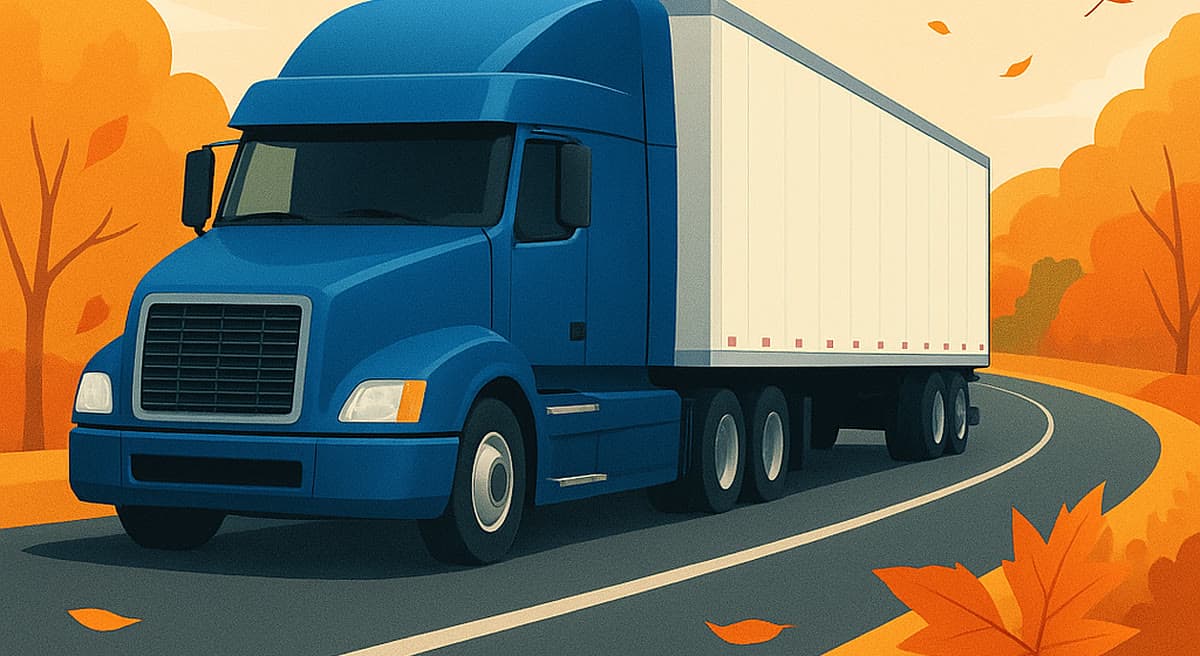
Why some freight routes get more expensive in autumn: the key factors in brief
Seasonality does not affect the whole market the same way
Why do some freight routes get more expensive in autumn while others stay almost unchanged? The main reason is that autumn does not change just one condition of a haul — several change at once: demand for transport, the availability of drivers and trucks, the price of diesel, weather risks, restrictions on the roads, and the complexity of crossing borders.
At the same time, a seasonal price rise is not automatic for every route. Routes with a heavy flow of agricultural cargo, export goods or products bound for retail chains can feel the transport shortage more strongly: in September 2026, grain and oilseed crops accounted for about 19% of cargo listings on SAMO-TRANS, mineral fertilisers for about 12%, and shippers asked for a grain truck or a tipper in roughly 18% of listings. On routes with stable or lower demand, by contrast, carriers do not always have room to raise their rates.
It is important to distinguish the base price of a trip from additional costs. In a commercial quote these can be far from obvious, yet they still affect the final rate: waiting time at loading, waiting at the border, paid permits, route changes, or the truck returning without cargo.
Five factors that are most often left out of the calculation
In autumn a shipper may see only the final rate, while the carrier is pricing the entire economics of the trip. The price is most often shaped by:
- Seasonal demand. Harvesting sunflower and late grain crops, bringing in mineral fertilisers for the winter sowing, a pickup in exports, and retail chains preparing for the winter season and the holidays all increase the number of transport requests.
- Weather and road conditions. Rain, fog, early frost and repairs on certain sections can lengthen the trip and raise fuel costs.
- A shortage of free trucks. Some trucks are already tied up on long-term contracts, and others are working more profitable routes.
- Waiting time and empty running. A queue at the grain elevator, at a Danube port, or at a border crossing, and a remote delivery point with no return load, are unproductive time whose cost the carrier folds into the rate of the main trip.
- Fuel price. As of 17 September 2026, the average diesel price in Ukraine is UAH 98.24/l, so at a consumption of 32 l/100 km, fuel alone costs about UAH 31 on every kilometre of the trip; on top of that come toll sections, insurance, and customs-brokerage and forwarding services.
These factors are interconnected. For example, rising demand simultaneously lengthens queues at terminals, narrows the choice of trucks, and drives up the price of urgent listings. So the same mileage does not mean the same shipping cost.
Why the price changes specifically on certain routes
What matters most is the nature of the cargo, geography, how regular the shipments are, and how quickly a return load can be found. A route with a seasonal product and an unstable schedule can get more expensive than a route with a steady flow and a predictable truck turnaround.
So the answer to why some freight routes get more expensive in autumn lies not only in seasonal demand. The real rate is shaped by the combination of hidden costs, risks, and the availability of transport on a specific route in a specific period.
1. A seasonal spike in demand for haulage
When the number of listings rises all at once
In autumn, freight transport starts competing not for every order at once, but for specific time windows, body types and routes. At the height of the sunflower and late grain harvest, agricultural companies step up shipments of grain, oilseeds, vegetables and other produce to grain elevators, processing plants, ports and border terminals, while mineral fertilisers for winter sowing move the other way to meet that flow. If the harvest is gathered in roughly the same period, the number of listings jumps within a few weeks.
In this situation a carrier can choose between several orders. Preference often goes to those with a short lead time, clear loading, and an acceptable return trip. For a shipper this means: even a familiar route can become more expensive if there simply aren't enough free trucks on a given day. In September 2026 on SAMO-TRANS, about four cargo listings came in for every one listing of free transport, and the month's most expensive trips were mineral fertiliser hauls — up to UAH 74,000 per truck; more examples are collected in the review “The 10 most expensive freight routes of September”.
The price is shaped not only by distance, but by how many trucks are available exactly when they're needed.
That is exactly why the question of why some freight routes get more expensive in autumn cannot be explained by the change in fuel price alone. When demand outpaces supply, carriers price in the transport shortage, the risk of waiting, and the cost of finding the next load.
Preparing for winter and the holidays intensifies competition
Alongside the agricultural season, businesses build up stock ahead of the cold season. Warehouses accumulate building materials, fuel, packaging, long-shelf-life food, heating goods and retail products. Some companies try to deliver cargo early to reduce the risk of disruptions in December and over winter.
By late autumn, preparation for the holiday season adds to this. Distributors increase deliveries to shops and logistics centres, and manufacturers try to avoid empty shelves or stoppages at warehouses. As a result, more urgent listings appear on popular routes, competing with each other for the same trucks.
- Shipments of agricultural and food products increase.
- Companies build up seasonal stock earlier.
- Retail chains shorten the acceptable delivery time.
- Urgent trips crowd out part of the planned orders.
Why the price rise does not affect every route
Rates react most strongly where several conditions coincide: seasonal cargo, a limited number of suitable trucks, complex logistics, and a weak flow of return loads. In September 2026 this was chiefly remote delivery points with nothing to pick up for the return trip, and frontline regions that carriers agree to enter only for a higher rate. For example, a route to a region with heavy autumn exports can get more expensive faster than a route with steady year-round demand.
A shipper can reduce the impact of the seasonal spike by booking transport in advance, agreeing a flexible loading window, and looking not just at the price of the truck's arrival but at the full duration of the trip. During a period of peak demand, early planning often saves more than trying to find the cheapest truck at the last moment.

2. Weather, road conditions and more time on the road
Autumn weather increases not only time but the uncertainty of the trip
Rain, fog, sleet and early black ice directly affect a truck's speed. The driver has to slow down, increase following distance, and take turns, descents and busy sections more carefully. Even if the distance between points doesn't change, the actual delivery time can grow.
For the carrier this means a longer truck turnaround. A truck that, in good conditions, could have made its next load the same day arrives late because of the weather. The rate calculation factors in the driver's extra hours, the fuel spent during slow driving, and the risk of disrupting the schedule for the next trip.
Why do some freight routes get more expensive in autumn? Partly because unstable weather makes planning less precise. On routes with mountain sections, secondary roads or frequent congestion, this effect is usually more noticeable than on main highways.
Roadworks and temporary restrictions change the route's logic
In autumn, repairs, bridge works, verge reinforcement, or preparing roads for winter continue on certain sections. Because of this, trucks may face detours, waits before reversible traffic, or sections with a reduced speed limit. The extra kilometres don't always look significant, but together they add to the cost and duration of the trip.
A separate factor is temporary restrictions for oversized, overweight or other specialised transport. These can be introduced because of the condition of bridges, repairs, unfavourable weather, or decisions by the responsible road authorities. The carrier has to check the current traffic conditions and sometimes has to rebuild the route after the order has already been accepted.
- weight or size restrictions on a specific structure;
- lane closures and an organised detour;
- a driving ban on certain sections at certain hours;
- a reduced speed limit because of dangerous road surface conditions;
- delays on approaches to repair zones and large cities.
How risks turn into a higher final price
A shipper often compares only the mileage and the base rate. The carrier, however, prices the full cost: time on the road, the likelihood of waiting, extra fuel, labour, and the risk of damage to the cargo or the truck. If the delivery schedule is tight, a reserve for urgency and complexity may be added to the price.
To reduce the impact of autumn factors, it's worth checking road conditions in advance, agreeing a time buffer, and clarifying acceptable detours. A flexible delivery window often makes it possible to use a safer and cheaper route, while a requirement to arrive at an exact hour can noticeably raise the rate.
3. A shortage of drivers and free transport
Why a free truck becomes a more expensive resource in autumn
In autumn, carriers get more requests at once from the agricultural sector, manufacturers, distributors and retail chains. Demand rises unevenly: some routes are short of trucks, while on others trucks may be waiting for a load. Because of this, a shipper sees only the overall rate but doesn't always understand how hard it is to find the right type of transport on a given day.
Driver availability becomes an added factor. Some drivers are already working under long-term contracts, some choose stable routes with a predictable schedule, and it's harder to quickly find a replacement for complex or urgent trips. If a listing involves night loading, a border crossing, a long wait, or several delivery points, the carrier weighs not just the mileage but the working conditions.
This is exactly one of the answers to why some freight routes get more expensive in autumn. A limited supply of trucks and drivers lets a carrier choose the orders with the best balance of income, time and risk.
4. Waiting time and empty running go into the price of the trip
A truck earns money only while it's doing paid work. If it arrives at a warehouse and waits for hours for paperwork, a queue, the completion of order picking, or a free loading ramp, that time doesn't disappear from the calculation. The driver still has to be paid, the truck still consumes resources, and the next order can end up postponed.
A route with no guaranteed return load becomes even more expensive. After delivering to a region with low business activity, a truck may have to return empty or spend extra time looking for an order. In that case, the rate of the first trip partly compensates for the future empty running — we calculated exactly how much such a return costs in the article “A truck returns empty: the cost of deadhead running”.
- waiting for loading or unloading;
- searching for a return load after delivery;
- the truck returning without a paid assignment;
- the next trip being postponed because of a delay;
- extra communication and route changes by the dispatcher.
Uneven demand creates different rates for similar distances
Two routes of the same length can have different prices. In September 2026, on domestic trips of 450–700 km, listed rates stayed roughly in the range of UAH 59–80/km, while on short legs of 200–350 km they ran UAH 95–167/km, since the cost of positioning the truck and paperwork is spread over a shorter distance there (for more, see the review “How much does a truck cost across Ukraine in September 2026”). On a route with a regular two-way flow of cargo, a truck returns to work faster, so the carrier has more room to offer a competitive rate. But if cargo travels only one way and return listings are rare, the risks get priced into the rate.
A shipper should clarify whether the quote already accounts for waiting time, loading restrictions, and possible empty running. Early booking, a fixed schedule, and willingness to accept a wider delivery window help attract more carriers and reduce the seasonal surcharge.
5. Fuel, queues, borders and other hidden parts of the rate
Fuel is only one part of the variable cost
The price of diesel directly affects the rate, since for a carrier it's one of the main cost items. As of 17 September 2026, the average diesel price in Ukraine is UAH 98.24/l (fuel prices), so at a typical consumption of 32 l/100 km, every kilometre of the trip takes about UAH 31 in fuel alone: over a 540 km leg that's roughly UAH 17,000. But it's important to account not only for the price per litre at the pump, but also for the actual consumption on a specific route. Autumn weather, traffic jams, detours, frequent stops and slow driving all increase fuel consumption compared with the standard calculation.
When a route gets longer because of road repairs or a change in traffic patterns, a carrier spends more resources even without a formal increase in the distance stated in the listing. If the fuel price fluctuates, a company may build a reserve into the rate so as not to end up working at a loss if prices rise during regular trips.
So the answer to why some freight routes get more expensive in autumn often includes not one big surcharge, but several small costs that accumulate over the whole trip.
Border queues and paperwork add to the cost of time
In autumn, queues don't form only at the border: during the harvest export season, trucks stand at the approaches to grain elevators and at Danube ports, where grain and oilseeds go for export. For international haulage, how busy the border crossings are plays a major role. A long wait holds up the truck, the driver and the next orders. The carrier may price in the risk of waiting, especially if the route regularly has an uneven flow or requires several control procedures.
The length of processing is affected by how complete the paperwork is, whether the data in the declarations matches, the nature of the cargo, and the requirements of the specific route. An error in the paperwork can cause an extra wait, a postponed delivery, or the cost of correcting the documents. Even when the delay isn't the carrier's fault, the truck stays tied up and can't do another trip.
Separately payable services can include a freight forwarder, a customs broker, special permits, or cargo escort. Whether these are needed depends on the type of haulage, the destination country and the characteristics of the goods, so the same distance doesn't mean the same final price.
Insurance, toll roads and waiting time in the final rate
Valuable, dangerous, temperature-sensitive or oversized cargo requires extra safety measures. This can mean extended insurance cover, special equipment, permit documents, or a truck with specific technical characteristics. Such costs aren't always visible in the first quote, but they end up in the final bill.
- fees for using certain roads, bridges or tunnels;
- cargo insurance and carrier liability insurance;
- customs-brokerage and forwarding services;
- waiting at the border, at a terminal, or at a warehouse;
- the cost of changing the route or sending the truck again.
To compare rates correctly, a shipper should ask for a breakdown listing which costs are included and which aren't. A low base price can turn out less advantageous if waiting time, toll sections, paperwork or extra waiting hours are billed separately.
FAQ: what to check with a carrier before an autumn trip
How do you lock in a rate for an autumn trip?
Before confirming an order, ask for how long the carrier is fixing the rate and under what conditions it can change. Clarify whether the price includes fuel, toll roads, the truck's positioning, loading, unloading and the standard waiting time. For an international route, separately check whether forwarding, customs-brokerage services and possible document costs are accounted for.
It's best to fix the rate in writing, in the listing, the contract or the shipment confirmation. These should state the route, the truck type, the weight and nature of the cargo, the lead time, the payment terms, and the grounds for revising the price. This is especially important in autumn, when demand for transport can change quickly. This is exactly what makes it clearer why some freight routes get more expensive in autumn and which factors can affect the agreement.
What surcharges and waiting-time risks need to be discussed?
Ask how many hours of waiting are included in the base rate for loading and unloading. It's important to know the rate for every extra hour or day of waiting, and the point from which it starts counting. For trips across a border, clarify how delays at the crossing are calculated and whether there are extra charges for a change of queue, route or delivery date.
You should also find out who pays for a detour due to road repairs, sending the truck again, storing the cargo, or a loading delay caused by the warehouse. If the cargo needs a temperature regime, special securing, or higher insurance cover, these conditions should be reflected in the calculation before the trip begins.
It's just as important to clarify what happens in bad weather, temporary restrictions for trucks, or a delay caused by an official road closure. A carrier can't always guarantee an exact arrival time, but can agree on an acceptable delivery window and a procedure for reporting changes.
How do you cut costs and avoid unexpected charges?
The best approach is to book a truck well in advance and give the carrier complete information about the cargo, the loading locations, warehouse working hours and the desired schedule. The less uncertainty there is, the more precisely the rate can be calculated. A flexible pickup window often helps attract more trucks and avoid overpaying for urgency.
Compare not just the base price, but the full cost of delivery to the recipient. A cheaper offer can turn out more expensive because of separately billed waiting time, toll sections, insurance or empty running. Before the trip, ask the carrier to confirm the final amount, the list of surcharges and each party's liability in writing. This approach reduces the risk of disputes and lets you realistically assess seasonal costs.
Conclusion: how to prepare a freight shipment for the autumn price rise
Not all freight routes get more expensive in autumn in the same way. Certain routes are affected all at once by seasonal demand after the harvest, businesses preparing for winter and the holidays, worsening weather, road repairs, and temporary restrictions for trucks. Additional pressure comes from a shortage of drivers and free transport, uneven demand across regions, and the lack of a guaranteed return load.
The answer to why some freight routes get more expensive in autumn also covers the hidden parts of the rate: fuel costs, waiting at warehouses and borders, customs-brokerage services, insurance, toll roads and possible detours. So comparing offers by the truck's positioning price alone isn't enough. It's important to check exactly what's included in the rate, how many hours of waiting are covered, and under what conditions extra charges can appear.
To prepare for the autumn price rise, a shipper should book transport in advance, give the carrier complete information about the cargo, and agree a realistic delivery window. Before the trip begins, the route, the rate, the timing, the waiting-time terms, the procedure in case of a border delay or a road change, and each party's liability should all be fixed in writing. Comparing the full cost and terms of several carriers helps avoid unexpected costs and choose not the offer that looks cheapest, but one that's genuinely predictable.

Related posts



Do you have cargo or transport?
Post your offer — and find the right partner today.