What a Full Truckload Costs Across Ukraine in September 2026: Real Rates on Popular Routes
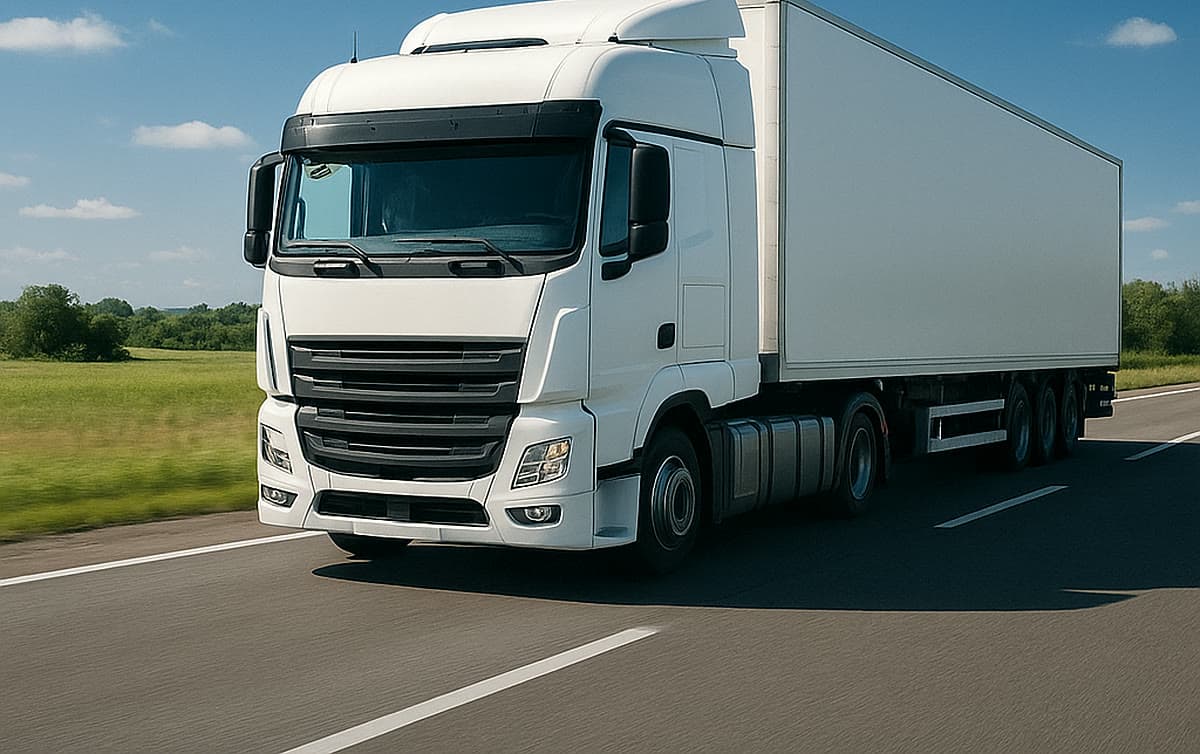
How much does a truck cost in Ukraine in September 2026
Indicative rates for a full truckload
The answer to how much a truck costs in Ukraine in September 2026 depends on the route, body type, cargo weight and urgency. For a standard curtainsider with a payload of up to 20–22 tonnes, you can use the following benchmarks for a preliminary budget:
| Route | Indicative rate per trip |
|---|---|
| Kyiv — Lviv | 32,000–45,000 UAH |
| Kyiv — Odesa | 30,000–43,000 UAH |
| Kyiv — Dnipro | 34,000–48,000 UAH |
| Kyiv — Kharkiv | 38,000–55,000 UAH |
| Lviv — Odesa | 42,000–60,000 UAH |
This is neither a fixed tariff nor a commercial offer, but a range for planning purposes. The actual price can change daily depending on truck availability and how busy the lane is.
What goes into the price calculation
The rate is affected by mileage, waiting time at loading and unloading, the number of stops, cargo type, temperature requirements, payment terms and whether the truck needs to return. Reefer, grain truck, tanker or ADR transport is usually priced higher than a standard curtainsider.
- check whether VAT, toll roads and additional services are included;
- verify weight limits and the actual number of pallets;
- compare not only the price, but also the truck arrival time and downtime terms.
Treat these benchmarks as a starting point: the carrier will quote an exact rate once they have the full details of your request.
Real rates on popular routes in Ukraine
Indicative rates on key lanes
In September 2026, the exact answer to how much a truck costs in Ukraine will depend on demand, truck availability and the characteristics of the cargo. Below are benchmarks for a full load on a standard curtainsider with a payload of up to 20–22 tonnes. These are ranges for budget planning, not a guaranteed tariff.
| Lane | Approximate distance | Rate per trip |
|---|---|---|
| Kyiv — Lviv | 540 km | 32,000–45,000 UAH |
| Kyiv — Odesa | 475 km | 30,000–43,000 UAH |
| Kyiv — Dnipro | 480 km | 34,000–48,000 UAH |
| Kyiv — Kharkiv | 480 km | 38,000–55,000 UAH |
| Lviv — border regions | 70–220 km | 18,000–35,000 UAH |
For deliveries to the Volyn, Zakarpattia, Chernivtsi or Lviv regions, the rate may rise due to uneven loads in both directions, queues at border crossing points and difficult conditions for the truck's return trip.
How cargo type changes the price
Refrigerated transport usually costs more than a curtainsider because of the cost of maintaining the temperature. Dangerous, oversized or fragile cargo requires special permits, equipment and a suitably qualified driver. Grain trucks, tankers and flatbed trucks also have their own rate scales.
Before booking, clarify whether VAT, toll roads, insurance, loading, unloading and downtime charges are included. These are exactly the terms that determine how much a truck costs in Ukraine for a specific request.
For an accurate quote, it is not only the origin and destination cities that matter, but also the weight, volume, number of packages and time constraints.
What real loads on SAMO-TRANS show
It is worth checking the benchmarks in the table against what shippers are offering right now. Here are a few examples of public full-truckload requests on SAMO-TRANS in September 2026:
| Route | Cargo | Rate per trip | Per 1 km |
|---|---|---|---|
| Dnipro — Kyiv region (Kniazhychi, Pereiaslav, Bila Tserkva), ≈420–560 km | 22–22.5 t | 33,000–37,000 UAH | ≈64–79 UAH |
| Bakhmach — Volochysk, ≈640 km | mineral fertilisers, 23 t | 38,000 UAH incl. VAT | ≈59 UAH |
| Mala Divytsia — Kropyvnytskyi, ≈346 km | mineral fertilisers, 23 t | 27,000 UAH incl. VAT | ≈78 UAH |
| Poltava — Dnipro, ≈204 km | groats on pallets, 23 t | 12,000 UAH | ≈59 UAH |
On long hauls, real rates hold within ≈60–80 UAH per kilometre. Keep VAT in mind too: 38,000 UAH incl. VAT is ≈31,700 UAH before tax. For more examples, see our ranking of the most expensive freight routes in September.
One reason rates are not going any lower is fuel. As of 17 September 2026, the average price of diesel in Ukraine is 98.24 UAH/l (fuel prices). At a consumption of 32 l per 100 km, diesel alone costs ≈31 UAH for every kilometre of the trip.
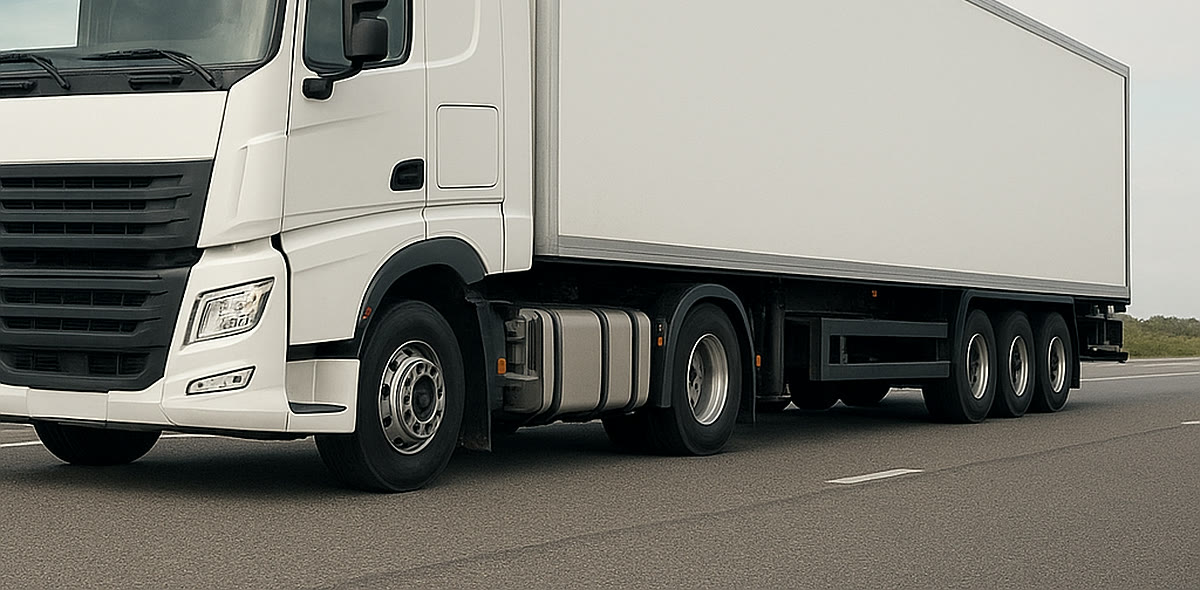
What the price of truck transport includes
Main components of the rate
To understand how much a truck costs in Ukraine, you need to look beyond the distance between cities. The carrier builds the costs of the entire trip into the rate: getting the truck to the loading point, driving with the cargo, a possible return, the driver's pay and organisational support.
- Mileage and fuel. This is the core part of the price. It depends on route length, fuel consumption, road conditions, traffic jams and forced detours.
- Driver pay. The rate includes wages, per diems, travel allowances and compensation for waiting time.
- Loading and unloading. If the carrier provides loaders, a forklift or a crane truck, these services may be charged separately.
- Downtime. Free waiting time is usually limited. Once it runs out, an hourly or daily fee is charged.
Additional costs worth checking
Cargo insurance, customs brokerage support, sealing, temperature control, reloading, delivery to several addresses and access to difficult or remote sites may be charged separately. For a reefer, the cost of running the refrigeration unit is added to the rate, and for dangerous goods, special permits and documents.
Before agreeing on a price, ask the carrier for a breakdown of the rate: what is included, what the downtime limit is, and whether VAT, toll roads, insurance and extra stops are accounted for. This approach helps you compare offers properly and avoid a situation where a low initial price rises significantly once the trip is over.
How truck costs vary with cargo and conditions
Vehicle type and cargo characteristics
How much a truck costs in Ukraine depends directly not only on distance but also on the type of vehicle. A curtainsider is the basic option for pallets, boxes, building materials and non-food goods. All other conditions being equal, its rate is usually the lowest.
A reefer costs more because the carrier pays for running the refrigeration unit, fuel to maintain the temperature and monitoring of the temperature regime throughout the trip. Additional requirements for the sanitary condition of the trailer or for a temperature log can also push the rate up.
- Curtainsider: standard general cargo with no special requirements.
- Reefer: food, medicines and other temperature-sensitive goods.
- Specialised vehicles: tankers, grain trucks, car transporters, flatbeds and vehicles for dangerous or oversized cargo.
For specialised transport, permits, escorts, additional equipment, speed restrictions and more complex route planning are taken into account. That is why it should not be compared with an ordinary curtainsider on price per kilometre.
Urgency, seasonality and direction of travel
Urgent truck arrival, night-time loading or delivery within a set narrow time window often add to the rate. In peak periods — before holidays, during harvest or with seasonal growth in demand — there are fewer free trucks, so the price goes up.
Backhaul matters a great deal. If the driver can pick up a load at the delivery point, the carrier sometimes agrees to a lower rate. On routes with uneven demand, by contrast, the customer has to compensate for empty running. Trips to border areas can also be more expensive due to queues, traffic restrictions and unpredictable waiting times.
The same distance can come at a different price depending on how easy it is to find a load for the return trip.
FAQ: answers to common questions about truck rates
How is the rate usually calculated: per kilometre or per trip?
There is no single rule. A carrier may quote a price per kilometre, per tonne or for the entire trip at once. For a full truckload, an overall rate for the route is more common, as it covers getting the truck to the loading point, waiting, road specifics and possible empty running. So when estimating how much a truck costs in Ukraine, ask not only about the per-kilometre rate but also about the final amount and the list of included services.
How can I book a truck for less?
Booking in advance, a flexible loading window and being ready to receive the truck at a time that suits the carrier all help you save. You can sometimes get a lower rate if you agree to a standard curtainsider, load the truck without extra stops or find a carrier with a backhaul. At the same time, an offer that looks too cheap needs checking: it may not include VAT, downtime, loading or insurance.
Is downtime included in the rate, and why do prices differ?
Free waiting time is usually limited by the terms of the request. Once it runs out, downtime is paid separately — by the hour or by the day. The exact limit should be agreed before the truck arrives.
Rates differ due to body type, the technical condition of the vehicle, the carrier's experience, insurance coverage, payment terms, urgency and seasonal demand. The price is also influenced by the route, road conditions, the risk of an empty return and the availability of a backhaul. So the ranges given for September 2026 should be treated as a guide, and the final amount confirmed with an individual quote.
Conclusion: how to calculate the cost of a truck in Ukraine correctly
So how much a truck costs in Ukraine in September 2026 depends on the route, body type, cargo characteristics, urgency and loading conditions. For a standard curtainsider, rates of roughly 30,000–55,000 UAH per trip on popular lanes can serve as a benchmark, but these ranges do not replace an individual quote. Refrigerated, specialised or urgent delivery will cost more.
Before booking transport, first pin down the cities and addresses for loading and unloading, the weight, volume, number of pallets, body type and preferred truck arrival date. Then ask the carrier to state the full amount and to explain separately whether VAT, fuel, insurance, loading, unloading, toll roads, extra stops and downtime are included. Be sure to clarify the free waiting time and the charge that applies once it is exceeded.
Offers should be compared on identical terms, not just on price per kilometre. Check the carrier's details, the vehicle documents, the terms of liability for the cargo and the payment procedure. If a rate is noticeably below the market range, find out whether it hides surcharges or empty running. This approach will help you estimate your budget realistically and avoid an unexpected rise in the cost of the trip. You can estimate transport costs in advance with the logistics calculator, and find a carrier for your route using the transport search on SAMO-TRANS.

Related posts

Do you have cargo or transport?
Post your offer — and find the right partner today.