Kyiv — Lviv, Kyiv — Odesa, Dnipro — Kyiv: what it costs to ship 20 tonnes right now
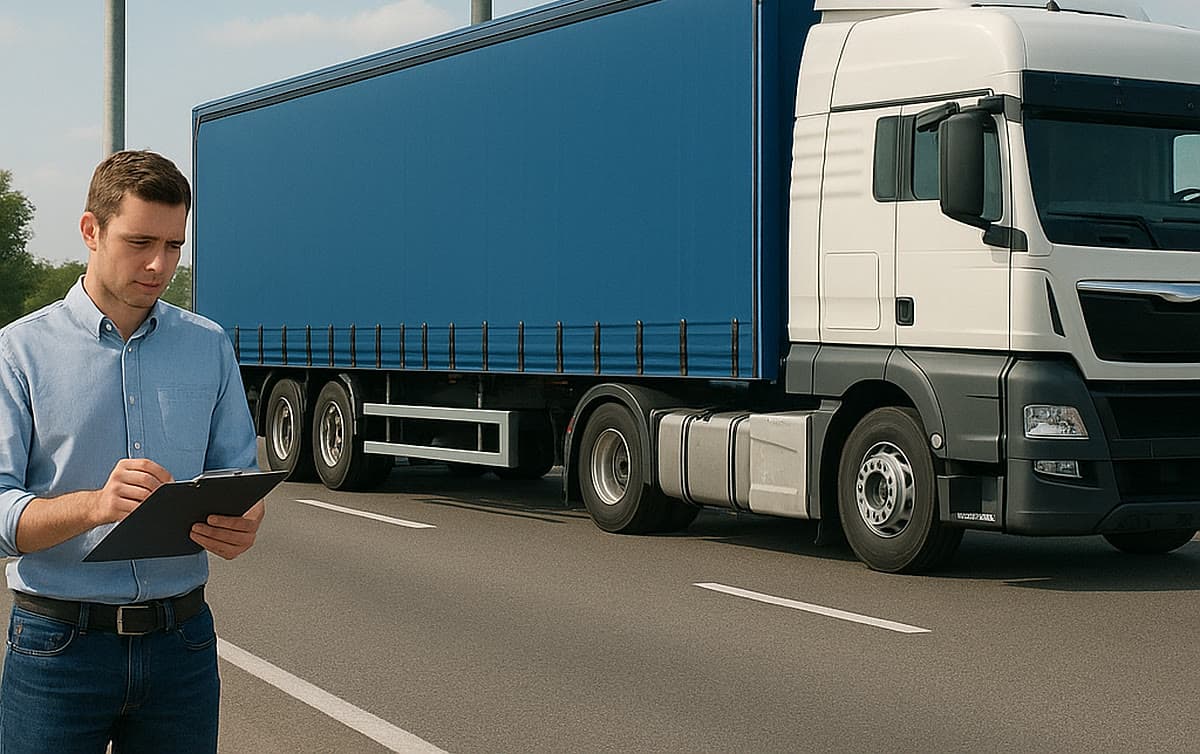
How much it costs to ship 20 tonnes right now: indicative prices on key routes
Estimated cost of moving 20 tonnes by route
How much does it cost to ship 20 tonnes across Ukraine right now? For a standard truck with a payload of up to 20–22 tonnes, a run between major cities is usually priced at 30,000–50,000 UAH per trip. This is a benchmark for a full truckload with no complex extra work, no waiting time and no special cargo requirements.
| Route | Approximate distance | Indicative price |
|---|---|---|
| Kyiv — Lviv | about 540 km | 32,000–45,000 UAH |
| Kyiv — Odesa | about 475 km | 30,000–43,000 UAH |
| Dnipro — Kyiv | about 480 km | 34,000–48,000 UAH |
The figures above are approximate and may change daily. Prices depend on seasonal demand, truck availability in the required region, road conditions, detours, fuel costs and how urgently the vehicle is needed. In some cases the price is quoted excluding VAT, so when placing an order it is important to check whether tax is included in the final amount.
What the rate includes and why it can change
The base rate most often covers positioning a curtainsider truck, loading at the agreed time, transport and unloading at the destination. Loading work, vehicle waiting time, stops at several addresses, insurance and idle time on the return leg may be charged separately.
- Groupage or non-standard cargo may be priced higher.
- A reefer, grain truck or truck with a tail lift costs more than a standard curtainsider.
- Oversized, fragile or dangerous goods require an individual quote.
To pin down exactly how much it costs to ship 20 tonnes right now, the carrier needs the loading and delivery addresses, the type of cargo, the number of pallets, the preferred date and any temperature or securing requirements.
Kyiv — Lviv, Kyiv — Odesa, Dnipro — Kyiv: comparing cost and distance
Route comparison for loads up to 20 tonnes
To understand how much it costs to ship 20 tonnes right now, it is important to compare not only the total trip price but also the distance, journey time and rate per kilometre. The benchmarks below apply to a standard curtainsider truck with no temperature control, complex securing or dangerous goods.
| Route | Distance | Journey time | Trip price | Approx. per 1 km |
|---|---|---|---|---|
| Kyiv — Lviv | 530–550 km | 9–11 hours | 32,000–45,000 UAH | 58–85 UAH |
| Kyiv — Odesa | 470–500 km | 8–10 hours | 30,000–43,000 UAH | 60–91 UAH |
| Dnipro — Kyiv | 470–500 km | 9–12 hours | 34,000–48,000 UAH | 68–102 UAH |
The mileage depends on the specific loading and delivery addresses, permitted routes and the traffic situation. Journey time can also increase due to traffic restrictions, curfew rules, roadworks or waiting at warehouses.
Real orders confirm these benchmarks: in September 2026, shippers on SAMO-TRANS offered 33,000–37,000 UAH for a 22-tonne Dnipro — Kyiv region run, depending on the unloading point. More examples are collected in the article “How much a truck costs in Ukraine in September 2026”.
How to read the price per kilometre
The cost per kilometre is a calculated figure, not a fixed carrier tariff. On shorter or less busy routes the per-kilometre rate is often higher, because the truck has to return to a region with enough orders. That is why the Dnipro — Kyiv route can cost more per kilometre than a Kyiv — Odesa trip.
The lowest price per kilometre does not always mean the most cost-effective trip: vehicle arrival time, contract terms and the carrier's liability matter too.
Before ordering, check whether the amount includes VAT, paid waiting time, loading, unloading and extra stops. The carrier will be able to give an exact quote once it has details of the cargo, the trip date and both addresses.
What affects the price of shipping 20 tonnes the most
Cargo, vehicle and transport requirements
How much it costs to ship 20 tonnes right now depends first and foremost on the characteristics of the cargo itself. Standard palletised goods are usually carried in a curtainsider, while food, medicines or frozen products require a reefer. Oversized, fragile, dangerous or high-value goods may need special securing, additional insurance and a separate permit.
Not only weight but also cargo volume matters. 20 tonnes of dense goods may take up less space than light but bulky products. If the cargo does not fit in a standard body, the carrier will have to send a larger vehicle or split the consignment across several trucks.
- a curtainsider suits most dry cargo;
- a reefer raises the rate because of temperature control and equipment costs;
- a tipper, grain truck or flatbed is needed for special types of products;
- extra securing, sealing and insurance may be charged separately.
Fuel, seasonality and load utilisation
Fuel is one of the main components of the rate. As of 17 September 2026, the average diesel price in Ukraine is 98.24 UAH/l (fuel prices). At a consumption of 32 l per 100 km, fuel alone costs ≈31 UAH per kilometre, or ≈17,000 UAH on a Kyiv — Lviv run. When diesel prices rise, carriers revise their rates even on the popular Kyiv — Lviv, Kyiv — Odesa and Dnipro — Kyiv routes. The final amount is also affected by toll roads, forced detours, route conditions and the likelihood of the truck returning without a backload.
During periods of seasonal demand — before holidays, during harvest or peak trading — fewer trucks are available, so prices may rise. On weekdays and with advance booking, it is sometimes possible to get a better rate.
Downtime, urgency and additional services
Urgent vehicle dispatch almost always costs more. Waiting time at the warehouse, manual loading, unloading, palletising, delivery to several addresses and returning packaging may be charged separately. To avoid unexpected costs, agree on the arrival time, the length of free waiting time and the full list of included services before placing the order.
How to calculate the full trip cost without hidden surcharges
Ask the carrier for a full cost estimate
To pin down exactly how much it costs to ship 20 tonnes right now, do not rely only on a price quoted over the phone. Ask for a written offer stating the route, vehicle type, cargo weight and volume, collection date and delivery time. Check separately whether the amount includes VAT and whether it is final provided the route does not change.
Before confirming the order, ask the carrier the following questions:
- Is positioning the truck at the loading point included in the rate?
- Who pays for loading, unloading and securing the cargo?
- How many hours of waiting at the warehouse are included at no extra charge?
- Are there charges for stops at several addresses or route changes?
- Does the carrier have liability insurance, and what are its terms?
Which costs to check in the contract
The contract or transport order should state the Kyiv — Lviv, Kyiv — Odesa or Dnipro — Kyiv route, the agreed rate, deadlines, vehicle details and the responsible parties. Check whether forwarding is included: supervision of loading, paperwork, communication with the driver and proof of delivery. If this service is not included in the rate, it may be added as a separate line item.
Waiting charges should also be agreed in advance. The terms may provide for free waiting time, for example two hours, after which an hourly fee applies. Check whether weighing, issuing access passes, sealing, returning packaging and additional documents are charged.
How to avoid an unexpected increase in the price
Send the carrier the exact addresses, cargo characteristics, number of pallets and body requirements. Keep the transport order, invoice and certificate of completed work. This approach lets you compare offers on identical terms and see the real final cost, not just an attractive base rate.
FAQ: answers to questions about shipping 20 tonnes across Ukraine
What vehicle do you need for a 20-tonne load?
Most standard consignments travel in a curtainsider truck or semi-trailer with a payload of 20–22 tonnes. This type of vehicle is suitable for pallets, boxes, building materials, raw materials and other dry cargo. If the goods need a constant temperature, you need a reefer, while grain, bulk materials or non-palletised cargo require a specialised vehicle. It is important to consider not only weight but also volume: light cargo can fill the entire body before the weight limit is reached.
Is VAT included in the rate, and how do you get an exact quote?
VAT is not always included in the price. It depends on the carrier's tax regime and the terms of the commercial offer, so the amount should be clarified before signing the transport order. Ask whether the rate is quoted including VAT and whether it covers vehicle positioning, loading, unloading, forwarding, insurance and waiting time.
To quickly find out how much it costs to ship 20 tonnes right now, give the carrier the exact addresses, trip date, cargo characteristics, number of pallets, preferred body type and any special requirements. With this information you can usually get a preliminary estimate within a few hours, and the final price once vehicle availability is confirmed.
When should you book a truck, and how can you cut costs?
It is more cost-effective to book a truck a few days in advance, and one to two weeks ahead for large consignments or seasonal shipments. Urgent orders often push the rate up. A flexible loading date, a full truckload, ready documents and no waiting at the warehouse all help you save. It is also worth comparing several offers on identical terms and checking for hidden extra charges.
Conclusion: how to find a good rate for shipping 20 tonnes
The estimated cost of shipping 20 tonnes is 32,000–45,000 UAH on the Kyiv — Lviv route, 30,000–43,000 UAH on Kyiv — Odesa and 34,000–48,000 UAH on a Dnipro — Kyiv run. These are baseline benchmarks for a standard curtainsider truck without special cargo requirements, long waiting times or extra stops.
The precise answer to how much it costs to ship 20 tonnes right now depends on the type of cargo, its volume, the body type, the trip date, fuel prices and vehicle availability. A reefer, a specialised vehicle, urgent dispatch, complex loading or temperature control will increase the final amount.
To find a good rate, first prepare the exact addresses, cargo weight and volume, number of pallets, preferred date and vehicle requirements. Then request several written offers and compare them on identical terms. Be sure to check whether VAT, vehicle positioning, loading, unloading, forwarding, insurance, documents and waiting time are included.
Before signing the transport order, fix the route, price, delivery deadlines, permissible waiting time and payment terms. Early booking, ready documents, a flexible loading date and full use of the truck body will help reduce costs. The lowest rate is not always the best: the safer choice is a transparent rate with no hidden surcharges and a verified carrier. You can estimate the trip cost in advance with the logistics calculator, and find a truck for 20 tonnes in the transport search on SAMO-TRANS.

Related posts

Do you have cargo or transport?
Post your offer — and find the right partner today.