What will happen to freight transport prices in autumn 2026: which factors are already affecting the market

What will happen to freight transport prices in autumn 2026: the main forecast
Baseline scenario: moderate price growth without a single market rate
Autumn 2026 has already begun, and as of 17 September the main point is clear: the cost of freight transport in Ukraine is not changing under a single scenario for all routes. The baseline expectation is a moderate rise in hryvnia rates, and the reasons are already known in advance: fuel remains the most expensive line item of a trip, driver pay is rising, and tyres, spare parts and leasing depend on the hryvnia exchange rate. The difference between directions, cargo types and modes of transport will still remain noticeable. The exact scale of the change will depend on fuel prices, the hryvnia exchange rate, the security situation, driver availability and the volume of foreign trade.
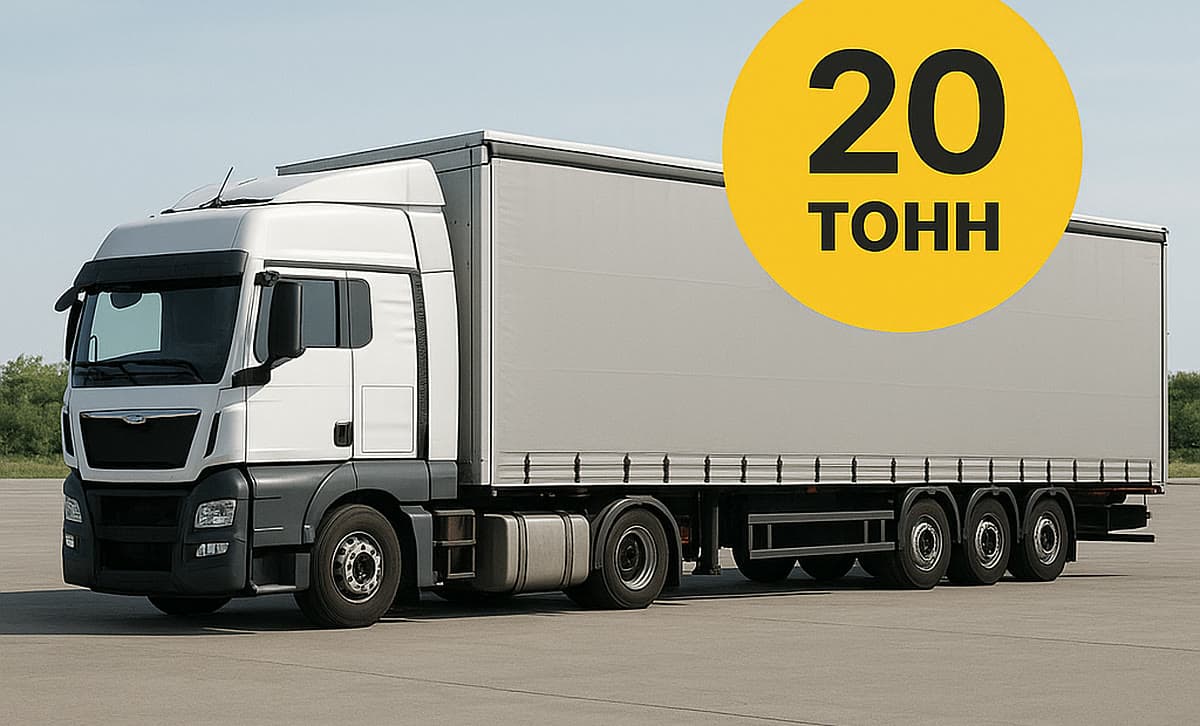
If the logistics situation doesn't deteriorate sharply, carriers will try to pass costs on to clients not all at once but gradually. Competition on popular routes can hold rates down, while a shortage of trucks in peak periods will quickly push up the price of individual trips. So the answer to the question of what will happen to freight transport prices will depend not only on the average market rate but also on the specific order. The starting point here is the current rates: a full 20–22 t truck on the Kyiv–Lviv route (≈540 km) costs 32,000–45,000 UAH, and Kyiv–Odesa (≈475 km) costs 30,000–43,000 UAH (how much a truck costs across Ukraine in September 2026). The rate for each trip is agreed between the shipper and the carrier — there is no single market-wide rate.
Why prices may move unevenly in autumn
Autumn is traditionally an active period for agricultural, industrial and trade transport. Harvesting, and the movement of grain, fertiliser, fuel, construction materials and retail goods can create a short-term shortage of transport. At such moments the rate rises even when the average annual market situation remains stable.
On international routes to the European Union, additional weight will fall on how congested border crossings are, the availability of permits or other procedures, requirements for transport companies, and the cost of operating within the European jurisdiction. A longer wait at the border increases the cost of a trip: the vehicle and driver aren't fulfilling another order, and the carrier factors this risk into the rate.
| Factor | Possible impact in autumn 2026 |
|---|---|
| Fuel | Rising cost base and fuel surcharge |
| Seasonal demand | Temporary rate increases on individual routes |
| Hryvnia exchange rate | If the hryvnia weakens — higher prices for imported spare parts, tyres and leasing |
| Security risks | More expensive or longer routes with extra insurance |
What this will mean for shippers
Urgent, seasonal and non-standard shipments, where it's hard to book a vehicle in advance, carry the biggest risk of getting more expensive. For regular shipments, companies will be able to partly hold down costs through long-term contracts, cargo consolidation and route planning.
Shippers should compare not just the price per kilometre but the full cost of delivery: waiting time, toll roads, insurance, reloading, downtime and possible extra fees. This approach will help more accurately assess what will happen to freight transport prices for a specific business, rather than for the market on average.
Which factors are already affecting the freight transport market
Cost base: fuel, the hryvnia exchange rate and driver pay
The costs that most quickly affect freight transport rates in Ukraine are the ones a carrier can't postpone or significantly cut. First of all, that's diesel fuel: as of 17 September 2026, the average price of diesel in Ukraine is 98.24 UAH/l (current fuel prices). At a consumption of around 32 l/100 km, that's already ≈31 UAH of fuel per kilometre: on long domestic trips, where rates in listings in September 2026 stayed within 59–80 UAH/km, diesel alone takes up between 40% and more than half of the total. Fuel's share of a trip's cost base depends on the type of vehicle, the load and the length of the route, but any noticeable swings in pump prices are usually reflected fairly quickly in commercial offers. This often happens through a fuel surcharge, which is reviewed separately from the base rate.
The hryvnia exchange rate remains an important factor. Tyres, spare parts, lubricants, part of the electronic equipment and leasing payments depend directly or indirectly on imports. Even with fuel prices unchanged, a weaker hryvnia can raise fleet costs for maintenance and vehicle renewal. Ultimately this may put pressure on rates in autumn 2026 — but only to the extent that the hryvnia actually weakens.
Driver pay is a separate line of cost. On international trips, travel allowances, paperwork and long time on the road are added to the salary. If companies compete for experienced drivers, they're forced to raise pay or offer extra payments. These costs are ultimately factored into the rate charged to the client.
The price of a trip is not just kilometres, but also the time, risks and resources needed to complete the delivery.
Transport shortages, infrastructure and security risks
On individual routes the market may face a shortage of suitable vehicles. The causes are seasonal demand, repairs, downtime due to technical condition, limited driver availability and an uneven distribution of transport between regions. When cargo needs to be picked up urgently, the shipper often pays more for a guaranteed vehicle, even if the average rate on the route hasn't changed.
The condition of roads, the throughput of border crossings, roadworks and the workload of logistics hubs affect not only delivery time but also the number of trips a single vehicle can make. Extra hours of waiting mean paying for downtime, higher fuel costs and the risk of losing the next order.
Security risks shape prices unevenly by region. For potentially dangerous routes, a carrier may factor in detours, extra insurance, a time buffer or the use of specialised transport. So what will happen to freight transport prices for a specific direction will largely be determined by its operational complexity.
Business demand and market behaviour
Rates rise when the agricultural sector, industry, construction, retail trade and imports all pick up at the same time. A seasonal build-up of orders reduces the number of free vehicles and strengthens carriers' bargaining position. Conversely, weaker demand or a surplus of transport forces companies to compete on price.
For a forecast it's important to assess not a single indicator but their combination: fuel prices, the exchange rate, driver availability, time on the road and order volume. It's precisely this combination that explains why what will happen to freight transport prices in autumn 2026 can differ even between neighbouring regions and similar cargo.

How rates for road, rail and sea transport may change
Road transport: the most sensitive to seasonal demand
Road transport is most likely to react fastest to market changes in autumn 2026. Its rates depend on the price of diesel fuel, driver pay, maintenance, downtime and road congestion. During periods of active harvesting or pre-holiday restocking of warehouses, demand for vehicles can grow faster than supply.
Because of this, on some domestic routes the price increase may be higher than the market average. This is especially true for directions with seasonal cargo, urgent delivery or a difficult return trip for the vehicle. If a vehicle returns empty after unloading, the carrier factors the cost of the whole route into the rate for a single client.
At the same time, on popular directions with a large number of carriers, competition can hold growth back. Long-term contracts, cargo consolidation and advance booking of transport are also available for regular clients. So the answer to the question of what will happen to freight transport prices for road delivery will depend on the specific region, body type and how urgent the trip is.
Rail transport: more stability, but not for all cargo
Rail is usually less sensitive to daily fuel-price fluctuations, since large batches of cargo move more efficiently over long distances. This can make rail transport relatively attractive for grain, ore, metal, construction materials and container shipments. However, the rate isn't formed by the carriage fee alone.
The final cost is affected by the availability of wagons and locomotives, the condition of the tracks, the throughput of junctions, and the cost of loading and delivery to the station. If a route requires several reloadings or a road-based "first" and "last" mile, rail's advantage can shrink. On directions with a wagon shortage or high infrastructure congestion, rates can rise more noticeably.
Sea transport: dependence on corridors and global freight
For Ukrainian exports, sea logistics remains a distinct segment. The cost depends on how the sea corridor is operating, security conditions, the availability of port infrastructure, insurance, queues and port charges. Even a small change in risk can increase the insurance premium or force operators to choose more cautious routes.
The international rate is also affected by global demand for vessels, bunker fuel prices, port congestion and freight costs. In some cases, sea delivery can get cheaper per tonne on large shipments, but the overall logistics price will still rise because of transport to the port, transshipment and onward delivery.
| Mode of transport | What will most affect the rate | Likely trend |
|---|---|---|
| Road | Fuel, drivers, seasonal truck shortage | Most uneven |
| Rail | Wagons, throughput, reloading | Gradual or stable |
| Sea | Security, insurance, port charges, global freight | Dependent on external events |
So what will happen to freight transport prices in autumn 2026 will be determined not by a single overall index but by a combination of local and international factors. For large shipments, rail or sea may remain more cost-effective, while road transport will most likely keep its advantage in flexibility and speed.
What will most affect the cost of delivery in autumn 2026
Seasonality and empty return runs
In autumn 2026, seasonal demand may become one of the main factors changing delivery costs. After the harvest, the need to transport grain, oilseeds, fertiliser, fuel and related goods increases. At the same time, businesses prepare for the autumn-winter season, restock warehouses and build up inventory. If the number of orders grows faster than the available fleet, carriers raise rates, especially for urgent dispatch.
The price is affected not only by the loaded trip but also by the ability to find a return order. For example, delivering goods from central Ukraine to a border region can cost more if the driver has to come back without cargo. In that case, the costs of fuel, pay and depreciation are effectively spread over just one direction. But if a dispatcher finds cargo for the return trip, the final rate can be lower — we covered how much an empty trip costs separately, in the article about a carrier's losses on deadhead mileage.
So what will happen to freight transport prices in autumn will depend on the balance between demand and the ability to organise an efficient two-way route. Irregular, urgent and regionally unbalanced trips are usually the most expensive.
Border delays and extra operations
For international delivery, it's important to consider not only the distance between loading and unloading points. Waiting at the border can take longer than planned, and during that time the vehicle isn't earning the carrier income from the next trip. The cost of downtime may be included in the overall rate or charged separately once the agreed free time is exceeded.
A hypothetical example: a vehicle is meant to complete a trip in three days but is delayed by another day due to a queue. The carrier bears the cost of the driver, fuel while manoeuvring, parking and the lost opportunity to take another order. If such delays regularly recur on a certain route, the risk gets built into the base price of all trips on it.
The final cost can also be increased by:
- toll roads, parking and expedited paperwork;
- loading, unloading, weighing or reloading of goods;
- cargo storage due to late dispatch or acceptance;
- delivery to a remote warehouse or a change of route en route.
Insurance, risks and the real price of a trip
Insurance costs are especially important for expensive, hazardous, temperature-sensitive or strategic cargo. The size of the premium depends on the value of the goods, the route, storage conditions and the level of risk. For certain directions, a carrier may plan for extra security measures, an escort or a detour around potentially dangerous sections.
Because of this, the lowest offer isn't always the cheapest in the end. If it doesn't account for downtime, insurance, paid operations or the empty return of the vehicle, the final amount can grow after the order has already been confirmed. To more accurately assess what will happen to freight transport prices, the shipper should agree in advance on the list of included services, the rules for charging downtime, and possible extra fees.
FAQ: answers to questions about freight transport prices in autumn 2026
Is it worth signing long-term transport contracts?
Yes, if the company has regular shipment volumes and clear routes. A long-term contract helps reserve transport in advance, agree on the rules for vehicle dispatch, and reduce the risk of a sharp rate increase during a period of seasonal demand. This is especially important for agricultural, trading and manufacturing companies that need stable transport volumes in autumn.
At the same time, it's not necessary to fix the same price for the whole term of the contract. A more practical solution can be a base rate with a review formula tied to fuel prices, the hryvnia exchange rate or officially agreed additional costs. The contract should also spell out payment for downtime, rules for changing the route, notice periods and the parties' liability.
When is the best time to book transport for autumn 2026?
The season is already underway: from 1–17 September 2026, the exchange saw roughly four cargo loads for every one free-truck listing, so there's no point waiting. For regular or large shipments, it's best to start negotiations at least a few weeks before the planned dispatch date. On popular routes and during harvest periods there may be fewer free vehicles, so booking late raises the risk of getting a more expensive offer or a limited choice of body types.
International transport should be planned even earlier, since trip duration is affected by how busy border crossings are, document requirements and possible delays. Urgent booking usually costs more: the carrier has to rearrange the schedule, look for a vehicle without a return load, or compensate for potential downtime.
How to fix a rate, and which directions might be the most expensive?
A rate can be fixed through a contract with a defined term, order volume and a clear list of services. However, a fully fixed rate isn't always good for the carrier, so the parties often agree on a price corridor or automatic review terms. It's important to separately state whether the rate includes the fuel surcharge, toll roads, insurance, loading, unloading and downtime.
The most expensive directions in autumn 2026 could be those with a seasonal demand peak, a shortage of return cargo, long waits at the border or elevated security risks. These may include certain agricultural routes, urgent international deliveries and trips to regions where it's hard to quickly find transport for the return. For a reference point, see the roundup of the 10 most expensive freight routes in September: in September 2026 the most expensive trips turned out to be those carrying mineral fertiliser — up to 74,000 UAH per vehicle.
So what will happen to freight transport prices will depend on the specific route and the terms of the order. The best strategy is to book transport in advance, compare the full cost of delivery, and fix in the contract not just the rate but also the rules for reviewing it.
Conclusion: how businesses can prepare for changing transport rates
In autumn 2026, freight transport rates in Ukraine will likely change unevenly. Road rates will be most strongly affected by fuel prices, driver pay, seasonal demand, truck shortages and the cost of empty return runs. Rail and sea transport may be more stable for large shipments, but their cost will depend on wagon availability, port infrastructure, security conditions and international freight rates.
So the answer to the question of what will happen to freight transport prices can't be the same for every company. Urgent trips, seasonal agricultural directions, international deliveries with long waits at the border, and routes without a guaranteed return load may turn out to be more expensive. The final amount is also affected by insurance, downtime, toll roads, reloading and other extra operations.
To reduce the risk of unforeseen costs, businesses should forecast transport volumes in advance and book transport for peak-demand periods. For regular routes, it makes sense to sign long-term contracts with clear rules for rate review, payment for downtime and a list of included services. At the same time, it's important to compare not just the price of road delivery but also the full cost of rail or sea logistics.
It's advisable to build a reserve into the budget for fluctuations in fuel, the hryvnia exchange rate, insurance payments and delays. Regularly monitoring these indicators will help revise routes in time, consolidate cargo and choose a more cost-effective mode of transport. This approach will make it possible to prepare for changing rates without a sharp rise in logistics costs.

Related posts


Do you have cargo or transport?
Post your offer — and find the right partner today.